Media Release
Mangaluru, Jun 20: In a remarkable feat of neonatal medicine, doctors at Indiana Hospital & Heart Institute, Mangaluru, have successfully treated and discharged a critically fragile micro-preterm infant born at just 27 weeks of gestation—an outcome regarded as one of the most challenging achievements in neonatal intensive care.
The baby, born nearly three months before term, was transferred to the Indiana Hospital Neonatal Intensive Care Unit (NICU) at three weeks of life. Upon admission, the infant was found to have a hemodynamically significant, large Patent Ductus Arteriosus (PDA)—a congenital cardiac condition where a blood vessel that normally closes soon after birth remains open, severely compromising the infant's cardiovascular stability and lung function.

Despite the daunting prognosis, the clinical team adopted a meticulous, evidence-based approach. Initially, every effort was made to facilitate spontaneous closure of the PDA through intensive medical management and specialized medications, aiming to avoid an invasive procedure. However, when conservative treatment proved insufficient to stabilize the infant, the team decisively proceeded with a highly complex surgical intervention. The PDA closure was performed successfully, marking a decisive turning point in the infant's recovery. Following surgery, the baby's condition improved steadily, culminating in a successful discharge following close to 30 days’ of NICU stay.
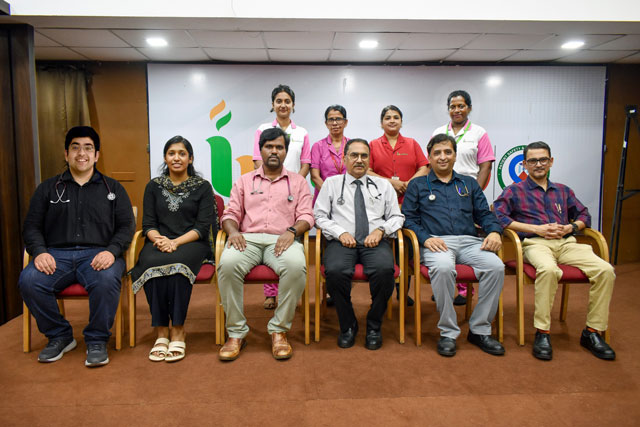
The multidisciplinary Indiana team was led by Prof Dr Ali Kumble, senior consultant and head of the department of paediatrics and chairman of Indiana Hospital and included Dr Abhishek K Phadke, senior consultant neonatologist; Dr Satish Kumar B S, consultant paediatric interventional cardiologist; Dr Prateek Vaswani, consultant and head of Cardiothoracic and Vascular Surgery (CTVS) & anaesthetist Dr T V Shenoy, supported by a dedicated team of neonatal nurses.
Speaking on the achievement, Prof Dr Ali Kumble said, "Every day in the NICU reminds us of the extraordinary resilience of these tiny lives. While our team routinely manages extremely premature infants, every successful recovery remains deeply personal. Caring for this baby demanded unwavering vigilance, clinical precision and seamless collaboration across specialties."
Dr Abhishek K Phadke added that surgical intervention for PDA is uncommon in the hospital's neonatal practice. "Our philosophy when it comes to a premature baby with this condition is to optimize every possible medical option before considering surgery. However, when a definitive intervention becomes essential, our team possesses the expertise and infrastructure to perform these delicate procedures safely, even in babies weighing less than 1 kilogram. We have successfully performed this procedure previously at our centre, but this baby’s triumphant journey is truly special.”
Dr Satish Kumar B S noted that this journey exemplifies the advanced capabilities of our Level IIIA NICU. Caring for micro-preterm infants requires not only cutting-edge technology but also extraordinary teamwork, compassionate nursing, continuous monitoring and the unwavering support of the family.
Dr. Prateek Vaswani stated, “Operating on a fragile, micro-preterm infant whose blood vessels are as delicate as tissue paper requires an extraordinary level of surgical precision and a gentle touch. Every single millimeter matters when you are working on a heart this tiny. Seeing this tiny survivor thrive and go home healthy is incredibly rewarding for our entire surgical team.”
Indiana Hospital’s Level IIIA NICU offers advanced neonatal ventilation, sophisticated haemodynamic monitoring, round-the-clock neonatal critical care, in-house paediatric cardiac and surgical expertise, and comprehensive family-centred support—facilities that together enable the management of some of the most critically ill newborns.
The successful recovery of this tiny survivor stands as a testament to modern neonatal medicine, multidisciplinary excellence and the indomitable human spirit, offering renewed hope to families facing the challenges of extreme prematurity.