Daijiworld Media Network - Havana
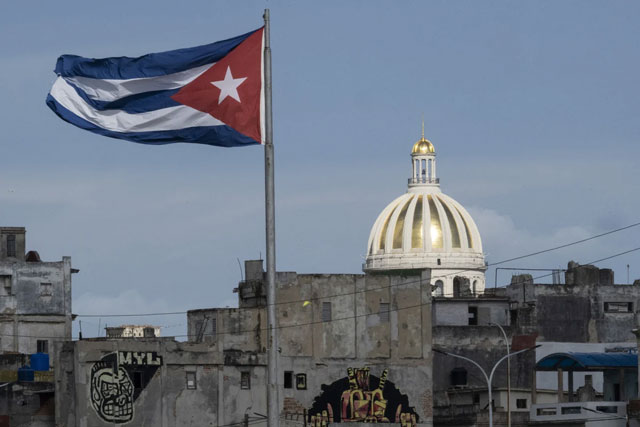
Havana, Jun 20: Cuba has announced its most sweeping economic reforms since the 1959 revolution, introducing a series of free-market measures aimed at reviving the island’s struggling communist economy and encouraging greater private participation.
The 176-point reform package seeks to decentralise the state-controlled economy, which has been severely affected by a tightened US embargo under President Donald Trump.
Under Cuba’s existing economic system, the government has traditionally controlled production, pricing, employment and allocation of resources. The new measures will allow greater space for private businesses, foreign trade without direct state involvement, private hiring, private banking operations and investment by Cubans living abroad.
The reforms also permit international fast-food chains to establish operations in Cuba, marking a significant shift from previous economic policies.
“Elements that for decades were considered pillars of the revolutionary economy, such as the state monopoly over foreign trade and centralisation of productive forces, have been dismantled,” said Luis Carlos Battista, a Cuban-American political scientist and lawyer.
Former Cuban president Raul Castro, who continues to hold influence on the island, had earlier supported limited economic reforms, but several initiatives faced delays due to bureaucratic obstacles.
Cuban authorities acknowledged that implementing the new measures could take time and warned that the reforms would face challenges unless the United States eases its energy and financial restrictions.
Since January, Cuba has faced intensified US sanctions, creating severe shortages of fuel and worsening an economic crisis that has continued for five years. The country has witnessed prolonged power cuts lasting up to 20 hours a day, affecting healthcare, transport and education services.
US President Donald Trump and Secretary of State Marco Rubio have maintained a policy of maximum pressure against Cuba’s political and economic system, which has remained in place for more than six decades. The US administration has also not ruled out the possibility of military action.
Meanwhile, Raul Castro’s grandson Raul Guillermo Rodriguez Castro said Cuba does not pose even a slight threat to the United States and stressed the need for economic transformation.
“Our country must seek a path to economic development where we must inevitably diversify our economy, diversify the way we do business and diversify the way we do investments,” Rodriguez Castro said in an interview.
Cuban President Miguel Diaz-Canel said the reforms were inspired by economic models followed by Vietnam and China, where communist governments operate market-oriented economies.
Analysts said US sanctions remain the biggest challenge to the success of the reforms. Lee Schlenker, a research associate at the Quincy Institute, said the measures would have limited impact unless Washington gradually removes restrictions and sanctions.
Experts also pointed to other hurdles, including investor concerns, lack of confidence and what analysts described as slow and inefficient bureaucracy.
Paolo Spadoni, associate professor at Augusta University in Georgia, said Cuba has limited time to deliver results.
“If Cuban leaders hope to survive this unprecedented crisis and pressure from the United States, they must move quickly with the implementation of reforms and achieve tangible results,” he said.