Daijiworld Media Network - New Delhi
New Delhi, Jun 12: The Central government informed the Supreme Court on Friday that it is working on a policy framework for private CBSE students in West Asia whose Class 12 results remain pending after examinations were cancelled due to the regional conflict.
Appearing before the apex court, Solicitor General Tushar Mehta said the government is examining issues raised by affected students and requested that the matter be taken up after June 22 to allow time for policy deliberations.
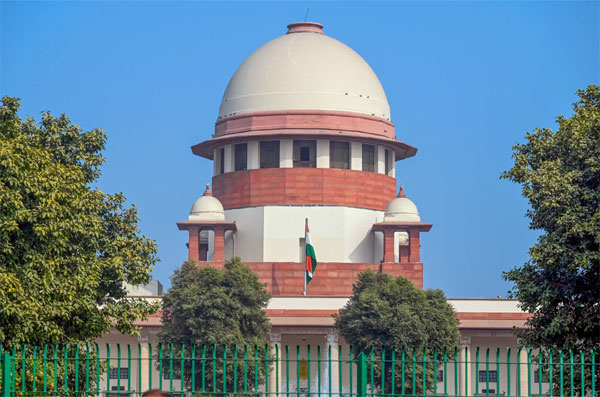
He told the court that a solution is being formulated specifically for private candidates whose results could not be declared because they were impacted by the cancellation of board examinations in several Gulf countries. The proposed framework may also serve as a model for handling similar situations in the future.
The issue arose after the Central Board of Secondary Education (CBSE) cancelled Class 12 board examinations across multiple West Asian nations earlier this year due to the deteriorating security situation in the region.
In a circular issued on March 15, the board announced the cancellation of all remaining examinations scheduled between March 16 and April 10, 2026, for CBSE-affiliated schools in Bahrain, Iran, Kuwait, Oman, Qatar, Saudi Arabia and the United Arab Emirates. The decision also covered papers that had previously been postponed.
Several affected students subsequently approached the Supreme Court, arguing that the non-declaration of their results had disrupted higher education plans and admission opportunities.
Earlier this month, the court issued notices to the CBSE and its Dubai Regional Office while hearing a petition filed by student Pransu Jigarkumar Patel, a private candidate from Saudi Arabia seeking declaration of his Class 12 result.
A bench comprising Justices Manmohan and Vijay Bishnoi sought responses from the education board regarding the matter.
During the previous hearing, CBSE informed the court that its special assessment mechanism relied on evaluation records maintained by schools. Since Patel had appeared as a private candidate, no such assessment data was available, creating difficulties in determining his result under the existing framework.
The petition filed under Article 32 of the Constitution contends that withholding the results of affected private candidates has placed their academic futures at risk and limited access to higher education opportunities.
With the Centre now considering a dedicated policy, affected students are awaiting clarity on how their academic performance will be assessed and when their results will be declared.