Daijiworld Media Network - Kathmandu
Kathmandu, Jun 1: Nepal Prime Minister Balen Shah on Sunday triggered a political controversy after claiming that both India and Nepal had encroached upon each other's territory in several places, reviving debate over the long-standing border dispute between the two neighbouring countries.
Addressing Parliament for the first time since taking office earlier this year, Shah acknowledged that the dispute involving Lipulekh, Limpiyadhura and Kalapani remains a sensitive issue in Nepal-India relations. At the same time, he called for a peaceful and fact-based resolution through dialogue.
“You will be surprised to know a fact that I have learnt recently, only after becoming Prime Minister. India has not only encroached Nepali territory, but Nepal has also encroached Indian territory in many places,” the 35-year-old Prime Minister said.
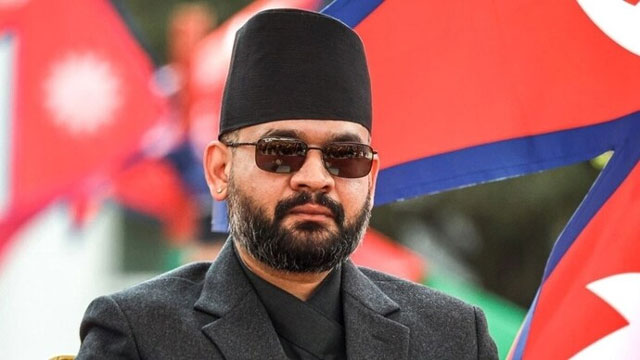
He urged both countries to examine historical records and seek the help of historians, surveyors and experts to settle the issue amicably.
“Now both countries should study the facts and sit together as friends and resolve the issue,” Shah added.
The Prime Minister also informed lawmakers that Nepal had raised the matter with China and the United Kingdom, citing Britain’s colonial-era involvement in defining regional boundaries.
However, hours later, Nepal’s Ministry of Foreign Affairs issued a clarification, stating that Shah’s reference to Nepal “encroaching” Indian territory related to no-man’s land areas and instances of cross-border occupation along the frontier.
The ministry explained that in some locations, land being used by people on the Indian side may fall within Nepalese territory, while land used by Nepalis may lie on the Indian side. It stressed that the Prime Minister’s remarks referred to overlapping land use rather than any official territorial encroachment.
The statement added that technical teams and border mechanisms of both countries are actively working on repairing and constructing boundary pillars, collecting data related to Dasgaja areas and addressing long-standing cross-border occupation issues.
Shah’s comments immediately drew criticism from opposition leaders.
Basana Thapa of the Nepali Congress and Ramesh Malla of the Nepali Communist Party demanded that the remarks be removed from parliamentary records. They asked the Prime Minister to either provide evidence for his claim or withdraw the statement.
Former Nepal Foreign Minister Pradip Gyawali also reportedly sought an apology.
Border expert and geographer Buddhi Narayan Shrestha disputed Shah’s assertion, saying Nepal had never encroached upon Indian territory. He noted that farmers from both sides have, at times, cultivated land across the border due to missing boundary pillars and unrestricted local movement.
Former Nepalese Ambassador to India Nilambara Acharya also rejected the claim, saying there is no official record of Nepal occupying Indian territory. He added that nearly 97 per cent of border issues between the two countries have already been resolved.
Another former ambassador, Deep Kumar Upadhyay, echoed the view, stating that India has never officially raised the issue of Nepal encroaching on its territory.
“So far we have conducted studies, but this matter has never surfaced in official discussions,” he said, adding that the context of the Prime Minister’s statement remained unclear.
The controversy comes weeks after Nepal formally objected to the Kailash Mansarovar Yatra route through Lipulekh and sent diplomatic protests to both India and China.
Nepal’s Foreign Ministry reiterated that, under the 1816 Sugauli Treaty, Limpiyadhura, Lipulekh and Kalapani are integral parts of Nepal.
India rejected the claim, describing it as a “unilateral artificial enlargement” and maintaining that the issue should be resolved through bilateral dialogue.
Foreign Ministry spokesperson Lok Bahadur Chhetri said Nepal remains committed to settling the dispute through diplomatic channels.
The border dispute between India and Nepal centres on Lipulekh, Limpiyadhura and Kalapani, located near the tri-junction of India, China and Nepal. India maintains that the territories are part of Uttarakhand, while Nepal claims historical ownership.
The dispute intensified in 2021 when the government led by KP Sharma Oli released a new political map showing all three territories as part of Nepal. India rejected the move as a “unilateral cartographic assertion” and urged Nepal to respect its sovereignty and territorial integrity.