Daijiworld Media Network - New Delhi
New Delhi, May 31: A sprawling solar energy project in Gujarat’s Rann of Kutch is rapidly reshaping the region’s landscape and positioning India at the forefront of the global renewable energy transition, according to a recent report.
Located near the India-Pakistan border, the Khavda Renewable Energy Park spans nearly 280 square miles and is projected to become the world’s largest solar power installation by 2029.
Once fully operational, the project is expected to house nearly 60 million solar panels and generate up to 30 gigawatts of electricity, enough to meet the energy requirements of a country the size of Austria, the report by Yale E360, cited by Grist, noted.
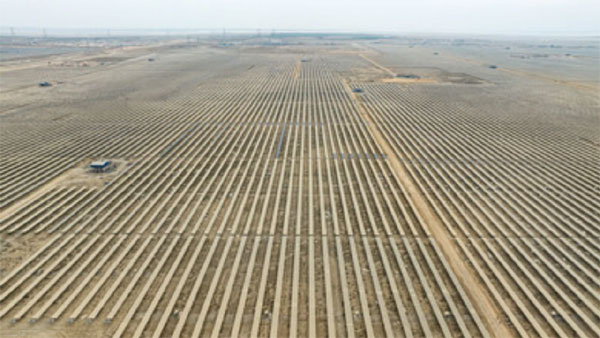
The development reflects India's accelerating shift towards renewable energy, particularly solar power. The country's installed solar capacity has been expanding at an average annual rate of around 40 per cent and surpassed 150 gigawatts in March.
Experts expect this capacity to double again by 2030 as India seeks to meet rising electricity demand while reducing dependence on fossil fuels.
Energy analysts say India could become the first major economy to industrialise primarily through large-scale solar energy deployment rather than relying heavily on coal-fired growth.
According to Kingsmill Bond, an energy strategist at Ember, India is following a different development trajectory from many industrialised nations.
“China built on coal; India is building on sun,” Bond said, suggesting that India's experience could serve as a model for other developing economies seeking economic growth with lower carbon emissions.
India's solar journey has evolved significantly over the past decade. Until recently, coal remained central to the country's energy strategy, with policymakers emphasising increased domestic coal production to support industrial expansion and economic development.
Following Prime Minister Narendra Modi's pledge in 2014 to substantially increase coal output, India continued to defend the use of fossil fuels at international climate negotiations, arguing that developing nations required affordable energy sources to combat poverty and support growth.
However, the sharp decline in solar technology costs, combined with India's favourable climatic conditions, has accelerated the country's transition towards renewable energy.
Since the COP26 climate summit in Glasgow, solar deployment has gathered significant momentum across the country.
The report noted that non-fossil fuel sources accounted for more than half of India's installed electricity generation capacity for the first time last year, marking a major milestone in the nation's energy transition.
According to projections by the International Energy Agency (IEA), nearly half of India's additional electricity demand through 2030 is expected to be met by solar power. Another quarter is likely to come from other low-carbon energy sources, including wind, hydropower and nuclear energy.
The Khavda project is increasingly being viewed as a flagship example of India's ambition to balance economic growth, energy security and climate goals through large-scale renewable energy investments.