Daijiworld Media Network - New Delhi
New Delhi, May 3: India’s economy is expected to maintain growth above 7% in the near term even amid rising geopolitical tensions in West Asia, according to Chief Economic Adviser V. Anantha Nageswaran.
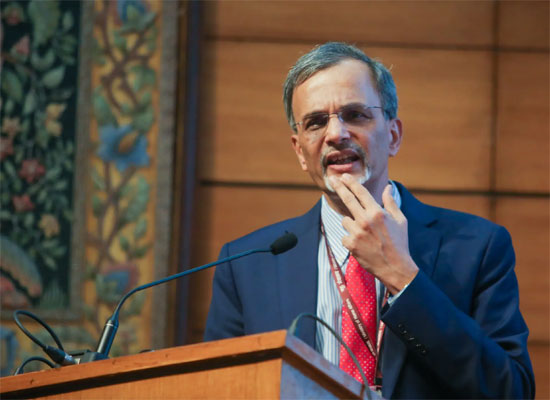
Speaking on Saturday, Nageswaran said the timing of external conflicts coincides with a period of strong domestic growth momentum. He added that the government is closely tracking global crude oil supply conditions and their possible impact on the economy.
He noted that India’s dependence on imported crude oil should not be viewed as a standalone weakness, pointing out that alternative energy sources also carry significant cost implications.
However, he cautioned that external sector pressures could rise if global conditions remain volatile. Higher import costs and a possible slowdown in remittance inflows could widen India’s current account deficit (CAD), which he projected may increase to around 2% of GDP in FY27, compared to below 1% in FY26.
On investment flows, the CEA said India continues to remain an attractive destination for global capital. Gross foreign direct investment (FDI) inflows are expected to remain strong at around $90–95 billion in FY26, with momentum likely to continue into the following year, supported by expansion in the manufacturing sector.
On inflation, he observed that the weight of food in the consumer price index is gradually declining, although short-term risks remain due to weather conditions and rising input costs.
Nageswaran also highlighted ongoing regulatory reforms across states, noting significant progress in easing business regulations. He said nearly 86% of identified deregulation targets across 23 sectors have already been achieved.
At the same time, he pointed out a mismatch between rising corporate profits and relatively slower private investment growth, indicating that capital formation has not fully kept pace with earnings expansion.
Overall, he said India remains on a stable growth path, supported by reforms, investment inflows, and improving macroeconomic fundamentals despite global uncertainties.