Daijiworld Media Network - Dhaka
Dhaka, Feb 12: Bangladesh heads to the polls on Thursday in a high-stakes general election that is set to define the country’s political transition following the 2024 student-led uprising that brought an end to Sheikh Hasina’s 15-year rule.
All but one of the 300 parliamentary seats are up for grabs in a fiercely contested battle primarily between the Bangladesh Nationalist Party (BNP) and an unusual alliance of student leaders and Islamist groups. The outcome is being closely watched both domestically and internationally, as it will determine whether a new generation of political leadership can consolidate reform momentum or whether power will return to the traditional establishment.
The BNP, which governed Bangladesh before Hasina’s tenure, is widely expected to emerge as the single largest party. However, analysts remain uncertain whether it will secure an outright majority.
“The BNP’s status as one of the two dynastic forces that have defined Bangladesh’s troubled post-independence politics underlines how precarious the reform momentum could prove,” said Joseph Parkes, senior analyst at risk intelligence firm Verisk Maplecroft.
For global investors and policymakers, the election carries significant weight. Bangladesh, a key player in South Asia, sits at the crossroads of influence among India, China and the United States. The new government will need to reassure international partners about political stability and economic continuity.
The incoming administration will inherit an economy grappling with persistently high inflation and global trade disruptions. The garment industry, which accounts for more than 80 percent of the country’s exports, faces mounting external pressures. At the same time, rising law-and-order concerns pose additional challenges that could hinder reform efforts.
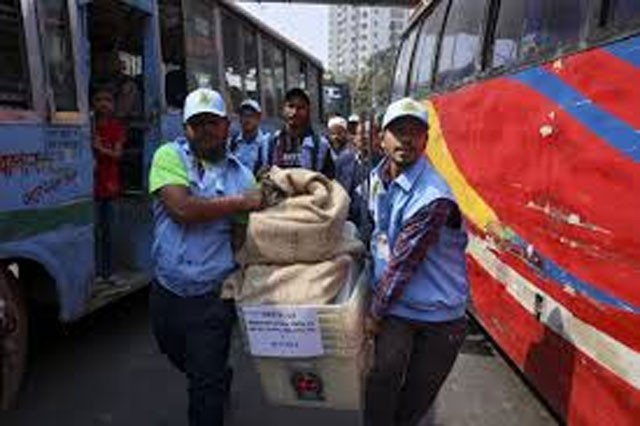
Voting is scheduled to begin at 7:30 am local time and conclude at 4:30 pm, with results expected by Friday. More than 127 million registered voters are eligible to cast their ballots at 42,766 polling centres nationwide. A total of 51 political parties and around 2,000 candidates are in the fray.
While the BNP is seen as the frontrunner, it faces strong competition from the alliance between Jamaat-e-Islami, the country’s largest Islamist party, and the student-led National Citizen Party.
The election will also mark the end of the interim administration led by Nobel laureate Muhammad Yunus, who assumed leadership following the political upheaval.
The significance of the moment was evident in Dhaka this week, as millions of residents left the capital for their hometowns to vote. Among them was Mohammad Shah Alam, a 41-year-old Uber driver, who travelled to Faridpur district to cast his ballot for the first time since 2008.
“The race would be more inclusive with the participation of the Awami League,” Alam said, referring to Hasina’s party, which was barred from contesting the election by the interim government last year. Hasina currently lives in exile in India, a development that has strained relations between the two neighbouring nations.
As Bangladesh stands at a political crossroads, Thursday’s vote is widely seen as a decisive moment that could shape the country’s democratic trajectory and economic future for years to come.