Daijiworld Media Network - Washington
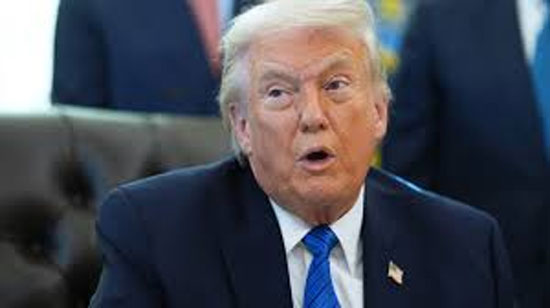
Washington, Feb 2: As the United Nations grapples with a deepening financial crisis driven largely by unpaid contributions from the United States, President Donald Trump has claimed that resolving the situation would be “very easy” for him—without committing to clearing Washington’s own arrears.
In an interview with Politico on Sunday (local time), Trump stopped short of saying the US would release the nearly $4 billion it owes the world body, even as UN officials warn that the organisation is edging toward a financial breaking point.
UN Secretary-General Antonio Guterres, in a recent letter to heads of UN missions, cautioned that the organisation is facing an “imminent financial collapse,” though he did not directly name the US as the primary contributor to the crisis. According to UN figures, Washington owes $2.196 billion to the regular UN budget and another $1.8 billion to the peacekeeping budget. Excluding the 2026 assessment of $768 million—which the US has until the end of the year to pay—outstanding arrears total $1.429 billion.
As the UN’s largest contributor, responsible for 22 per cent of its regular budget under a formula set by the General Assembly, the US plays an outsized role in the organisation’s financial health. Its failure to pay on time has significantly strained UN operations.
Despite his long-standing criticism of the UN and previous withdrawals from several UN agencies, Trump struck a more conciliatory tone in the interview, portraying the organisation as a potential pillar of his legacy. He said the UN had “tremendous potential” and could play a role in resolving global conflicts once he was no longer personally involved in peace efforts.
Trump reiterated this view amid speculation about whether the UN might one day leave New York, insisting the organisation would remain in the US because of its untapped promise. He also claimed that he could compel member states to clear their dues “within minutes,” likening the situation to his pressure campaign on NATO allies to raise defence spending.
However, most major contributors—including China, which covers 18 per cent of the UN budget—are not in arrears and remain within their payment timelines. Only a few smaller contributors, such as Mexico and Venezuela, have outstanding dues, and recovering those amounts would do little to stabilise the UN’s finances.
Unlike NATO, where members can independently raise defence budgets, UN contributions are determined collectively by the General Assembly. Any attempt to alter the assessment formula would require broad consensus among the UN’s 193 member states—a politically daunting task.
Guterres, in his letter, warned that unless all member states meet their financial obligations on time, the UN would be forced to consider a fundamental overhaul of its financial rules to avert collapse.
For now, the central issue remains unresolved: whether the US will settle its own dues. A senior UN official warned that the organisation could run out of cash as early as July, potentially jeopardising key operations—including the high-level General Assembly session in September, when world leaders gather in New York. In a worst-case scenario, even the UN’s iconic glass headquarters could be forced to shut its doors.