Daijiworld Media Network - New Delhi
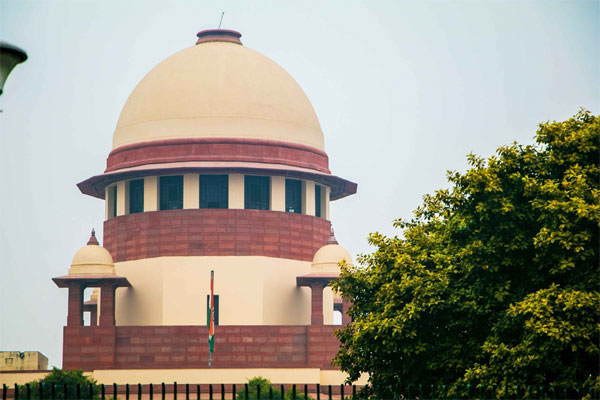
New Delhi, Jan 29: The Supreme Court on Thursday stayed the implementation of the University Grants Commission (Promotion of Equity in Higher Education Institutions) Regulations, 2026, directing that the 2012 Regulations will continue to apply until further orders.
Passing an interim order, a Bench comprising Chief Justice of India Surya Kant and Justice Joymalya Bagchi issued notice to the Centre and the UGC on a batch of writ petitions challenging the validity of the 2026 framework, with specific objections to Clause 3(c), which defines “caste-based discrimination”.
Taking a prima facie view, the apex court observed that certain provisions of the new regulations suffer from ambiguity and that the possibility of misuse cannot be ruled out, warranting suspension of their operation at this stage.
During the hearing, petitioners argued that the definition of caste-based discrimination under the 2026 Regulations is unduly narrow and exclusionary, effectively denying remedies to individuals belonging to general or non-reserved categories, even if they face caste-based bias or institutional discrimination within higher education institutions.
Recording these submissions, the court noted the concern that the regulations appear to rest on an assumption that caste-based discrimination operates only in one direction, thereby excluding the possibility that individuals outside reserved categories could also be affected.
The Supreme Court identified several substantial questions of law for detailed examination. Among them is whether Clause 3(c) bears a reasonable and rational connection with the objectives of the 2026 Regulations, particularly when no independent procedural mechanism has been provided to address caste-based discrimination, unlike the broader definition of “discrimination” under Clause 3(e).
The Bench also expressed concern over Clause 7(d), which includes the term “segregation”. The court observed that allocation of hostels, classrooms, or mentorship groups—even if based on transparent criteria—could invite a “separate yet equal” classification, potentially infringing the constitutional guarantees of equality and fraternity under Articles 14 and 15.
Another issue flagged was the absence of “ragging” as an expressly recognised form of discrimination under the 2026 Regulations, despite its clear inclusion in the 2012 framework. The court observed that this omission could amount to a regressive legislative step, creating unequal access to justice and possibly violating Articles 14 and 21 of the Constitution.
In its operative direction, the court ordered that the 2026 Regulations remain in abeyance, invoking its powers under Article 142 to ensure that the University Grants Commission (Promotion of Equity in Higher Education Institutions) Regulations, 2012, continue to remain in force until further orders.
The matter has been scheduled for further hearing on March 19.