Daijiworld Media Network - Mumbai
Mumbai, Dec 24: Even as Mumbai’s air quality has largely remained in the ‘moderate’ category in recent days, concerns have emerged over the accuracy of the Air Quality Index (AQI) being reported, with data reportedly drawn from a limited number of monitoring stations across the city.
An analysis of data from the Central Pollution Control Board (CPCB) between November 15 and December 23 reveals that out of Mumbai’s 28 air quality monitoring stations, only 17 to 19 were functional on most days between December 15 and December 23. Despite this, the city’s AQI during this period ranged between 91 and 138, consistently falling in the ‘moderate’ bracket.
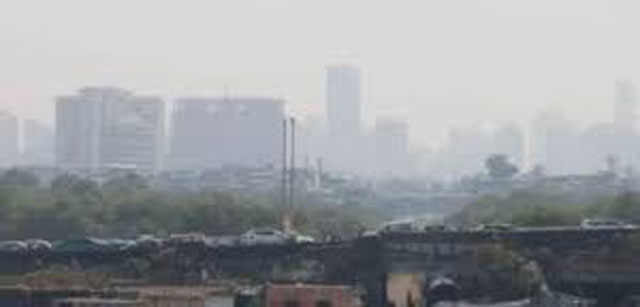
However, experts point out that several key pollution hotspots did not contribute data during this time. Stations in areas such as Bandra-Kurla Complex (IITM), Bandra (MPCB), Kurla, Sewri, Powai, Kandivali East, Worli (IITM and MPCB), Mulund West and Mumbai airport’s Terminal 2 were among those frequently offline.
On December 22, for instance, when Mumbai recorded an AQI of 104, only 17 stations were operational. Major locations including BKC, Bandra, Colaba, Deonar, Kurla, Powai, Sewri, Worli and the airport’s Terminal 2 failed to report data. Similar gaps were observed on December 20 and 21 as well.
Air quality experts warn that excluding high-emission zones from AQI calculations can significantly skew city-wide averages. Gufran Beig, chair professor at the National Institute of Advanced Studies (NIAS) and founder project director of SAFAR, said that many monitoring stations do not adhere to prescribed technical siting norms. “Assessing a city’s AQI based on readings from a handful of stations, without factoring in missing or non-representative locations, is technically flawed,” he noted.
Several of the offline stations have historically recorded severe pollution levels. In mid-November, the BKC IITM station had reported AQI readings crossing 280, falling under the ‘very poor’ category. Areas such as Kurla and Kandivali East also recorded AQI levels above 200, driven largely by spikes in PM2.5 and PM10, while Sewri and Worli frequently showed high PM10 levels due to construction activity, port operations and traffic congestion.
Responding to the issue, a senior official from the Brihanmumbai Municipal Corporation (BMC) said civic-run stations were functioning normally. “BMC-operated air quality stations are generating data regularly. However, we are informed from time to time about technical issues at stations managed by other agencies,” the official said, while also admitting that some stations are located away from pollution hotspots.
A former senior Maharashtra Pollution Control Board (MPCB) official attributed prolonged station outages to systemic issues, including poor maintenance and lack of accountability. “In many cases, AQI stations remain shut for days or even weeks due to monitoring issues and absence of ownership over data quality,” the official said.
Sunil Dahiya, founder of air quality research group Envirocatalysts, said the absence of data from local hotspots undermines pollution control measures. “When key stations are shut, the AQI reported cannot be trusted, and it weakens action against pollution breaches,” he said.
Echoing similar concerns, Goregaon-based environmental activist Gyan Chaddha alleged deliberate shutdowns. “Stations in highly polluted areas like BKC and Worli are often offline, allowing authorities to claim improved air quality despite ground reality,” he said.