Daijiworld Media Network - Mumbai
Mumbai, Dec 10: For a party that once commanded Mumbai’s civic space for decades after Independence, the Congress now approaches every Brihanmumbai Municipal Corporation (BMC) election as a spectator in a contest largely defined by others. Despite its national stature and deep-rooted organisation in the financial capital, the Congress has been battling a prolonged decline in its influence over India’s richest municipal body.
With the first phase of Maharashtra’s civic elections completed for municipal councils and panchayats, polling dates for major municipal corporations — including the 227-member BMC — are still awaited. For the Congress, the road ahead remains steep.
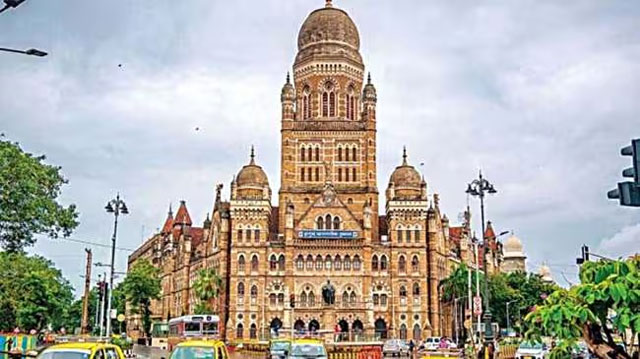
The party’s last victory in the BMC came back in 1992. Since then, a gradual erosion driven by internal factionalism, shifting demographics, and the loss of traditional vote banks has forced the party into the struggle of proving its relevance once again.
In the decades following Independence and the formation of Maharashtra in 1960, the Congress was the uncontested political authority in what was then Bombay. Civic elections revolved less around multi-party competition and more around the dynamics within the party itself.
Though challenged by socialists and Communists initially, its dominance stood strong. This reflected most prominently in the period between 1947 and 1968 — when the first modern BMC polls were conducted — during which:
• All 21 mayors elected were from the Congress
• 15 of them were non-Marathis, symbolizing the party’s cosmopolitan appeal and diverse leadership
The first major setback arrived after the 1968 elections. Though the Congress emerged as the single largest party with 65 of 140 seats, it still lost the mayor’s post mid-term to Shiv Sena’s Dr. Hemchandra Gupte.
A similar situation unfolded in 1972 — Congress again topped the tally with 45 seats, yet failed to retain the mayoral position. The moment marked the rise of the Sena in Mumbai’s political theatre and the beginning of Congress’s gradual fall in civic dominance.
It is this historical context that prompted the Congress high command in November to approve the Mumbai unit’s proposal to contest the BMC elections independently, without alliances — particularly distancing from the Shiv Sena, with whom it has previously shared power.
“We compromised during the Lok Sabha and Assembly elections, but our office-bearers feel that this civic election should be fought on our own strength. There’s nothing wrong in it,” AICC Maharashtra in-charge Ramesh Chennithala said while announcing the decision.
According to him, feedback from local cadres has been clear: continued alliances dilute the party’s independent presence and weaken its grassroots structure.
“Lower-rung leaders have been telling us that the existence of the party organisation is jeopardised due to alliances at many places. These local body polls give us an opportunity to test the waters,” he added.