Media Release
Udupi, Dec 8: Co-curricular committee & Hobby project club in association with ISTE student chapter & Institute Innovation Council of SMVITM organized the final year student project exhibition in the institute premises on December 5.
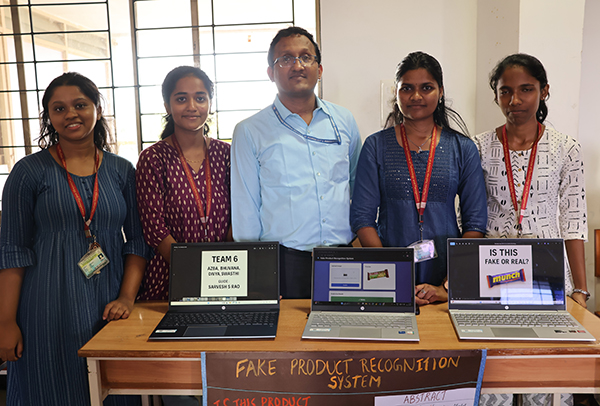
The exhibition was organized separately for the students of their respective departments. 7 projects from mechanical engineering, 28 projects from electronics & communication engineering, 2 student’s projects from civil engineering, 49 projects from computer science & engineering, 14 projects from artificial intelligence and data science and 16 projects from artificial intelligence and machine learning were exhibited at the respective department.
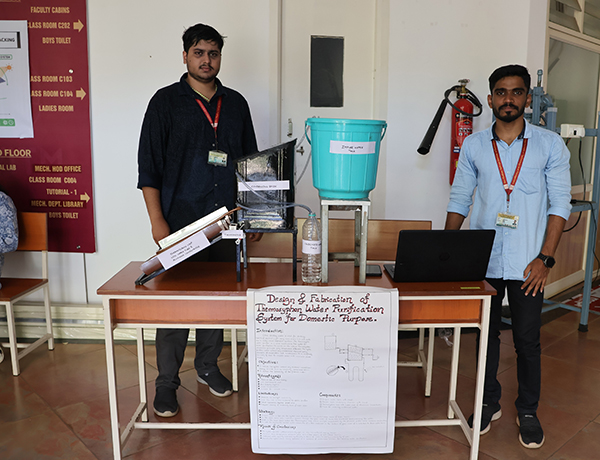
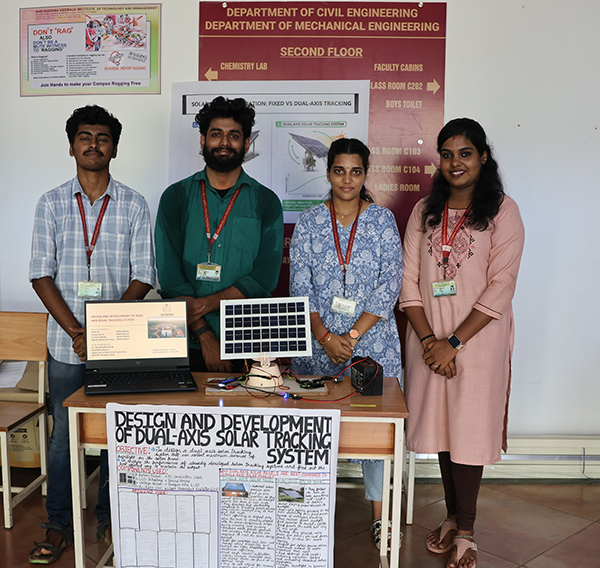
Mechanical engineering students displayed projects in the areas of renewable energy, solar technology, water purification, and agricultural mechanization. Key works included the dual-axis solar tracking system, thermosyphon solar water purification system, toroidal drone, and shade tree pruning machine, focusing on sustainability and reduced physical effort.
Computer science & engineering students showcased projects based on deep learning, IoT, blockchain, federated learning, computer vision, and machine learning. Major highlights included clinical decision support using federated learning, ai-based disaster prediction, autism detection, smart agriculture, deepfake virtual try-on, plant disease identification, skin cancer detection, and audio-to-2D image generation.
AI-DS and AI-ML departments presented projects across domains such as healthcare AI, agricultural AI, security analytics, transport automation, and environmental monitoring. Prominent works included 3D brain tumor segmentation, pneumonia detection, UTI diagnosis, E-challan & emergency Services, AI investment advisor, dental condition classification, Parkinson’s prediction, breast cancer detection, wildlife species recognition, and capsicum disease detection.
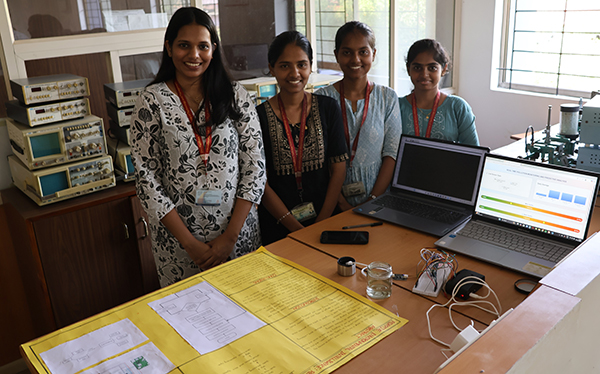
Electronics & communication engineering students exhibited interdisciplinary projects rooted in IoT, embedded systems, VLSI design, robotics, computer vision, and energy harvesting. Highlights included KRISHI SURAKSHA (IoT-based plant disease detection), RISC-V processor design, agri rover, driver drowsiness detection, smart hearing aid, and UAV for disaster management, PiezoStair, and smart helmet for coal miners, and solar-powered water purification.
Civil engineering students displayed two projects in the areas of sustainable construction materials and groundwater conservation: Pervious concrete pavements and air-entrained concrete.
The principal, Dr Nagaraj Bhat, visited the project exhibition and discussed with students who were representing their projects and also gave good suggestions to them. HOD’s, faculty and students also visited the project exhibition and interacted with the final year students. Two best projects were awarded with cash prizes in each department.