September 28, 2026
I have travelled to Goa often enough to know that my affection for the state goes far beyond its beaches, sunsets and familiar holiday photographs. Coming from Mangaluru, I have found myself returning to Goa repeatedly, sometimes for work, sometimes for conversations and often simply because there is something about the place that keeps drawing me back. Over time, my work as a media strategist has also made me look at Goa differently — beyond tourism, into its businesses, entrepreneurs and the aspirations of its people. Somewhere along the way, beneath the postcard image, one issue began standing out with surprising persistence.
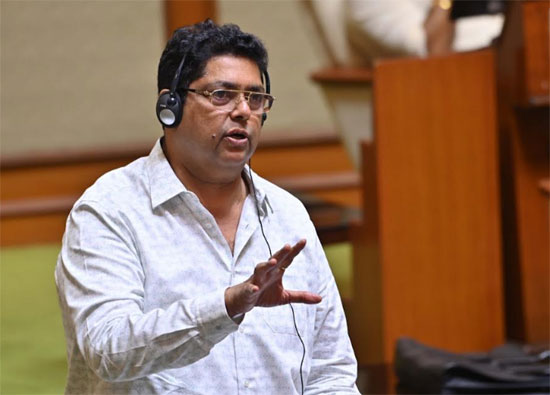
Reginaldo Lourenco, MLA Curtorim & Chairman, GIDC
It was a question that became increasingly difficult to shake off: why are so many young Goans leaving Goa to build the lives they want? Bengaluru, Mumbai, Hyderabad, Europe and the Gulf have become destinations for ambitious young people who believe that serious professional opportunities lie elsewhere. The paradox is striking. Goa possesses the lifestyle that millions dream of, yet some of its own young people feel compelled to leave it behind to pursue their ambitions. It was while exploring this contradiction that I sat down with Aleixo Reginaldo Lourenco — Reginald, as Curtorim knows him — Independent MLA from Curtorim and Chairman of the Goa Industrial Development Corporation. It is a question he says he hears constantly at home, from Curtorim parents whose children now work in the Gulf, in Europe or in Bengaluru, and from young people weighing the same choice. What emerged was not simply a conversation about jobs, but a much larger question that both of us kept returning to: can Goa build an economy in which its young people do not have to choose between their homeland and their ambitions?
Why Goa is Losing Educated Youth: The Reality of Brain Drain

Reginald is candid about how Goa got here. In his view, Goa missed the first wave of the technology boom: the ecosystem that could have retained its educated youth never took root at the scale it needed, and technology companies established themselves elsewhere. Rather than dwell on blame, he treats it as a lesson for the choices ahead — how industrial and IT land is used, and how quickly Goa acts, will decide whether it misses the next wave too. The cost of inaction is more than empty industrial potential; it becomes a quiet cycle. When the high-paying jobs do not exist, the talent moves towards the jobs. “Goans will get jobs, and they will prosper in Goa itself,” is the goal he keeps returning to. The question, therefore, is not whether Goans love Goa. It is whether Goa can give them enough reasons to stay.
Goa Does Not Need To Become Bengaluru
What makes the argument particularly interesting is that Goa does not have to become another Bengaluru to compete with Bengaluru. In fact, its greatest advantage may be precisely what Bengaluru cannot easily reproduce. Reginald believes Goa can offer companies something increasingly valuable: a serious business environment surrounded by an exceptional quality of life. A technology professional could work in Goa without losing hours every day to traffic. An international company could maintain a specialised team here. A young entrepreneur could build a business while remaining close to home. Goa can be both a business destination and a holiday destination, rather than forcing itself to choose between the two. “Give companies the facilities, give them the leverage,” Reginald argues, and make it easier for them to build at scale. That is not simply an argument for more offices; it is an argument for changing the way the world imagines Goa.
“Goa is not only a tourist destination; Goa can become a business as well as a holiday destination. A peaceful, welcoming environment helps teams perform better — that is an advantage no crowded metro can easily match.” — Reginald Lourenco, MLA, Curtorim
Laying the Groundwork: GIDC and Goa’s Next Economy
Reforms undertaken through GIDC have focused on simplifying procedures, improving infrastructure in industrial estates, introducing single-window mechanisms, and making it easier for inactive industrial units to transfer or exit, ensuring idle industrial land returns to productive use. Reginald’s larger argument is that companies need functioning roads, electricity, water, connectivity, land and predictable rules before they can create employment. The next step, he believes, has to be more ambitious. Goa should be thinking about AI, machine learning, design, deep technology, green industries and specialised services — not merely traditional factories or conventional IT offices. Goa’s existing IT policy has itself identified areas including artificial intelligence, machine learning, data science, robotics and blockchain, alongside the goal of creating advanced IT employment. The real test is whether those ambitions become visible career opportunities for young Goans.
Preparing Goa’s Youth for an AI Economy
Reginald is equally clear that bringing in companies is only half the job; young Goans must also be equipped for the work that is coming. Artificial intelligence, he believes, will fundamentally alter the employment landscape, and conventional degrees on their own will no longer be enough. That is why he sees closer links between industry and Goa’s colleges, practical exposure to working units, and training in specialised and AI-related skills as part of the same agenda as attracting investment. His message to young people is one of encouragement: go deep, build specialised knowledge and learn to work alongside AI — and Goa must meet that effort halfway with opportunities to match. In a world increasingly shaped by algorithms, the advantage may belong to those who understand problems deeply enough to use technology intelligently. Goa’s own skill-development framework similarly emphasises advanced technological training and stronger industry-institute interaction, underlining how closely education and employment must connect.
A Goa Worth Building In
Nobody should expect every young Goan to remain in Goa. Mobility is part of a modern economy, and ambition should never be restricted by geography. But there is a crucial difference between leaving because one wants to explore the world and leaving because one believes there is no future at home. That distinction is where our conversation kept returning. As Reginald puts it, Goa should not ask its youth to stay merely because it is beautiful; it should build an economy compelling enough that staying becomes a genuine choice. The dream should not be to create a Goa that looks like Bengaluru. It should be to create a Goa where a young engineer, designer, entrepreneur or technology professional can look at the future and say: I can build something significant here.
Perhaps that is the real answer to Goa’s brain drain — not asking its young people to come back out of nostalgia, but giving them a reason to never feel that they had to leave in the first place. Let them travel, study in Bengaluru, build companies in Mumbai, work in Europe and discover the world. But let there always be a road back — not merely to the Goa they remember, but to a Goa that has grown into the opportunity they once believed existed only elsewhere. A truly confident Goa would not ask its children to choose between the world and their homeland. It would give them the freedom to conquer the world, while making Goa a place worthy of bringing that experience home. Reginald’s own closing thought was simpler: “Let our young people go out and see the world. My job is to make sure that when they want to come home, there is something worth coming home to.”