September 2, 2026
The first time I heard “O Thithithara Thithithai…”, I had absolutely no idea what I was singing. It sounded cheerful. Rhythmic. Completely unfamiliar. A few days later, I was singing it with people from Kerala and Sri Lanka, rehearsing it with my Tamil friend Susee in a car on the way to work, and eventually performing it before colleagues from France, Mexico, India and several other countries. Somewhere along the way, a Malayalam song stopped being someone else’s song. It became ours. And, unexpectedly, that became my first real Onam experience.
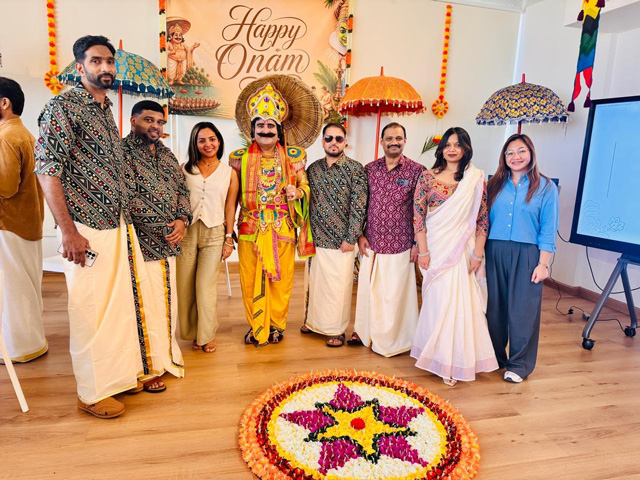
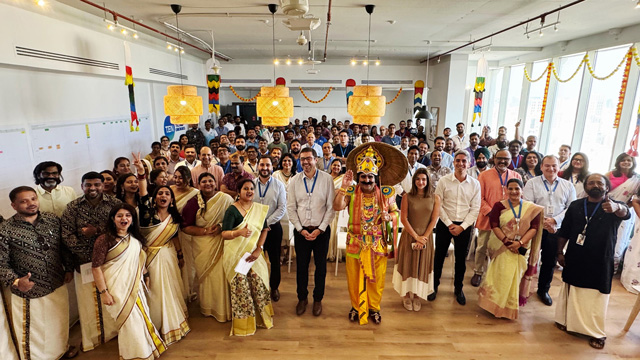
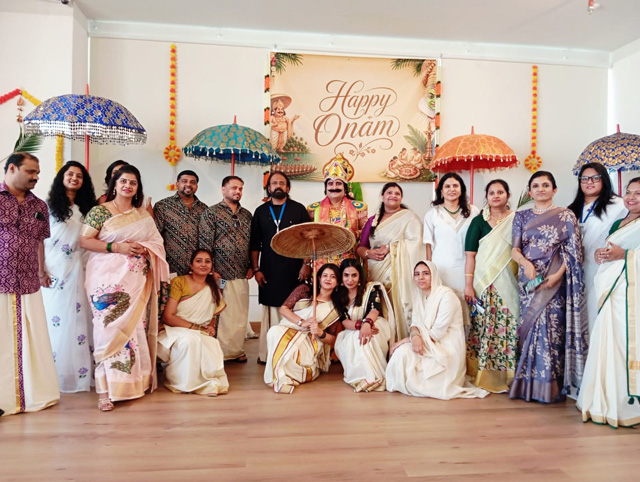
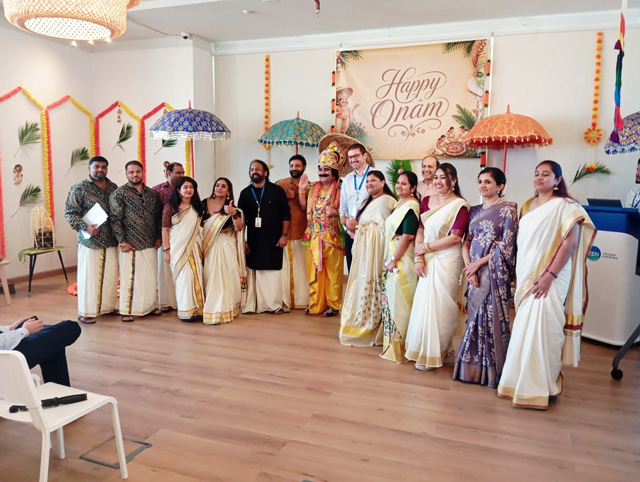
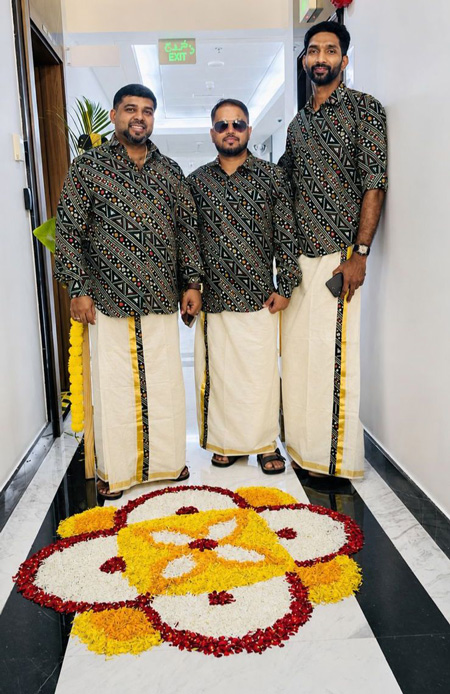
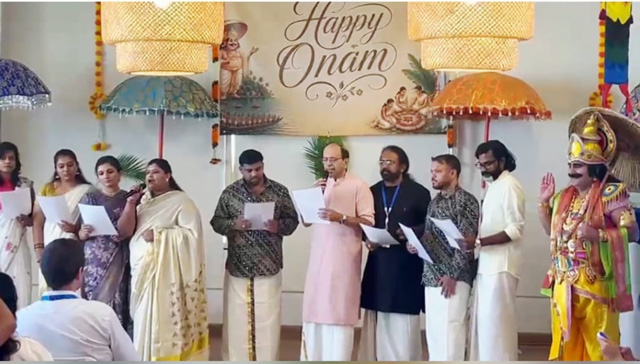
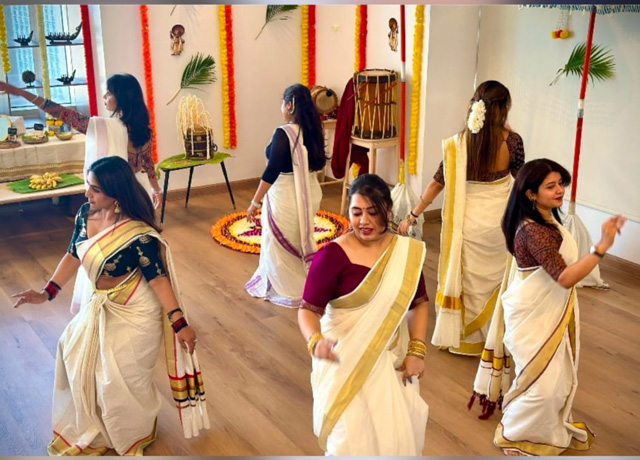
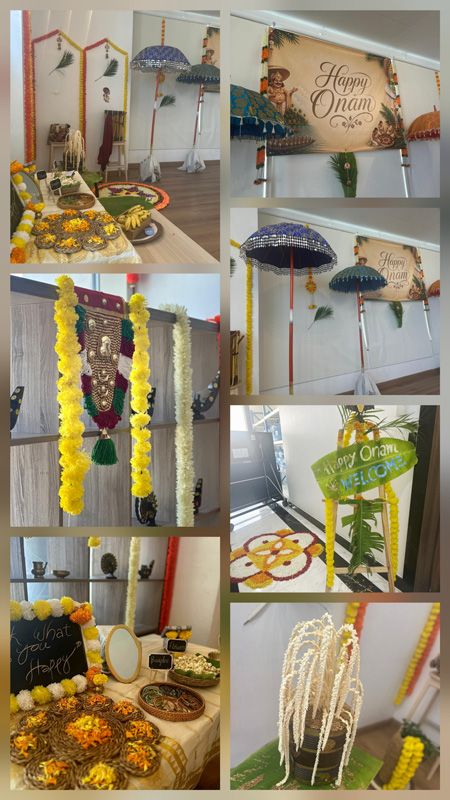
I am from Karnataka. My friend Susee is from Tamil Nadu. Although Kerala is close to both our states, Onam had never really been part of our cultural lives. We had seen the celebrations, heard the songs and enjoyed the food, but neither of us had ever taken part in an Onam cultural programme. Until a few Malayali colleagues invited us to join their celebration at our Doha office. We said yes. What seemed like a simple invitation turned out to be an invitation into somebody else’s memory.
The rehearsals brought back a feeling I had almost forgotten. Gathering in conference rooms after work, learning lyrics, correcting pronunciation and trying to get the rhythm right—it felt like school and college days again. There was plenty of laughter too, especially with Susee, who is laughing gas wherever we go and can strike up a conversation with almost anyone. During one rehearsal, Manoj sang “Thaka Thaka” twice instead of following Tina’s sequence. I immediately complained to her. Susee burst out laughing: “In school, you must have complained to the teacher about other students too!” For a moment, we really were back in school.
There was Tina, patiently leading the group, along with Mischel, Linu, Satheesan and Manoj from Kerala; Pavithra and Madhushika from Sri Lanka; Susee from Tamil Nadu; and me from Karnataka. Later, Dinesh sir, a senior colleague and well-known singer, joined us. It was an unlikely little choir—different states, different countries, different accents, and for some of us, very little understanding of the Malayalam we were singing.
Tina quickly realised that lyrics alone would not be enough. She explained the song’s references to Thiruvonam, Maveli, Kerala’s landscape and the Kuttanad backwaters. For the Malayalis, these were familiar memories. For us, they were windows into a culture we had never really entered. Slowly, the unfamiliar words acquired rhythm. We were no longer simply reproducing sounds. We were beginning to sing with feeling.
The rehearsals followed us beyond the office. Susee and I started practising in the car on our way to work. The words that had once sounded completely foreign slowly became familiar. Even “O Thithithara Thithithai…” became impossible to forget. Perhaps that is how another culture enters your life—with curiosity, a little courage to sound foolish, and someone patient enough to teach you.
After several rehearsals, something subtle happened. We had started as people from different places trying to learn the same song. We were becoming one voice.
On the day of the celebration, the hall had undergone its own transformation. The decoration team had recreated elements of Kerala’s visual heritage—a beautiful pookalam, flowers, bangles, jasmine and sevanthi, bindi, traditional instruments such as the chenda and idakka, miniature boats, umbrellas, mirrors and nettippattam designs. Walking into the hall, you could almost forget that Kerala was thousands of kilometers away.
Finally, it was our turn. The same song. The same melody. The same words we had stumbled over in the beginning. Only now there was an audience. The music started. And the words came. There was no time to wonder whether my Malayalam sounded like Malayalam. I was simply singing. Beside me were people from different backgrounds, doing exactly the same thing. The voices that had once sounded separate had become one.
Interestingly, the person dressed as Maveli was a North Indian colleague. The celebrations continued with music, dance and laughter. Then came the competitions—tug of war, sari folding and the particularly entertaining sari-wearing competition for men. Susee and I joined the tug of war.
The audience reflected Doha’s diversity—colleagues from across India, Pakistan, Nepal, Iran, Sri Lanka, the Philippines and Africa, each carrying their own languages, traditions and memories of home. Yet here they were, celebrating a festival rooted in Kerala. Perhaps that is the beauty of Doha: when people bring a piece of home and share it, it becomes everyone’s.
We were not trying to become Malayalis. We were learning to participate in a culture that was not originally ours—with respect, curiosity and joy.
My first Onam taught me that cultural belonging does not always require a shared birthplace. Sometimes it begins with an invitation. Someone opens a door. Someone explains a song. You listen. You make mistakes. You laugh. You try again. Eventually, you find yourself singing along.
For the Malayalis, Onam carried memories of Kerala. For me, it became a new memory of Doha—learning a song in a new language, singing it with colleagues from different states and nationalities - a beautiful reminder of how a festival can cross boundaries.
The pookalam eventually disappeared. The costumes were put away. The hall returned to its ordinary office rhythm. But somewhere in my head, that song is still playing.
“O Thithithara Thithithai…”
I arrived at Onam as someone who had never really participated in it. I left with something much more than a performance. I left with a small piece of another culture—and the realisation that perhaps culture is at its most beautiful not when it is kept within its own boundaries, but when someone invites you in and simply says:
Come, sing with us…