July 30, 2026
Long-distance running has witnessed remarkable growth in recent years. Across the world, and especially in India, marathon events are attracting thousands of participants ranging from first-time runners to elite athletes. The typical marathon season in India runs from September to February, when the weather is more conducive to endurance running. These events cater to runners of all abilities, offering race categories such as 5K, 10K, Half Marathon (21.1 KM), and Full Marathon (42.195 KM) or ultra distances.
A Glance at India's Popular Marathons
Tata Mumbai Marathon
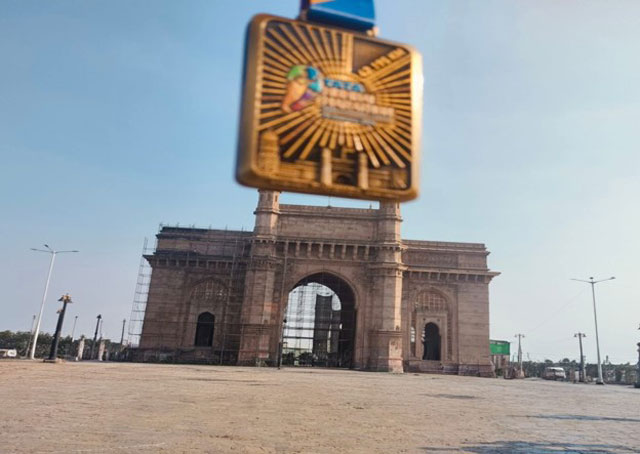
Held annually on the third Sunday of January, the Tata Mumbai Marathon is India's most prestigious marathon. It attracts elite international athletes, recreational runners, and one of the largest mass participation fields in the country. It is also India's largest charity fundraising platform, raising significant funds for social causes every year.
Ladakh Marathon
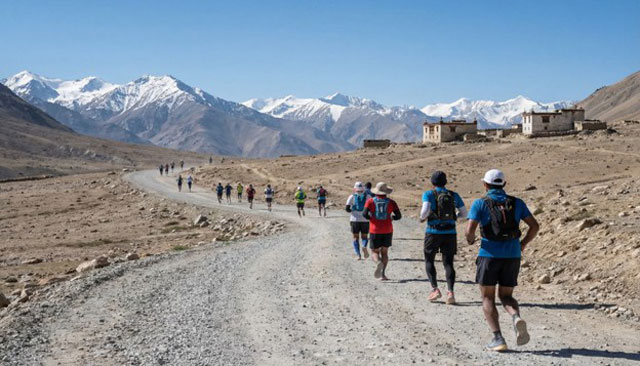
The Ladakh Marathon is recognized as one of the world's highest marathons, with the course ranging from approximately 11,500 to 17,618 feet above sea level. Running at such high altitude presents unique physiological challenges due to reduced oxygen availability.
World Marathon Majors
More than 1,000 marathons are organized worldwide every year. Among them, the seven races that form the Abbott World Marathon Majors are considered the most prestigious:
- Berlin Marathon
- Boston Marathon
- Chicago Marathon
- London Marathon
- New York City Marathon
- Sydney Marathon
- Tokyo marathon
Ultra Marathons
Ultra marathons are running races that exceed the standard marathon distance of 42.195 KM. The most common ultra-marathon distances range from 50 KM to 160 KM (100 miles), although some races are considerably longer like 160 miles,200 miles etc
India's Most Challenging Ultra Marathons
Hell Race – Border Ultra Marathon
One of India's toughest endurance races, the Hell Race – Border point to point Ultra Marathon offers categories of 50 KM, 100 KM, and 100 miles (160 KM). The iconic 100-mile race starts from Jaisalmer and finishes at Longewala, a border town in the Thar Desert.
Since 2018, the event has been organized to honour Major Kuldeep Singh Chandpuri and the brave soldiers of the 23rd Battalion, Punjab Regiment, who defended the Longewala post during the historic Battle of Longewala (1971). Covering long distances across the harsh desert terrain, this race tests a runner's physical endurance, mental resilience, and determination.
La Ultra – The High
Widely regarded as one of the world's toughest and most dangerous ultra-marathons, La Ultra – The High is held in the cold desert of Leh-Ladakh. Participants must complete 333 kilometers within 72 hours, crossing three Himalayan mountain passes, including Khardung La, Wari La, and Tanglang La, each rising above 17,500 feet.
The event presents extraordinary challenges:
- Extreme Temperatures: Runners may experience temperatures ranging from 40°C during the day to -12°C at night within a few hours.
- Low Oxygen: At elevations above 17,500 feet, oxygen availability drops to nearly 40–50% of sea-level levels.
- Distance and Time: Participants must maintain a carefully planned pace to complete each 111-kilometer segment within approximately 24 hours and finish the entire race before the 72-hour cutoff.
Other Popular Indian Ultra Marathons
India offers numerous ultra-marathon opportunities across diverse terrains.
Southern India
Some of the popular ultra-marathons in Southern India include the Ooty Ultra, Malnad Ultra, Bison Ultra, Vagamon Ultra Trail and Jawadhu Hills Ultra. These events offer a wide range of race categories, with distances ranging from 15 km to 90 km, catering to both novice and experienced ultra-runners.
Western India
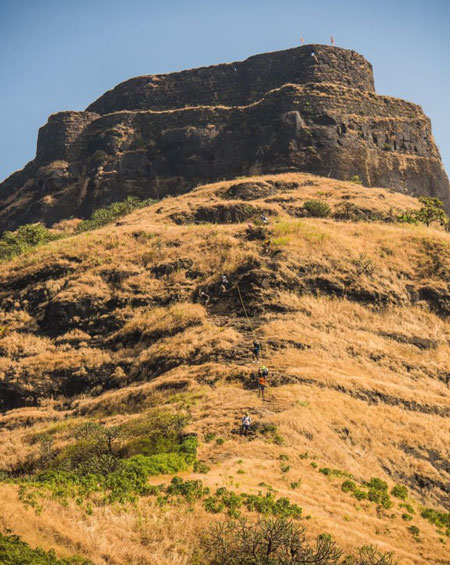
- Mawla ultra, Inspired by the fearless Mawla Warriors of Shivaji Maharaj, this race will challenge untamed mountain trails, with steep ascents, technical ridges, and zero loops. Every step will test your body, mind, and spirit. Event race ranges from 10 KM to 200 miles/360KM
- SRT Ultra, a demanding mountain and trail race that follows the historic route connecting the forts of Sinhagad, Rajgad, Torna, and Lingana in Maharashtra.
Some of the World's Toughest Ultra Marathons
Several ultra-marathons around the world have earned legendary status for their extreme difficulty:
- The Comrades Marathon is one of the oldest ultramarathons in the world. It is an approximately 88-kilometre race that is held annually in the KwaZulu-Natal province of South Africa, between the cities of Durban and Pietermaritzburg. The direction of the race alternates each year between the "up" run, which covers about 87.6 KM and starts in Durban, and the "down" run, which covers about 89.98 KM and starts in Pietermaritzburg.
- The Cocodona 250 is a point-to-point ultramarathon across Arizona, beginning near Black Canyon City and finishing in downtown Flagstaff. The course is listed at 253.3 miles, with 38,791 feet of elevation gain and 33,884 feet of descent, and has a 125-hour cutoff.
- Spartathlon (Greece) – 246 KM following the historic route from Athens to Sparta.
Running Terminology
Understanding common running terms helps both beginners and experienced runners.
General Running Terms
- PB / PR (Personal Best / Personal Record): Your fastest performance over a particular distance.
- Pace: Time taken to cover one kilometer or one mile.
- Split: Time recorded for a specific section of a run.
- Negative Split: Running the second half of a race faster than the first.
- Cadence: Number of steps taken per minute.
- Stride: Running form or the length of each running step.
- Recovery Run: An easy-paced run following a hard workout or race.
- Long Run: The longest weekly run designed to build endurance.
- Tempo Run: A sustained run at a comfortably hard pace to improve lactate threshold.
- Intervals: Repeated fast-running efforts separated by recovery periods.
- Easy Pace: A relaxed, conversational running speed.
Marathon and Race-Day Terminology
- Carb Loading: Increasing carbohydrate intake before a race to maximize glycogen stores.
- Tapering: Gradually reducing training volume before race day to allow recovery.
- Bib: The race number worn by participants.
- Chip Time: Official timing measured from the moment a runner crosses the start line until they cross the finish line.
- Gun Time: Time measured from the official race start until the runner finishes.
- Wave Start: A race format where runners begin in staggered groups to reduce congestion.
- Pacer: A runner assigned to maintain a predetermined finishing pace.
- Aid Station: Designated points along the course providing water, electrolytes, food, and medical assistance.
- DNF (Did Not Finish): Indicates a runner who started but did not complete the race.
- DNS (Did Not Start): Indicates a registered participant who did not start the race.
- Cutoff Time: The maximum time allowed to finish the race or reach designated checkpoints.
Running is more than just a sport—it is a journey of perseverance, discipline, and self-discovery. Whether you are taking your first steps in a 5K event, training for a marathon, or pushing your limits in an ultra-marathon, every run is an opportunity to become stronger, healthier, and more resilient. Success in running is not measured solely by speed or finishing time but by the determination to keep moving forward despite challenges. So, lace up your shoes, embrace the journey, and remember that every great runner started with a single step.
Also read: