July 15, 2026
Every admission season tells a story, the recently concluded 2026 engineering admissions told us something far more profound than which institutions filled their seats first or which specialisation was the most sought after. It revealed that India is witnessing a fundamental shift in how young people perceive engineering education. The race is no longer for an engineering seat—it is for a career that will remain relevant in an era where technology is rewriting the rules of every industry.
This changing mind-set comes at a time when Indian higher education itself is undergoing transformation. According to the latest All India Survey on Higher Education (AISHE), enrolment in higher education has crossed 4.5 crore students, with STEM programmes accounting for more than one crore enrolments. At the same time, AICTE's recent approval process saw 58 engineering institutions close and over 950 programmes discontinued due to poor demand and quality concerns. These seemingly contrasting statistics convey a powerful message: students are not turning away from engineering—they are turning away from institutions and programmes that fail to evolve.
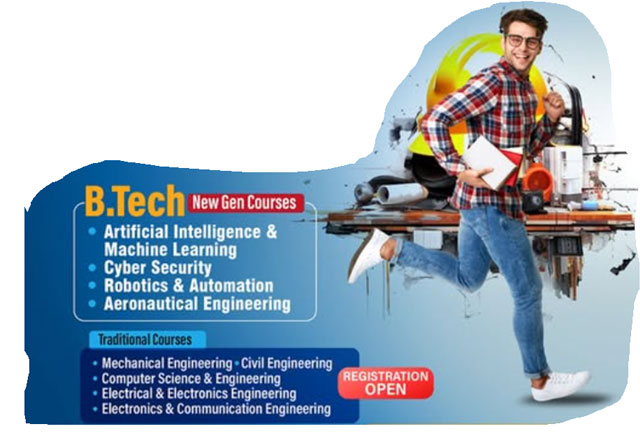
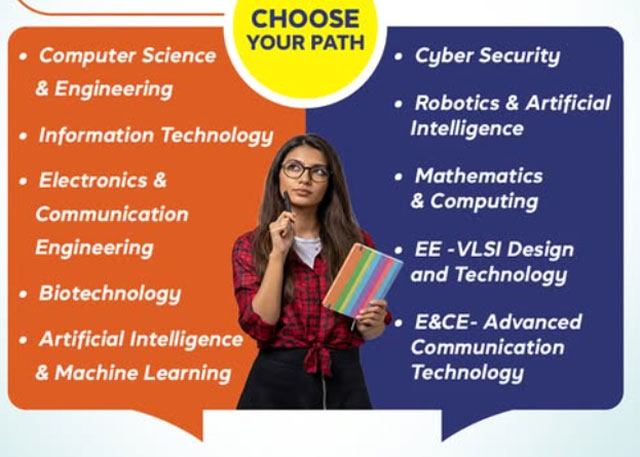
Perhaps no technology has influenced admission choices more than Artificial Intelligence. Yet, the biggest misconception of this admission season was that AI is replacing traditional engineering. In reality, AI is transforming it. Mechanical Engineering now intersects with robotics and smart manufacturing; Civil Engineering with digital twins and sustainable infrastructure; Electrical Engineering with renewable energy and intelligent grids; and Computer Science has expanded into an ecosystem that includes AI & Machine Learning, Data Science, Cybersecurity, Cloud Computing, IoT and Quantum Technologies. The future engineer will not belong to a single discipline but will work at the intersection of many.
Global workforce projections reinforce this direction. The World Economic Forum's Future of Jobs Report 2025 estimates that technology-driven roles—including AI specialists, big data analysts, Fintech engineers, cybersecurity professionals and software developers—will be among the fastest-growing occupations by 2030, while analytical thinking, AI literacy, creativity and lifelong learning rank among the most valued employability skills. Similarly, reports from McKinsey and NASSCOM suggest that India's digital economy will require millions of professionals equipped not only with technical expertise but also with interdisciplinary capabilities that combine engineering, data, business and innovation.
The 2026 admission season also underscored an important behavioural shift among students and parents. Questions that once centred on cut-off ranks and placement packages have given way to more meaningful conversations: Will this curriculum remain relevant five years from now? Does the university offer industry-integrated learning? Will I graduate with practical skills, research exposure and global competencies? These are precisely the questions that higher education institutions must be prepared to answer.
As universities prepare for the 2027 admission cycle, success will increasingly depend not on introducing another fashionable specialisation, but on creating learning ecosystems that integrate strong engineering fundamentals with experiential learning, multidisciplinary education, industry collaboration, research, entrepreneurship and emerging technologies. The distinction between "traditional" and "new-age" engineering is rapidly disappearing; what will matter is whether graduates can adapt, innovate and continue learning throughout their careers.
The lesson from the 2026 admission season is therefore both simple and significant. Engineering remains one of the most powerful pathways to nation-building and innovation—but only when education keeps pace with technological change. The institutions that will lead the next decade are those that prepare students not merely for their first job, but for careers that will span technologies yet to be invented. Likewise, the students who will thrive are not those who choose the most fashionable branch, but those who choose to become lifelong learners.
As India advances towards becoming a global knowledge economy, the question before every aspiring engineer is no longer "Which branch should I choose?" It is "Which institution will prepare me to solve the problems of a future that has not yet arrived?" The answer to that question will define not just admission trends in 2027, but the future of engineering education itself.