June 15, 2026
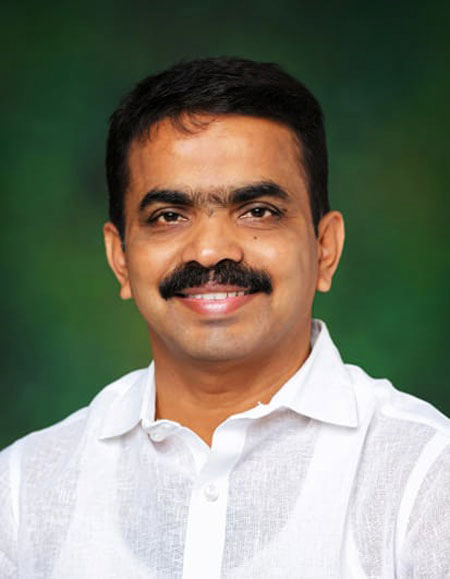
Long before he became one of Mangaluru’s most recognised public figures, Naveen R D’Souza was a young boy quietly observing his father serve the people.
While most children spent their evenings occupied with school and play, young Naveen often watched his father, then the corporator of Kulshekar Ward, interact with residents, listen patiently to their concerns and work towards solutions. It was through these simple yet powerful moments that he received his first lessons in leadership, responsibility and public service. These foundational lessons left an indelible mark on his character. Decades later, they would shape a journey spanning more than thirty years — a journey that would see him rise from a grassroots youth worker to a four-time corporator, civic leader and one of Mangaluru’s most experienced and celebrated public representatives.
For Naveen, public service was never merely a profession. It was a responsibility.
A Youth Leader with National Vision
In 1992, Naveen formally entered public life by joining the Youth Congress.
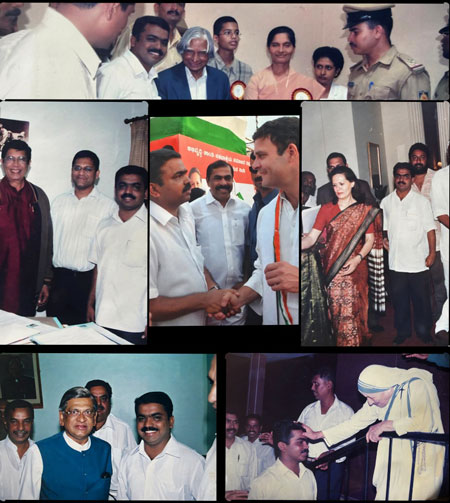
Like countless young workers beginning their journey, there was no instant recognition, no title and no spotlight. The early years were spent meeting people, understanding local concerns, and learning the realities of public life from the ground up. During this phase, he had the opportunity to work alongside and learn from respected leaders such as Janardhana Poojary, Oscar Fernandes, Ramanath Rai and Blasius D’Souza. These interactions strengthened his belief that meaningful leadership begins with connecting directly with people.
His dedication soon translated into responsibility. In 1996, he served as a member of the Telephone Advisory Committee of Dakshina Kannada district. Two years later, he became Organising Secretary of the Karnataka Pradesh Youth Congress, marking the beginning of a steadily expanding leadership journey. What started as youthful enthusiasm gradually evolved into a lifelong commitment to public service.
Earning and Retaining the People's Trust
The year 2000 marked a significant milestone when the Government of Karnataka nominated Naveen as a corporator in the Mangalore City Corporation.
However, his greatest test came two years later when he contested and won the Bendoor Ward election. The victory reflected the trust people had placed in him, but retaining that trust year after year would prove to be an even greater achievement. Naveen achieved the rare political milestone of winning four consecutive terms as corporator (2002, 2007, 2013, and 2019)—a remarkable reflection of unwavering public confidence.
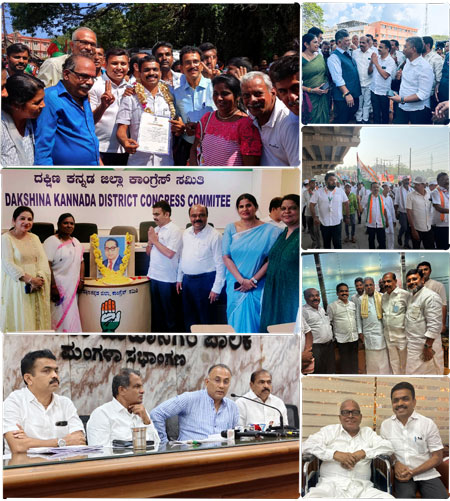
Over the years, he held numerous important responsibilities. He served as Chairman of the Social Justice and Health Committee, Chairman of the Tax, Finance and Appeal Committee, Secretary of the Dakshina Kannada District Congress Committee, spokesperson of the district unit and member of several key civic and planning bodies.
His leadership journey steadily expanded beyond Mangaluru. He served as a member of the Mangalore International Airport Advisory Board and later took up significant responsibilities as secretory for Karnataka Pradesh Congress Committee. He also served as Assistant to AICC Secretary Sri Vishwanath, overseeing organisational responsibilities across the Mysuru Division, which comprised 49 Assembly constituencies. His growing reputation eventually led to national-level assignments, including his role in Rahul Gandhi’s Youth Congress Task Force, where he handled organisational responsibilities across states such as Odisha, Punjab and Goa.
Beyond local civic development, Naveen was also involved in issues that affected thousands of livelihoods across the region. During a period when the beedi industry was facing immense pressure due to a taxation structure comparable to that imposed on cigarette manufacturers, he joined a delegation led through veteran leader Oscar Fernandes to present the industry's concerns before then Union Finance Minister P. Chidambaram. Following detailed discussions and official hearings with senior government officials, the sector received significant relief through recognition as a cottage industry, helping protect numerous jobs and small-scale livelihoods.
Naveen was similarly involved in efforts concerning the challenges faced by the Kudremukh region after mining operations were halted due to environmental concerns. As uncertainty gripped the organisation and its workforce, with many employees facing the prospect of voluntary retirement, he took up the matter alongside Oscar Fernandes and other leaders before the government. Their efforts contributed towards securing the necessary approvals and clearances, providing much-needed support to the affected workers and helping address a prolonged period of uncertainty in the region.
Through every role, one principle remained constant — service before self.
Building Bendoor, One Project at a Time
Ask Naveen what gives him the greatest satisfaction, and the answer is simple: seeing people benefit from development. For him, public service is meaningful only when it improves the daily lives of residents. Bendoor Ward underwent a massive infrastructure transformation under his watch. Roads were improved, water supply facilities strengthened and street lighting expanded extensively. Footpath development across the ward enhanced accessibility, while the modern under-construction Kankanady Market complex emerged as one of the most notable projects associated with his efforts.
While acknowledging that every locality continues to face challenges and that no ward can ever be completely free from issues, Naveen believes that consistent effort and regular engagement with residents are what ultimately drive progress. His administrative experience also earned him responsibilities beyond Karnataka. He was appointed by the All India Congress Committee as an election observer for the Kundara Assembly Constituency in Kerala and later for Vasai during the Maharashtra Assembly elections, reflecting the confidence placed in his organisational and leadership abilities.
Recent high-level political discussions have strongly tipped his name for a potential Rajya Sabha nomination, recognizing him as a formidable voice representing Karnataka’s Christian community.
The Road Ahead
Today, Naveen continues to serve as a part of the Mangaluru City Corporation while remaining actively involved in public life and organisational responsibilities within the Karnataka Pradesh Congress Committee. Reflecting on his journey, he acknowledges that public service is not always easy. There are setbacks, criticism and moments of disappointment. There are occasions when progress is slow and challenges seem overwhelming. Yet he believes perseverance is essential.
For young people aspiring to enter public service, his advice is straightforward: remain determined, stay connected to the people and never lose sight of the purpose behind the work.
Drawing from over three decades of experience, he emphasizes public service is not a profession with fixed working hours. It often demands complete commitment, requiring leaders to remain accessible, understand local realities and respond whenever people need them.
More than three decades after taking his first step into public life, Naveen continues to be guided by the same lesson he learned while watching his father serve the community many years ago — that leadership begins with listening, trust is earned through service and meaningful change is built one person, one family and one community at a time.
Blueprint for the Corporation
Every morning, thousands of people step onto Mangaluru’s roads without thinking about who built them. They expect clean streets, uninterrupted water supply, efficient drainage, timely garbage collection and responsive civic services. A city corporation rarely enters public conversation when everything functions well, but the moment a road develops potholes or drains overflow during the monsoon, citizens begin questioning the system. According to Naveen R D’Souza, good municipal governance is not about reacting to complaints; it is about creating a system where problems are prevented before they arise.
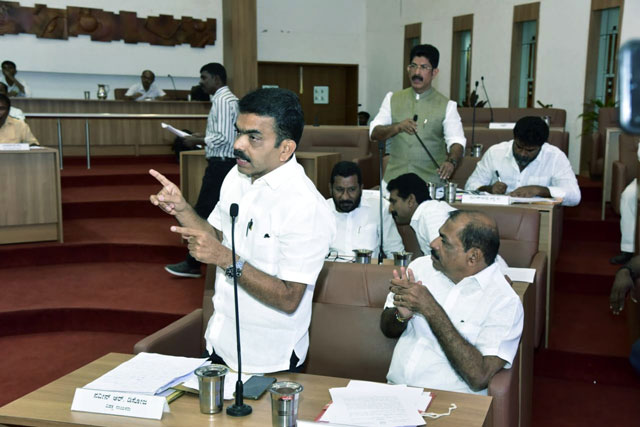
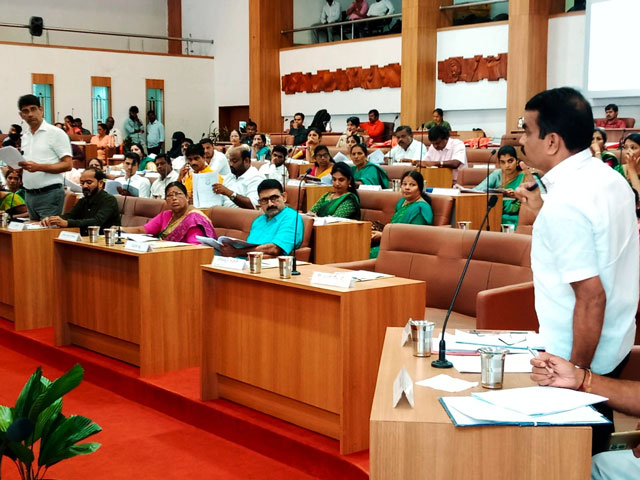
Having served as a four-time Corporator for Bendoor Ward, Former Leader of Opposition in the Mangaluru City Corporation, Chairman of the Social Justice and Health Committee, Chairman of the Tax, Finance and Appeal Committee, and Member of the Town Planning and Works Committee, Naveen D’Souza has spent years understanding how a city functions from within. Drawing from this experience, he believes the future of Mangaluru depends not merely on constructing new infrastructure but on creating an administration that is transparent, efficient and accountable to every citizen.
According to Naveen, the foundation of an efficient city corporation lies in 100% computerisation. He believes that every department within the corporation should be digitally integrated into a single system. Such integration would drastically reduce delays, eliminate unnecessary paperwork, and make civic services far more citizen-friendly. More importantly, Naveen believes that a fully computerised corporation leaves very little scope for corruption. Every application, approval, file movement and transaction can be tracked digitally, making the entire administration transparent and accountable.
Whenever civic processes depend entirely on manual intervention, unnecessary delays and lack of transparency become inevitable. However, with the adoption of a computerised system, Naveen believes that the ultimate beneficiary would be the citizen. Routine civic services that currently take weeks could be completed far more efficiently, with residents able to track the progress of their applications online instead of making repeated visits to corporation offices. Greater transparency, he says, would not only improve administrative efficiency but also strengthen public confidence in the corporation by making every stage of the process visible and accountable.
Naveen advocates the creation of a dedicated online portal where citizens can easily access complete information about every civic project being undertaken with public funds. By simply entering a project number, citizens should be able to view essential details such as the nature of the work, its location, present stage of execution and completion status. Naveen asserts that such transparency would not only keep the public well-informed but also encourage greater civic participation, making citizens active stakeholders in the city’s development rather than passive observers.
As Mangaluru continues to expand, infrastructure planning becomes even more critical. Naveen points out that many areas require substantial improvements in drainage, roads and water supply to meet the demands of a growing urban population. Infrastructure projects should therefore be designed not only for present requirements but also for the needs of the next two decades. He also emphasises that monsoon preparedness should begin well before the rainy season. He advocates the formation of a well-coordinated pre-monsoon committee comprising representatives from the Forest Department, National Disaster Management authorities, the Corporation, elected representatives, NGOs and senior citizens to meet in advance, identify potential challenges and implement preventive measures before they become emergencies. Roads should be durable enough to withstand Mangaluru’s heavy rainfall, drainage systems should be modernised, and water infrastructure must be strengthened to ensure uninterrupted supply during periods of scarcity.
Naveen further recommends improving civic infrastructure requires practical, technology-driven reforms across multiple departments. He advocates a single-window system that enables citizens to obtain house licences, door numbers and new water supply connections through one streamlined process. The engineering section, he says, should operate on Worksoft software integrated with GPS technology to eliminate overlapping project estimates. Public health must also receive greater attention through regular fogging and mosquito-control measures, while scientific street sweeping should systematically cover roads, drains and storm-water channels. He further recommends modernising the garbage collection system by deploying additional waste collection vehicles, improving traffic signboards and displaying the names of all major and inner roads. To make civic services more accessible, Naveen proposes installing interactive digital kiosks at the Corporation’s main office and zonal offices, allowing citizens to instantly check property tax dues, water bills, complaint status and licence approvals by simply entering their file or door number.
Financial discipline, according to Naveen, is equally important. Drawing from his experience of presenting the Mangaluru City Corporation Budget for the financial year 2005–06 as the Chairman of the Tax, Finance and Appeals Committee, Naveen believes sound financial planning must always prioritise public necessity over administrative convenience. In reality, municipal development depends upon systematic planning, prioritisation and phased execution. Every corporator submits proposals based on the most pressing needs of their respective wards after which proposals are evaluated and implemented based on necessity and the availability of funds. This structured approach ensures that development is carried out responsibly rather than arbitrarily.
Naveen believes that good governance cannot be achieved by the corporation alone. One of the biggest gaps today, he says, is that citizens rarely interact with the corporation or question civic works in their respective wards. Residents should actively engage with their elected representatives and municipal officials to understand how public funds are being utilised and whether promised projects are progressing as planned. According to him, greater public participation would strengthen accountability and transform citizens from passive observers into active partners in Mangaluru’s development. He also floats the proposal for a dedicated grievance cell that takes definitive action within 10 to 15 days to assist local citizens.
Beyond infrastructure, Naveen envisions a cleaner, greener and economically stronger Mangaluru. He believes that maintaining clean streets, scientific garbage collection, efficient sewage systems, well-maintained gardens and quality public amenities should remain constant priorities. Drawing inspiration from cities recognised for their cleanliness, he feels Mangaluru too possesses the potential to become one of India’s finest urban centres if sanitation receives sustained attention rather than seasonal focus.
Economic growth, in his opinion, must accompany civic development. Mangaluru already possesses several natural advantages, including educational institutions, industrial potential and coastal connectivity. The city should therefore focus on promoting tourism, supporting small and medium-scale industries, encouraging entrepreneurship among youth and creating greater employment opportunities locally. If young people find meaningful careers within the region, the migration of talent can gradually be reduced while strengthening the city’s long-term economy.
For Naveen, the future of Mangaluru is not defined by taller buildings or wider roads alone, but by a corporation that earns the trust of its people every single day. He envisions a city where civic services are transparent, technology makes governance effortless, and citizens actively participate in shaping their neighbourhoods. “A great city is built when the administration and its people work together,” he believes. If that shared responsibility becomes a reality, Naveen is confident that Mangaluru will not only emerge as a cleaner and smarter city, but also as one that future generations will proudly call home.