March 29, 2026
History repeats itself, they say. This repetition is rather shocking.
During 2024, on 08 July, on 02 August and 09 November, the High Court of Kerala pronounced three judgments, all by Justice Badharudeen, all of which were in favour of teachers by cancelling the cases registered against them for administering corporal punishment to children. In the November judgment, the court even went to the extent of reprimanding the students and stating that the teacher-student relationships had broken down and that it had reached a stage where the teachers had to be afraid of students. There could not have been anything more exaggerated than what was stated in the judgment. The judgement reflected an attitude of colonial and feudal mindset and lack of knowledge of the Supreme Court judgement of 01 December 2000 which concluded that corporal punishment violated the constitutional right to life, guaranteed by Article 21 of the constitution.
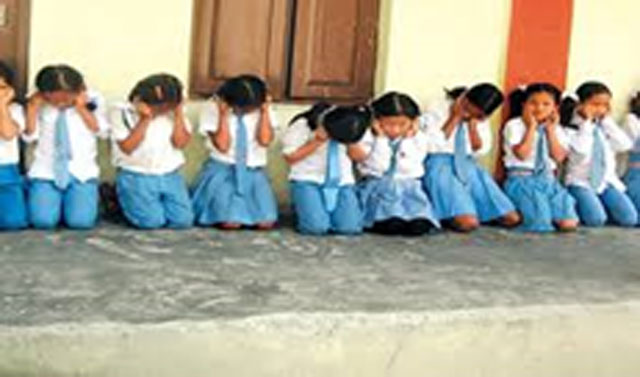
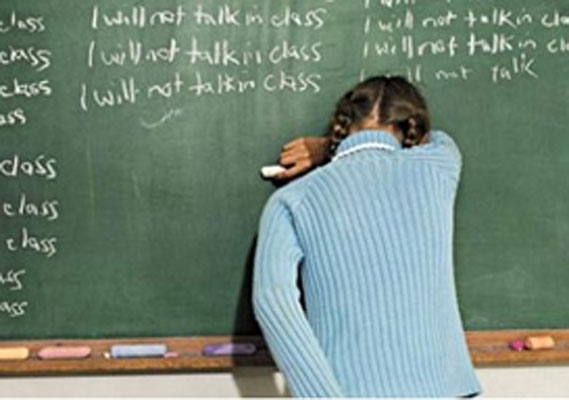
During the same time, there was a judgement passed by the Karnataka High Court on 07 July 2024 where the judge declined to interfere with a criminal case registered against two teachers and stated that the myopic or parochial mindset of teachers must undergo a paradigm shift. Justice Nagaprasanna also cited in the verdict the Juvenile Justice (care and protection of children) Act 2015.
Despite Supreme Court rulings being available, history repeated itself on 25 October 2025 in the High Court of Kerala, where Justice C. Pratheep Kumar passed a judgement stating that using a cane against children to correct the erring ones is not an offence. The Additional Sessions Court of Palakkad quashed a case against a teacher of a UP school in 2019 for beating the child with a cane.
One is consoled that the judge of the Kerala High Court did not pass judgements in favour of using canes by teachers, for punishing children at school, by stating that the children should be hung with their palms tied together on a tripod, in the middle of the open space available in front of the school, after all the other children assembled around the tripod to watch the children being beaten; so that it will become a model to influence the onlookers not to commit ‘unbelievably heinous crimes’ at the school. Chance was on the side of the children that the Honourable Judge did not give a judgement sanctioning the number of times a child should be beaten with a cane in front of all other children.
On the same day, the Government of Karnataka, Department of Education, Officer on Special Duty to the Chief Minister Ms K. Vaishnavi, wrote to the Principal Secretary of the Department of School Education and Literacy to take necessary action through investigations against the principal and teachers of a school, who meted out corporal punishment to a student. The Class V student was allegedly beaten up by the principal and teachers and an FIR was registered against both. The Karnataka State Commission for Protection of Child Rights registered a Suo moto case against the teachers.
The recent judgement of the Kerala High Court refers to the caning of children at school for the offences they might have committed. It may not be out of place to state here that a cane in the hands of a man or woman to punish another person is to be considered a weapon. Its possession and display to any human being is a chargeable offence, much more when it is held against a child. This weapon is used in some Arabian countries which follow styles of Talibanism. This weapon cannot be made available in the premises of a school at all, much less at a classroom. The fact that it is done in front of other students becomes a public flogging which is a sign of Talibanism again. Therefore, it is extremely disappointing that a teacher with a weapon in hand is an acceptable person in a classroom according to the Kerala High Court. Kindness is always more important than punishment, especially when it is used for correcting children. It is extremely disappointing that teachers do not understand this and even a judge does not, is more pitiable.
A little theoretic support is necessary and one cannot avoid quoting Sigmund Freud and Carl Jung. Freud speaks about human responses and refers to life responses and death responses. He considers the former as the essential human element and the latter as a primal reaction to threatening situations. He refers to Eros and Thanatos, he states that the former is a fundamental drive being a force for self-preservation and pleasure whereas the latter is an aggressive drive to self-destruction. Therefore, a teacher in a classroom ought to respond with Eros and avoid responses from Thanatos. A desire to punish a child, with no weapon in hand to defend itself, is a product of the Thanatos of a teacher who functions on the frontiers of violence and deserves punishment more than an erring student. All said and done, according to Freud, the internal instructions, along with ego and superego, shape all human behaviour, the superego is the regulator. It is the ego of the teacher that initiates and the belief that he or she could get away with anything done has many reasons. Primarily it is because the teacher is aware that the child cannot defend itself or return an attack by taking the cane from the hands of the teacher. That is why college teachers dare not use a cane against any, including even the most grievously erring student. In addition, the teacher is aware that the parents are helpless like children because their children may not be taught or even given the marks needed by the teacher if ever they complain. More importantly, the punishing teacher is totally ignorant of peaceful interactive methods that can be adopted to influence a child to change from an unacceptable behaviour to a better one. Much more importantly, the teacher is still in the thought lines of what was done to him or her while he or she was a student and where the teachers would have offered such punishments. Far more seriously, the teacher knows well that there will be nobody to complain or punish him or her when he or she indulges in cruel attacks on the body system of a child. Therefore, what is necessary is to institute learning and development for teachers; so that there will be a paradigm shift, as Justice Nagaprasanna of Karnataka High Court stated, in the attitude of the teacher in influencing children to change their behaviour.
Carl Gustav Jung, the Swiss Psychiatrist and Psychologist, and indeed a friend of Sigmund Freud, refers to the conscious and unconscious minds and both leading to a consciousness that prevails over individuals which results in specific behaviour patterns. Such behaviour patterns, he says, will result in an influence on all involved parties, even including the spectators. He continues to say that the consciousness that is developed in the involved parties will create a collective consciousness which decides the quality of that society. So, when a teacher uses a cane against a student in a classroom, she or he is modeling its use as a weapon, though not sophisticated, by the students at given moments by creating a collective consciousness of approval by the students. Therefore, this caning in front of other children is a public flogging of a helpless and hapless young individual in front of other young ones, is a criminal offence and such criminals should be dealt with only by Judges like Justice Nagaprasanna.
It is essential to support the arguments provided above, including the theoretic ones to record a personal experience. When my son was at primary school, he was given a knock on his head by a teacher by making a fist of the latter’s thumb in between his index finger and middle finger. The young boy was crying when he returned from school and I took the complaint to the headmaster who said that he would look into the matter. Of course, he went on to justify the teacher by stating that the child would have done something wrong. I said that I had no objection for any punishment but it should not be on the body system of my child. I left the matter with the hope that the Headmaster of the Primary School would instruct the teacher not to do it. The next day another child was offered the same treatment. This time I went to the headmaster. Instead of pleading with him, I gave a threat. I told the Headmaster that if one more child was knocked on the head like what was done to the two children, I would go to the class and in front of the children would give the teacher a similar knock on his head. Even now I do not know whether I would have done it at all. For me offering that threat was a strategy to influence both the teacher and the headmaster, the latter more because he had the prestige of the school to be kept without a possible violent action by a parent. However, it was not necessary because the teacher did not offer the same punishment again to any student in the class. It was paradoxical and strange that this boy, a few decades later, was the Chief Guest of a function at the same school.
However, the consequences were disastrous. This child who got 85 marks out of 100 in that teacher’s subject in the previous examination got only 18 in the next examination. The child was in tears. I took the matter to the same Headmaster who examined the paper and informed me that the boy deserved only that much. With definite statements from the child that he ought to get more marks, I took the matter to the High School Headmaster to which the Primary School was attached. He looked into the matter, summoned all papers of the entire class, assigned it to another teacher of the same subject and got a report where the involved paper was awarded 240% marks more. Though the child was not satisfied, I had to understand the reality that even a revaluation would have its own limitations.
Evidently, someone who read till now is bound to ask what should be done with the erring children. The answer is very direct and simple. First of all, they should be directed and assisted to perform in the new way suggested. The child can fail to do as per the suggestion, therefore, may have to be punished. Punishment can only be used as a strategy for rehabilitation, and therefore, is a strong sign of disapproval of the erring action. This disapproval must not be the result of anger which is a secondary feeling; instead, it should be a state of mind of the one who punishes with the single objective of influencing the child not to repeat the inappropriate behaviour. Punishments can also be deprivations, such as the child being denied access to a place where it used to commit the mistake or error. It could also be a demand for compensation, in the sense of making the child do something because the teacher wants to make the student realise the mistake done, making sure that it is not cruelty meted out or revenge taken.
We are in the land of the Mahatma who eschewed violence of all types. This country got its independence through non-violent strategies adopted by his leadership and continues to be less violent in comparison with many other countries including some of which are very near. Undoubtedly, corporal punishments for children, especially in front of other children are to be condemned in unequivocal terms and those who indulge in it should be punished as models for others.