March 24, 2026
Children are taught by their parents and learn by sight and observation. Be it knowledge, life skills, or life itself. This methodology has been going on for centuries, but now we live in an era where children for the first time ever have the upper hand in a skill and knowledge that most parents struggle with, ‘the technology’. The majority of parents were born when the thought of mobile phones, internet and social media were alien and now suddenly in the span of 20 years, they are confused and forced to accept the fact that they are in a changed modern era.
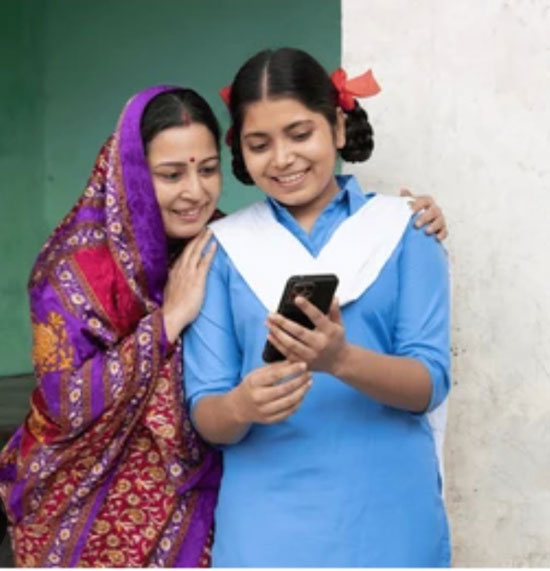
As parents struggle to adapt to the ongoing technological advancements, the children often demonstrate rapid proficiency in these developments, creating a significant disparity. This gap frequently leads parents to question their ability to keep pace with their children's digital expertise. This situation leads to significant confusion and anxiety among parents, who may find it challenging to guide children that possess advanced knowledge of the world yet exhibit heightened emotional needs. Parents navigating the challenges of raising children in the 21st century, while recalling their own childhood experiences, often encounter significant internal conflict and question why contemporary childhood differs from their own. Thus, the parents overburdened by the situation start to analyse and find answers to the main question on understanding the ‘Childhood’ of the children, often resume the role of a child psychologist and scientist to analyse and understand every action and behaviour of ‘the Child’ as mentioned by Ennis Richmond in her book ‘ The Mind of a Child’ in 1901. Even though this was written a century back by the author it makes more sense in the modern world about parenting. She wrote parents often focus on understanding every action and finding out the reason for such action that they end up in treating the child as a ‘specimen’ to be studied rather than as a ‘person’. In her book the author mentions that the adults focus on ‘the child’ losing most important sight of ‘the childhood’. This brings us to the task of finding the answer to the important question that is ‘What do we mean by childhood?’
According to the Oxford English Dictionary the word ‘childhood’ means the state of being a child. Therefore, childhood includes the freedom of expression, carefree nature, curiosity, joyfulness, playful activities, imaginary playtime and many more activities the child does without being judged. It’s the period with spans from birth to puberty. Childhood, in its ideal terms, should be happy for every child. Let us apply this understanding of childhood to the modern world and reflect upon ‘How does life look like for the children of 21st century? How do parents, teachers and communities work together to provide guidance, a safe and healthy environment to the children to enjoy their childhood, in this digital age?
Modern childhood is marked by the digital footprint of the child even before the birth. The phrase ‘21 st century children’ evoke images of radical change with a paradigm shift in childhood from the previous way of being. These children enjoy better facilities in terms of health, education and standard of living. Technological advancements have favoured the children’s development in many areas such as getting information at the fingertips, connection with their well-wishers and friends, exploration of any area of their interest online, cross border connections, umpteen learning opportunities and many more. There are also a number of dangers associated with the exposure to digital media such as online bullying, gap between knowledge and emotional development, online addiction etc. Given these changes, it's essential to examine childhood within a holistic framework that considers both opportunities and challenges.
Children today face stress for several reasons. Their curiosity now has endless sources for information, which often draws them deeper than they intended. Many business organisations are eager to profit from children's curiosity, often without ethical consideration, causing increased screen addiction among youngsters. They struggle with time management as they addictively spend time on digital media and then parents try to engage children with structured activities thinking of all round development of the children. Whether children get time to really relax and or explore on their own is a big question mark. This might cause a deep conflict within the child regarding external pressure and unmet internal wants.
Beyond challenges within the family, schools provide a highly supervised environment where children are frequently reminded by teachers and administrators not to touch each other or run, in order to prevent injuries. Today's education systems aim to equip children with the skills needed to tackle unpredictable future challenges brought about by technological advancements. This approach places additional pressure on students to acquire knowledge and skills beyond what is included in their curriculum. Moreover, children are required to face the ‘Parent Teacher Meeting’ to be evaluated (or to be judged?) of their ‘academic progress’ every quarter. This system steals freedom of children to enjoy the childhood, where the children are systematically controlled and moulded as per the wishes of the adults, rather than providing them the safe environment and required guidance for realizing their own potential and dreams.
Our communities have provided better living standards in terms of health care and recreational facilities for the children. Expectation of communities also being elevated for the child disciple, better performance, sports performance, structural play rather than free play etc. The scope of ‘explore and learn’ by the children is systematically reduced as the communities often demand and encourage only what they define as success, discouraging any effort of the children to explore on their own to learn to succeed. Therefore, the communities have built tuition centres, various sports facilities for structuring the child, and art classes. In this machinery built by the society children rather not think of childhood but become simply the raw material for getting moulded to become the good, complacent members of the society.
Therefore, it is important for all of us the ‘adults’ to pause and reflect upon the fact that the ‘future’ was and is unseen from the time of the beginning of humanity. Children should be given a fair chance to enjoy that precious childhood. Children must be treated as persons more than mere problem solvers of the future. This world is of theirs as much as it is ours. How about letting them explore, experience and learn rather than forcing them to learn through the dark lenses that we wear?