February 8, 2026
Some teachers enter our lives through classrooms. A rare few enter much earlier quietly, almost invisiblyand remain long after classrooms fade into memory. They shape not only what we become, but how we think, speak, and understand the world.
Dr. Bhaskar Hegde belongs unmistakably to that rare kind. Though he was never an editor by title, for three decades he quietly edited lives, crafting journalists who now populate newsrooms across Karnataka. He did not merely teach journalismhe taught courage, clarity, and conscience.
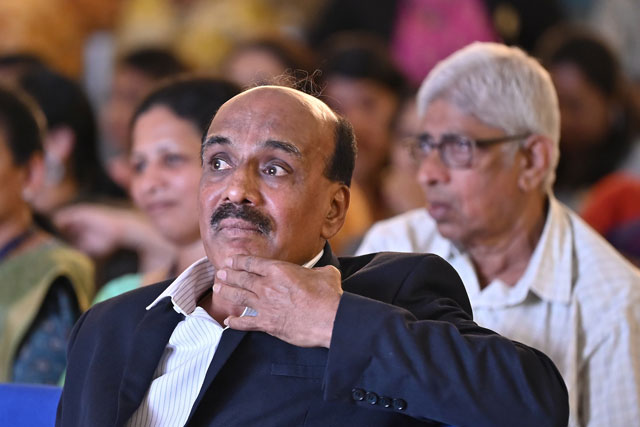
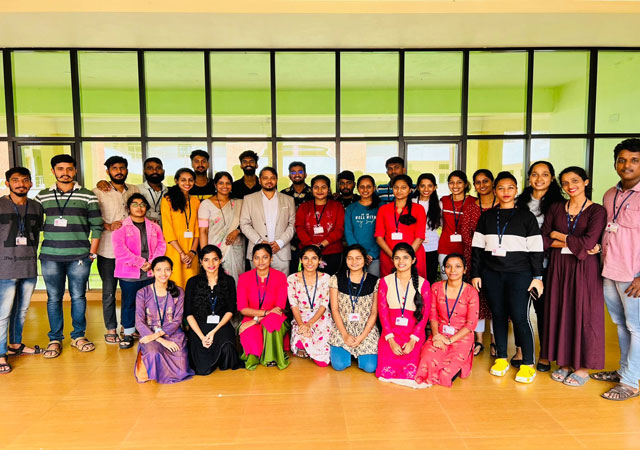
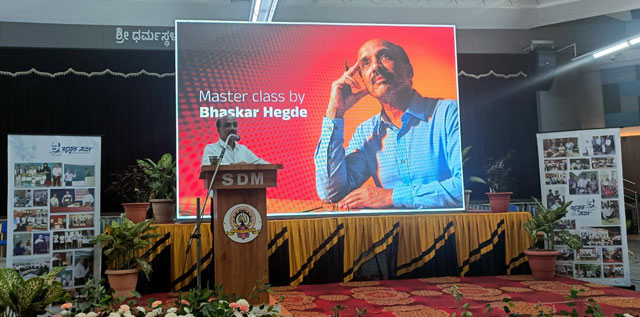
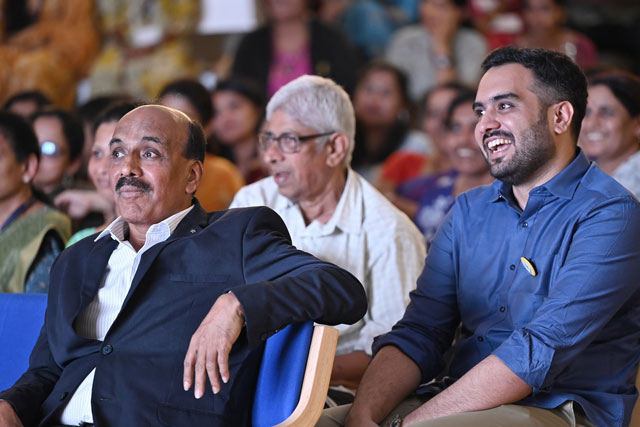
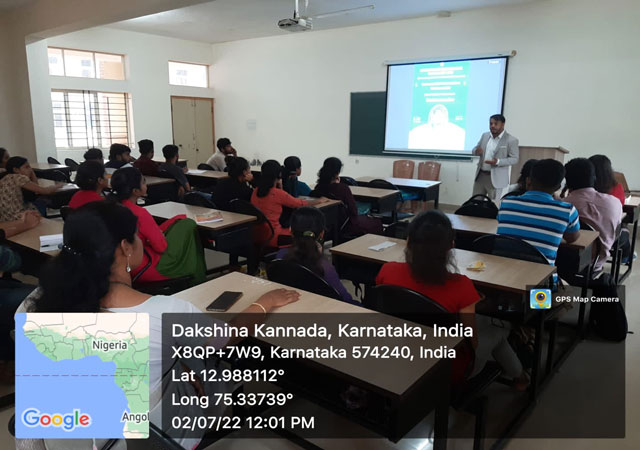
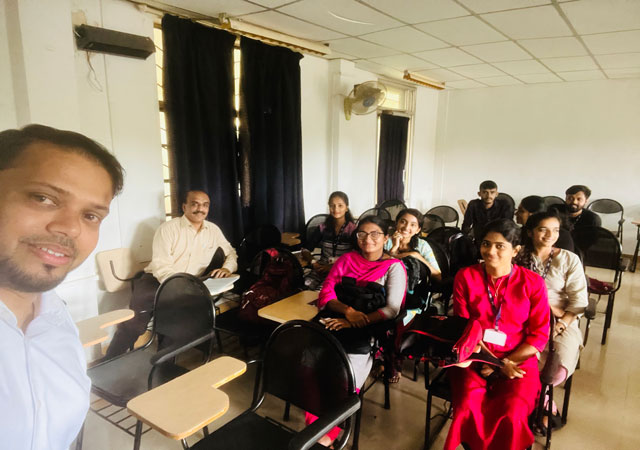
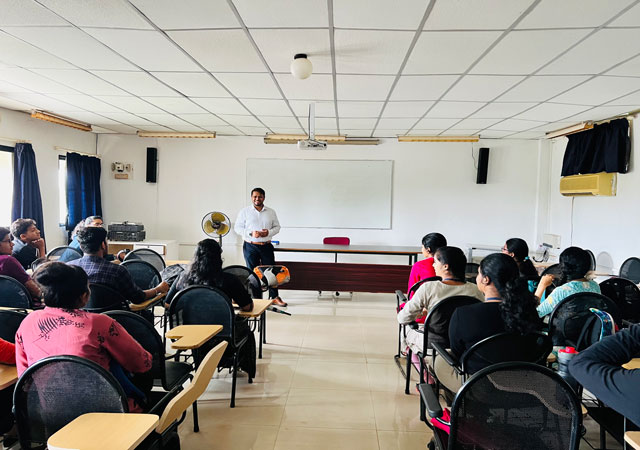
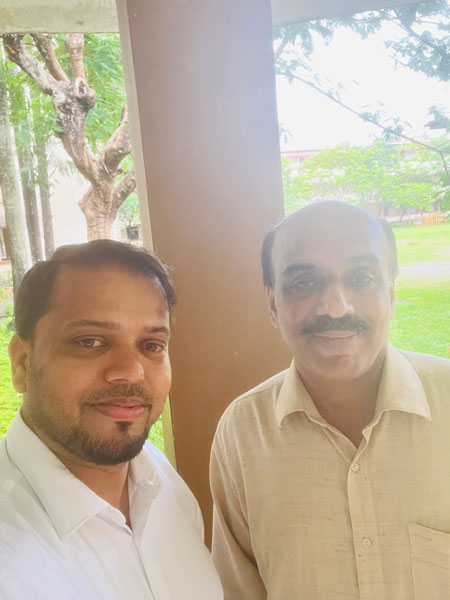
I first realized the depth of his influence around the time of his retirement. Even before the farewell, news of the event had spread like wildfire. A simple search of his name yielded a flood of articles celebrating his legacynot institutional publicity, but the collective voice of students whose careers he had quietly shaped. When students become journalists in large numbers, gratitude finds its way into the public domain even before the event begins.
I watched from afar, abroad, following the celebrations through messages, photographs, and a live stream on a local YouTube channel. Distance did nothing to diminish the feeling of belonging; if anything, it sharpened memory.
Journalism students from batches dating back to 1993 returned to SDM College, Ujirenot as professionals, but as students once again. Reporters, editors, TV and digital journalists, even professors of journalism, came together to honor a teacher who had spent decades turning classrooms into newsrooms. The farewell was less a ceremony and more a testament: a quiet editor shaping generations.
A WhatsApp group created by former students became the invisible backbone of the celebration. Contributions flowed in from across cities and countriesnot only to organize the event, but to establish an endowment in Dr. Hegde’s name, aimed at supporting deserving students in the years ahead. Even in retirement, the future remained his concern.
Books were released. A documentary chronicling his journey was unveiled. A song was composed. Paintings were created. Each tribute carried memory rather than mere ceremony. Such honor is reserved for a teacher who remained in his students’ heartsas mentor, guide, and often, a quiet friend.
For me, Dr. Bhaskar Hegde entered my life long before I knew him. As a schoolboy in Ujire, I walked daily past Siddavana near the lecturers’ quarters, greeting teachers with folded hands and a shy namaste. Teachers then felt distant, almost mythic. I never imagined that one day I would sit in a journalism classroom under Dr. Hegde—or that he would shape my life so decisively.
I was an average student, uncertain of ambition, but drawn instinctively to words. My parents encouraged education with steady faith, ensuring all their children pursued learning seriously. It was within this nurturing ecosystem that I entered the journalism program—and into Dr. Bhaskar Hegde’s classroom.
Fear did not survive there. Public speaking frightened me, yet every student had to speak—every day. The topic, he would say gently, could be “anything under the sun.” That single phrase dissolved fear and hierarchy. We spoke. We stumbled. We learned.
His classroom also left behind phrases that still echo in my mind.
“The pen is mightier than the sword,” he reminded us—never as a slogan, always as responsibility.
“Don’t become a jack of all, master of none,” he would caution, urging depth over noise.
“Journalism must have something of everything and everything of something,” he insisted, shaping balance as instinct.
Headlines were lessons too. He often recalled a Times of India headline from the Mumbai earthquake:
“Sons of toil under tons of soil.”
In that one line, we learned economy of language, empathy, and the ethics of reporting.
Then came the definition many of us still carry:
“Communication is the tool or medium that creates a common ground of understanding.”
And, of course, the newsroom logic he drilled into us with a smile:
“If a dog bites a man, it is not news. If a man bites a dog—that is news.”
Journalism, in his class, was never abstract.
One ritual remains etched in memory. At the beginning of class, if a student’s article was published, he would announce quietly:
“I am happy to inform you that Yahya Abbas’s article has been published in Praja Vani.”
Those words created journalists. Opportunities came without favour. Exposure came without fear. Even after graduation, learning continued. Whenever I visited SDM College, he always provided a platform for me to interact with the journalism students, keeping the learning spirit alive across generations.
Dr. Bhaskar Hegde served the institution for 33 years, beginning his career as a journalist in Hubballi before joining SDM College in 1993. He later headed the department and served on boards of studies and examination boards of several universities and autonomous colleges across Karnataka. Yet titles alone cannot explain Bhaskara Parva. That explanation lives in people.
Though I eventually moved into the corporate world, my academic journey never paused. Conversations with Dr. Hegde continued to nudge me back toward scholarship. When I cleared KSET and UGC-NET, his encouragement carried the same quiet pride I remembered from the classroom. Later, when I topped the PhD entrance examination and enrolled as a research scholar at Kuvempu University, his joy felt deeply personal—as though a student had just delivered a good opening paragraph.
Watching Bhaskara Parva unfold from afar, I understood this clearly: to be honoured in such a way, one must have taught not just journalism, but humanity.
Some teachers teach subjects.
Others teach courage, clarity, and conscience.
Dr. Bhaskar Hegde taught us how to speak to the world.