January 28, 2026
In the quiet corners of Kasargod, there is a philosophy that transcends the simple act of cooking: "Kitchen Zindagi Deti Hai"—the kitchen gives life. This is the guiding light for Avani Sharma, a food stylist and artist whose journey to the prestigious stage of MasterChef India Season 10 has become a masterclass in how the four walls of a kitchen can serve as a bridge between centuries. To Avani, the steam rising from a pot is not just about satisfying hunger; it is the breath of a culture being passed from one generation to the next, ensuring that the wisdom of the past does not evaporate in the heat of the modern world.
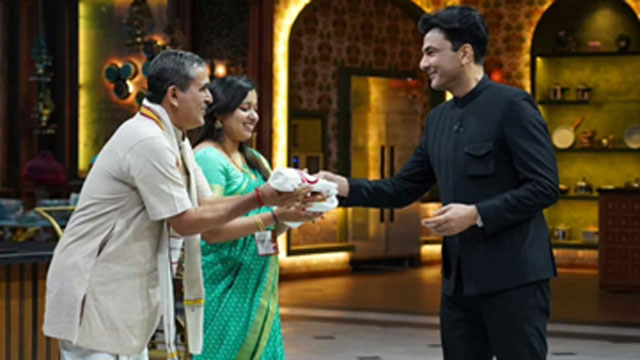
The heartbeat of Avani’s story lies in her roots within the Karada Brahmin community, a tiny group of barely 15,000 people with a history as rich as the spices they use. Six centuries ago, her ancestors migrated from the Karad region of Maharashtra to the verdant coastlines of the South. Over time, their culinary identity transformed into a rare and beautiful hybrid, blending the structured heritage of Maharashtra with the soulful, coconut-infused flavors of the coast. For years, this unique fusion remained a hidden treasure, tucked away in family recipe books. Recognizing that this heritage was on the brink of fading, Avani launched the "Karada Spice Box," a digital sanctuary dedicated to giving these ancient flavors a modern voice.
Through her artful eyes, traditional dishes like Tambuli, a medicinal yogurt-based delicacy, and Paathrode a fragrant steamed cake, are no longer just "old-fashioned" meals; they are vibrant expressions of identity. Avani approaches the kitchen as a laboratory of creativity, using her background as an Art Director to prove that local, Ayurvedic ingredients can stand proudly on a global stage. Her work serves as a vital reminder to a generation often captivated by Western trends that the most profound innovation often lies in the spice boxes of our own grandmothers.
What has truly captured the nation’s heart, however, is the presence of Avani’s father, Venu Sharma, by her side. A management consultant by profession, Venu has stepped into the spotlight not as a traditional patriarch, but as a pillar of support and a student of his daughter’s craft. Their partnership on MasterChef is a poignant rebuttal to the idea of a generation gap. When Venu speaks of gaining a "new identity" through his daughter’s talent, he highlights a beautiful evolution of family dynamics, where tradition is not forced upon the young, but shared through mutual respect and a shared love for their soil.
Beyond the technicalities of flavor profiles and plating, Avani has emerged as a symbol of quiet confidence. As a representative of the South on a national platform, her fluent and articulate Hindi has shattered linguistic stereotypes, proving that passion is the only language one truly needs to master. Amidst the high-pressure environment of a televised competition, she and her father have remained defined by their "Smita-vadana"—their constant, gentle smiles. They have shown the world that success is not merely about winning a trophy; it is about the grace with which one carries their culture and the joy found in the process of creation.
As Avani Sharma continues to advance, she carries more than just ingredients; she carries the pride of a 600-year-old journey. Her story is a testament to the fact that when we respect our traditions, the world begins to respect us. She is a reminder that the hands that stir the pot are capable of stirring the soul of a nation. In her kitchen, history is not a relic of the past, but a living, breathing, and delicious part of the present, proving once and for all that those who feed the stomach can also nourish the spirit of a civilization.