January 21, 2026
In May 2024, the then Chief Justice of India, D.Y. Chandrachud was addressing a symposium on ‘Juvenile Justice’ where he said, referring to a beating that was given to him by his teacher, that the mark of the teacher’s beating was in his mind even on the day of his speaking. His statement actually shocked the participants. He added that he got the beating from a teacher for forgetting to take a needle for the craft class when he was in the fifth standard. He also said that the shock of beating could not be wiped out at all from his mind even when he was speaking to the listeners. He also added that he requested the teacher not to beat him on his palm so that nobody would notice it and pleaded with the teacher to administer the beatings on his buttocks. However, the option was not acceptable to the teacher and it took him several days to hide the marks on the palm from the people at home. The mark on his mind remained permanently, even when he was speaking then. He said that that incident used to come to his mind even when he was at work.
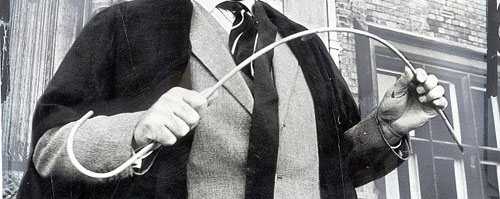
I wish the judge of the Kerala High Court, who approved of the caning children to correct them, would read newspaper reports of the statement of the former Chief Justice of the Supreme Court. If so, the honourable judge would have delivered a different judgement. The October twenty-five judgement by the judge of the Kerala High Court makes it the fourth such judgement in recent times from the same High Court. It is a pity that the honourable judges live in the old world values of corporal punishment as an inevitable deterrent to a possible repetition of the offence, despite the fact that psychologists, sociologists and thinkers have expressed their disapproval for punishing anyone corporally.
A couple of years earlier, I was at a school in the Nilgiris to conduct a learning and development intervention for teachers on peaceful and creative classroom management. I was at the principal’s room when a clerical staff brought a typed notice, meant for display on the notice board, to be signed by the principal. Before signing the notice, he read the content loud enough for me also to hear. Before he signed it, I intervened. I requested him whether he could direct the clerk to type a different notice after I had a discussion with him. The notice read, ‘Venkatramani of Standard VIII A is suspended from class for pushing another student down onto the floor in the class and kicking the fallen victim.’ I requested the principal to consider whether that would be a fair notice. My point of discussion was on the need for the notice itself because by suspending the student, punishment was meted out to him. Why should it be published at all, if the need is to correct the student? The principal responded by saying that other students should know that such actions would be punished because it would be a model for them. While he brought up the old theory of model punishment, I asked him if he needed that; the information could be made available through a notice, which may not need the name of the student who may be put to shame who, instead of avoiding possible repetitions, may do something similar in shame and associated anger. At the end of our discussion, the principal changed the notice with the wording ‘a student is suspended from class for misbehaving with another student, where the latter suffered.’ The need of the hour is to influence people, who are willing to understand the necessity for being kind even while punishing a person, even when that person deserves punishment, especially in such incidents related to children.
At the end of August 2023, a more grave criminal offense was committed by the principal of a school, Thrupta Thyagi in UP, by asking classmates to beat a seven year old student for not completing his homework. When the matter came up as a serious offense, she justified the action, stating that she was a physically handicapped person and therefore could not get up, and asked another student to punish his classmate. It is a YouTuber who brought the matter to the notice of the public. The parents learned about it when they discussed it with the child, who was not able to sleep at night. They admitted the child in another school, which was far away from one where he was punished. However, the YouTuber was charged with offenses for making the matter public, about the child, whose picture was also exposed. The Department of Education did not take any action against the teacher. Initially, the teacher reportedly said that children had to be treated thus to maintain discipline.
Far away in the state of Kerala, the General Education Minister wrote to the Chief Minister of UP informing that the Kerala ministry was willing to take the responsibility of bearing the educational expenses of the child. He also requested, in his letter, to punish the teacher, so that nobody else would do the same. This is certainly appreciable, especially in light of the fact of the four judgements of the Kerala High Court, which approved of the caning of children. Here also, the General Education Minister of Kerala disapproved of the judgement. What happens in courts need not be administration of justice in its purest form. A judge pronounces a judgement as per the arguments put forward by the lawyers of the contending litigants involved. In corporal punishment of children, when the cases go to a court, the complainants may not be in a position to hire the services of brilliant lawyers who can argue the case well, if at all, a lawyer is hired; whereas the teachers and the schools will hire the best of the lawyers available because they can afford them. Naturally, the arguments presented to the honourable judge by the dominant party will have a greater weight and the judgments are based on the laws and other judgments referred to in the arguments. Hence, the four cases in Kerala adjudicated in favour of the schools and teachers. In the meanwhile, there were two judgments in the Karnataka High Court that went in favour of those who were corporally punished.
What is sadder still is the fact that in Kerala, the Child Rights Commission did not do anything in the matter, despite the fact that the matter was brought to its notice and despite the fact that their own General Education Minister spoke against the judgement. It was the responsibility of the Child Rights Commission to go to the High Court with a revision petition, which they did not do. This also is strange in comparison with the Child Rights Commission’s initiative in Karnataka where serious note was taken and support offered to the children in the cases filed in the Karnataka High Court.
To go back to the Muzaphar Nagar case of Trupta Thyagi and her getting a child beaten by another child because she was not able to get up from her seat , according to her, she had a change of mind in a couple of days. This teacher’s photographs were published in many newspapers across the country, where she was shown holding both her palms together and pleading guilty, thereby correcting her former version that she was not ashamed of the incident. She stated that she accepted the mistake that she had committed and asked everybody to forgive her.
The concept of corporal punishment originated from the days when such punishments were acceptable to the kings and queens and the colonialists. It is a feudal belief system. Psychologists all over the world contribute to a view that punishing children corporally will leave in them indelible negative markings like what the former Chief Justice of India referred to in his speech. They say there are two possibilities. The primary one is that the children may lose their interest in any subject that they have to pursue for their studies. The secondary one is that they would accept the violent model presented to them as a code of behaviour and start practicing physical violence on others.
Undoubtedly, punishments may be necessary when unforgivable actions are done by children; deliberately knowing fully well that it is wrong to do so. But punishments cannot be connected to the physical body system of the children. Punishments can only be a reduction of freedom. That is why, shifting the student from the original seating where she or he was seated to another becomes a punishment where there is no freedom for the child to sit in the place of its choice or the usual order of seating provided originally by the teacher or parent. Secondly, punishment can also be a deprivation. Something that was an advantage for a child may not be allotted to the child, like a parent stating that the erring child would not get chocolates for the next two days or even a week. Punishments can also be compensation paid for. A student who has destroyed a physical property of the school may be punished to repair it. Of course, here the punishment is meted out to the child through its parents. Such deprivations, which are inevitable for repeated offenses or wrongdoings, could even be extended to keeping the student in a library to read a book, instead of being in the class, making him or her lose the contents of a class. A punishment can never be an attack on the body system of a child or an abuse of the child in any way.