December 19, 2025
For students pursuing their 12th grade, the period between board examinations and college admissions is often the most confusing phase of their academic life. It is a time filled with questions, anxiety, peer pressure, parental expectations, and an overwhelming flood of information. As an academic leader and a career guidance practitioner working closely with students and institutions, I see this dilemma play out every year—now amplified by rapid changes in technology, global education models, and employability expectations. In a city like Mangaluru, which has traditionally valued strong academics, professional degrees, and ethical grounding, the challenge is not the lack of options—but too many choices with too little clarity.
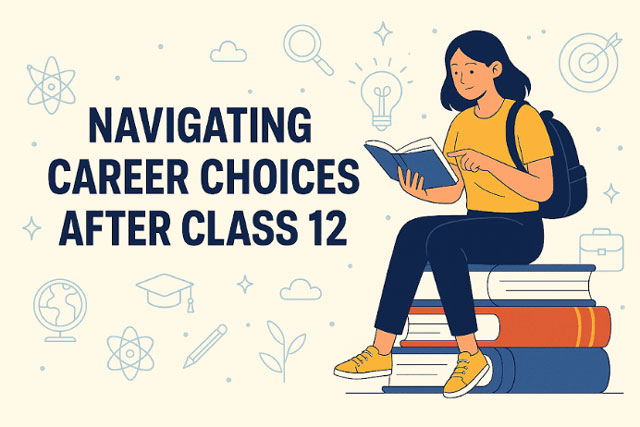
The Core Dilemma Facing Today’s Class 12 Students:
Degree vs Career Confusion:
Most students are asked, “Which degree will you choose?” instead of “What kind of problems do you want to solve?” Degrees are seen as destinations rather than pathways. Engineering, medicine, commerce, law, pure sciences, and emerging interdisciplinary programs are often chosen based on marks, social prestige, or hearsay rather than aptitude and long-term interest.
Parental and Social Expectations:
In many Indian households, including in coastal Karnataka, well-intentioned parents push children toward “safe” or familiar careers—engineering, medicine, CA—sometimes ignoring the student’s natural strengths. This often leads to disengagement, burnout, or mid-degree regret.
Information Overload and Misinformation:
Students are bombarded with social media claims about AI replacing jobs, foreign universities entering India, and “future-proof” careers. Without proper guidance, this creates fear-driven decisions rather than informed ones.
Marks-Centric Self-Assessment:
Board exam scores are treated as the sole indicator of ability. Yet marks reflect performance under a specific exam system—not creativity, leadership, problem-solving, or resilience.
The Changing Higher Education and Career Landscape:
The Indian education ecosystem is undergoing a major shift:
- NEP 2020 encourages flexibility, multidisciplinary learning, and skill integration
- Global universities are setting up campuses in India
- Industry is prioritizing skills, adaptability, and learning agility over degrees alone
- Careers are no longer linear; students will change roles—and even domains—multiple times
In this context, choosing an undergraduate program is not about locking a career, but about building a strong, adaptable foundation.
A Practical and Grounded Path Forward for Students in Mangaluru
Start with Self-Discovery, Not College Forms:
Before selecting a course, students must reflect on:
- Subjects they genuinely enjoy (not just what they score in)
- Activities that energize them (projects, labs, debates, design, coding, analysis)
- Natural inclinations: building, analysing, caring, communicating, creating
Aptitude and interest assessments (psychometric tests for abilities), mentoring conversations, and exposure sessions are invaluable at this stage.
Choose a Broad, Flexible UG Program:
In today’s world, flexibility is power. Programs that allow:
- Minors and electives across disciplines
- Skill certifications alongside degrees
- Research, internships, and project-based learning
are far more valuable than narrow, rigid pathways.
For example:
- Engineering with AI, datascience, design, or sustainability components
- BSc or BCA with strong industry exposure
- Commerce or management integrated with analytics or technology
- Liberal arts blended with science or economics
Focus on Skill Depth Alongside Degree Breadth:
From the first year of UG:
- Develop at least one strong skill area (coding, data analysis, design, writing, finance, research)
- Build portfolios, not just mark sheets
- Participate in internships, hackathons, labs, community projects
Employability today is driven by what you can do, not just what you have studied.
Prefer Institutions with Mentoring and Ecosystems
Students should evaluate colleges not only on brand name, but on:
- Faculty accessibility and mentoring culture
- Industry and research exposure
- Internship and project opportunities
- Support for higher studies, entrepreneurship, or global mobility
Mangaluru has the advantage of quality institutions with strong academic culture—students must leverage this wisely.
Keep Higher Studies and Career Options Open
A good UG choice should allow multiple exits and progressions:
- Employment
- Entrepreneurship
- Higher studies in India or abroad
- Domain switching through postgraduate specialization
The goal is optionality, not early specialization under pressure.
Advice to Parents: Guide, Don’t Decide
Parents play a critical role—but the most successful outcomes occur when parents act as enablers, not decision-makers. Listening to the child, encouraging exploration, and trusting the process often leads to better long-term satisfaction and success.
Final Thought: The First Step Matters, Not the Final Answer
For a Class 12 student, the undergraduate choice is a starting point, not a lifelong verdict. In a fast-changing world, curiosity, adaptability, and continuous learning will matter far more than the name of the degree alone. From an Indian context—and especially in an education-conscious city like Mangaluru—the best path forward lies in informed choices, flexible programs, strong mentoring, and early skill development. If we help students choose wisely today, we empower them not just for their first job—but for a lifetime of meaningful careers.