Daijiworld Media Network - New Delhi
New Delhi, Nov 29: India's Directorate General of Hydrocarbons (DGH) has relaxed financial eligibility norms for bidding for 18 deepwater and ultra-deepwater oil and gas exploration blocks in a bid to attract major international energy companies, after two earlier bidding rounds failed to receive the desired response.
The deadline for submitting bids has also been extended by a week to December 17.
The government is keen to attract global oil and gas majors with advanced technology and financial resources to explore deepwater blocks and help meet India's growing energy demand.
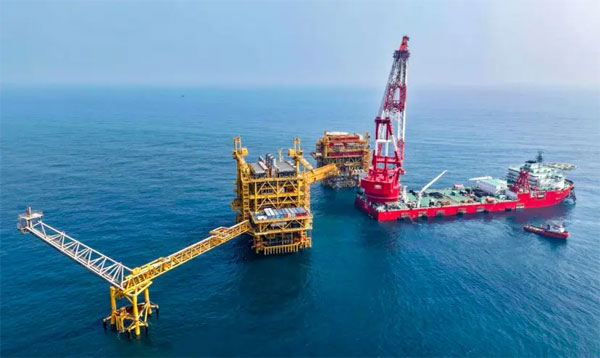
Under the revised norms, bidders will no longer be required to quote the revenue share they are willing to offer the government for Category-I deepwater and ultra-deepwater blocks. Instead, companies will compete on the basis of their committed exploration work programmes.
The shift to a Committed Work Programme-based evaluation brings the more promising Category-I basins in line with Category-II and Category-III basins.
Under the revised revenue model, windfall gain-based revenue sharing will apply during the initial five years on net revenues exceeding $2.5 billion. Thereafter, a minimum 5 per cent or slab-based revenue share will apply.
The new rules also allow foreign oil majors with a minimum net worth of $10 billion, when partnering with ONGC or Oil India, to use the financial qualifications of their Indian state-owned partners.
Parent guarantees will be waived if the prescribed net-worth thresholds are independently met. Foreign partners will also be permitted to transfer their participating interests to existing Indian state-owned consortium members without obtaining prior government approval.
The revised terms cover 13 blocks under Open Acreage Licensing Policy (OALP) Bid Round X and five blocks under OALP-XI. Together, the 18 blocks span approximately 1.62 lakh square kilometres across India's eastern and western offshore regions and the Andaman and Nicobar Islands.
Under the revised evaluation framework, seismic surveys will carry 80 marks out of the total 100, with 25 per cent of these marks allocated to two-dimensional surveys and 75 per cent to three-dimensional surveys.
The remaining 20 marks will be divided equally between originating the block and demonstrating deepwater drilling experience.
The experience requirement has also been raised, with bidders required to demonstrate at least three years of offshore exploration, development or production experience during the past decade. The evaluation will award 10 marks for originating the block and another 10 for deepwater or ultra-deepwater drilling experience.
A revolving bid bond of $2 million will support up to 10 simultaneous bids. Mandatory electronic bank guarantees (e-BGs) or approved insurance surety bonds will also be required under the revised framework.