Daijiworld Media Network - New Delhi
New Delhi, Nov 9: A large-scale Indian study has found that yoga-based cardiac rehabilitation significantly improves quality of life, functional capacity and overall health status among patients with heart failure, offering a potential alternative to conventional rehabilitation programmes, particularly in resource-constrained settings.
The Yoga-CaRe HF trial, funded by the Indian Council of Medical Research (ICMR) and coordinated by the Centre for Chronic Disease Control (CCDC), was led by Prof. Dorairaj Prabhakaran, executive director of CCDC and president-elect of the World Heart Federation.
The findings, presented as late-breaking science at the American Heart Association's Scientific Sessions in Chicago on November 7, 2026, showed improvements in quality of life, physical functioning and quality-adjusted utility scores among patients with heart failure with reduced ejection fraction (HFrEF). Although clinical events were 10 per cent lower in the yoga group, the reduction was not statistically significant.
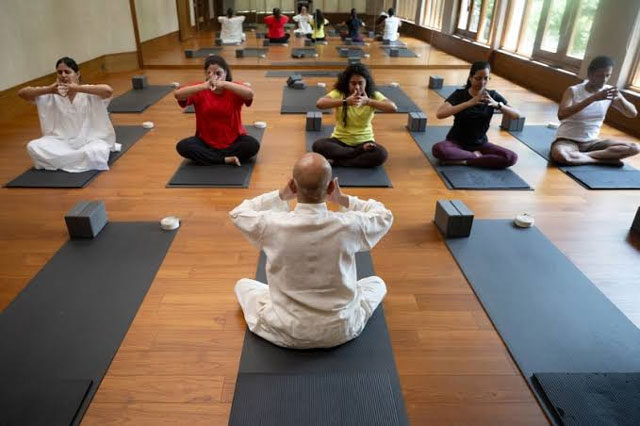
The trial involved nearly 3,500 patients recruited through 16 hospitals across India, making it the largest cardiac rehabilitation trial globally, according to the study team. Participants were randomly assigned to receive either enhanced standard care or a structured yoga-based cardiac rehabilitation programme.
Enhanced standard care included three health education sessions over three months, supported by a booklet titled 'Healthy Living with Heart Failure'. The Yoga-CaRe programme combined health education, guided behaviour change and a standardised set of yoga practices, including physical postures (asanas), breathing exercises (pranayama), meditation and relaxation techniques tailored to each patient's exercise capacity.
The programme was delivered by trained, board-certified Yoga and Naturopathy practitioners. Patients underwent 20 supervised training sessions, conducted both in person and online, over three months. They were encouraged to practise yoga at home for 50 to 55 minutes daily for up to 24 months and follow recommended lifestyle changes. Participants attended a median of 19 supervised sessions and practised at home for around 35 to 40 minutes a day, approximately five days a week.
At three months, patients in the Yoga-CaRe group recorded an 8.1-point greater improvement in the Minnesota Living with Heart Failure Questionnaire score compared with the control group. They also walked 25.5 metres farther in the six-minute walk test and recorded a 0.05-point improvement in quality-adjusted utility values. The study said these differences were both statistically and clinically significant and remained evident through 24 months.
Among patients who completed the prescribed duration of yoga practice, the programme was associated with a reduction in the combined outcome of death, hospitalisation and stroke. However, the overall differences in deaths and emergency hospital admissions between the two groups were not statistically significant.
Prof. Prabhakaran said improving quality of life and functional capacity was essential for people living with heart failure, particularly in India, where an estimated 1.8 million new cases are diagnosed annually and access to cardiac rehabilitation remains limited.
He said the trial demonstrated that a comprehensive, multicomponent rehabilitation programme delivered by a single trained practitioner could serve as an alternative to conventional multidisciplinary team-based cardiac rehabilitation in India and other resource-constrained settings. He added that yoga-based rehabilitation, alongside guideline-directed medical treatment, could help patients live longer and enjoy a better quality of life.
Prof. S C Manchanda, former head of the Department of Cardiology at the All India Institute of Medical Sciences, New Delhi, and senior consultant cardiologist at Sir Ganga Ram Hospital, described yoga as a lifestyle-based intervention with relevance for cardiac patients.
He said the programme encouraged patients to practise yoga almost daily, with an average of around 255 minutes of home practice each week. It also helped improve physical activity, dietary habits and avoidance of tobacco and alcohol, which he described as essential components of cardiac rehabilitation.
Prof. Ambuj Roy of the Department of Cardiology at AIIMS, New Delhi, and co-lead of the study, said advances in medical treatment for heart failure had improved outcomes, but access to cardiac rehabilitation remained limited.
He said the trial addressed an important gap in patient care and demonstrated that traditional practices such as yoga could be evaluated through rigorous modern scientific methods before being considered for wider adoption in medical practice.
The study also reported improvements in frailty and tobacco cessation among participants. Caregivers of patients in the yoga group experienced better quality of life and reduced symptoms of depression.