Daijiworld Media Network - Lucknow
Lucknow, Nov 4: Samajwadi Party (SP) president and former Uttar Pradesh chief minister Akhilesh Yadav has indicated that he may not contest the Assembly elections scheduled for early next year, suggesting that he could become chief minister while continuing as a Lok Sabha MP, as he did in 2012.
Speaking to the media in Varanasi on Tuesday, Yadav linked his possible decision to what he considers politically auspicious, while asserting that he would choose the course best suited to him.
"You tell us the seat, I will contest in Varanasi... I always thought Kashi people were religious and know the difference between 'shubh' (auspicious) and 'ashubh' (inauspicious)," he said.
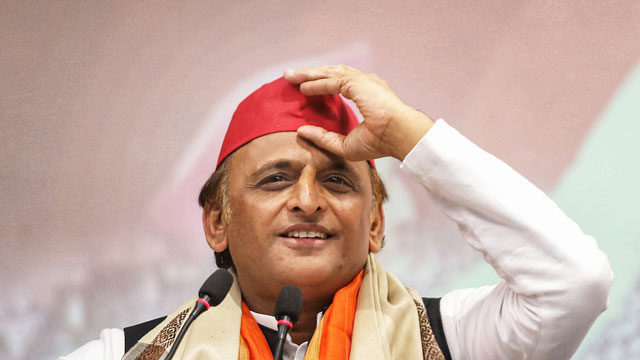
"I became CM when I did not contest an Assembly election; that is why I will do whatever is 'shubh' for me. So, I will take the CM's oath directly from the Lok Sabha," he added.
Yadav is currently the Lok Sabha MP from Kannauj. In the 2012 Assembly elections, he did not contest from any constituency. After the SP won 224 seats, he was elected leader of the party and sworn in as chief minister on March 15, 2012, at the age of 38. He subsequently became a member of the Legislative Council.
In 2017, Yadav again stayed away from contesting the Assembly polls while leading the SP-Congress alliance's campaign, which ended in defeat.
In 2022, however, he contested and won the Karhal Assembly seat in Mainpuri by a margin of more than 67,000 votes. He resigned from his Azamgarh Lok Sabha seat and became Leader of the Opposition in the Uttar Pradesh Assembly. In 2024, he returned to Parliament after winning from Kannauj.
Political observers believe his latest remarks could be part of a calculated strategy to project himself as the SP's chief ministerial face while retaining the flexibility to oversee party affairs without being tied to a particular Assembly constituency. The move could also put the BJP under political pressure, they say.
The practice of becoming chief minister without initially contesting an Assembly election has precedents in Uttar Pradesh politics.
Mulayam Singh Yadav became chief minister for his first two terms, from December 1989 to January 1991 and from December 1993 to June 1995, after winning Assembly elections. In 2003, he returned to the post after the collapse of the BSP-BJP coalition government, forming a government with the support of allies and independent legislators. At the time, he was a Lok Sabha MP from Sambhal.
Mulayam Singh took oath on August 29, 2003, and later contested a by-election from Gunnaur in January 2004, winning by a record margin of 1.83 lakh votes.
Mayawati also became chief minister in 1995 while serving as a Rajya Sabha MP, following the collapse of the Mulayam Singh government after the infamous Guest House incident. Her first government lasted less than four months. She later became chief minister for two more terms, from March to September 1997 and from May 2002 to August 2003, after winning Assembly elections.
In 2007, after the BSP secured a clear majority in Uttar Pradesh, Mayawati took oath as chief minister on May 13 despite not contesting the Assembly polls. She was then a Rajya Sabha MP and later resigned from the Upper House to become a member of the Legislative Council.