Daijiworld Media Network - Kinshasa
Kinshasa, Oct 30: The Ebola outbreak in the Democratic Republic of the Congo (DRC) has crossed 10,000 confirmed cases, raising concerns over the ability of health authorities to contain the disease as infections continue to spread across the country and into other nations.
According to the US Centers for Disease Control and Prevention (CDC), the outbreak had recorded 10,172 confirmed cases and 4,932 deaths across affected countries as of October 26. The DRC accounted for 10,141 cases and 4,928 deaths, representing a fatality rate of nearly 49 per cent. Kenya, Nigeria, Uganda and France have also reported cases linked to the outbreak.
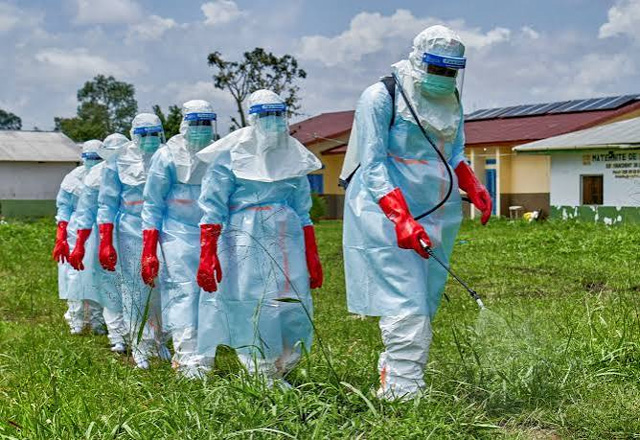
The outbreak is caused by the Bundibugyo virus, a strain related to, but distinct from, the Ebola virus responsible for most previous outbreaks. The World Health Organization (WHO) has reported sustained, high-level transmission in the DRC, with the outbreak spreading across multiple provinces and health zones.
The growing number of infections has raised fears that the outbreak could become one of the worst in Ebola history. The 2014-2016 West African outbreak remains the largest on record, with around 28,000 infections and more than 11,000 deaths. The current outbreak has already become the second largest recorded Ebola outbreak, according to health authorities.
Health experts say the continued high number of infections is particularly worrying. Around 400 to 500 new confirmed cases were being reported each week in the DRC, indicating that transmission had remained at a high level rather than showing a sustained decline.
A major challenge for health workers has been identifying people who have come into contact with infected patients. A large proportion of new cases are being detected among people who were not previously known to have been exposed, suggesting that several transmission chains remain untracked.
Limited contact tracing, mistrust among communities, misinformation, armed conflict and weaknesses in the healthcare system have complicated efforts to control the outbreak. In some affected areas, health workers have faced difficulties persuading residents to cooperate with testing, treatment and contact tracing.
At a virtual summit of African health ministers on Wednesday, Africa Centres for Disease Control and Prevention Director-General Dr Jean Kaseya acknowledged that the continent was “not winning” the fight against Ebola and called for stronger coordination between countries.
Kaseya said African nations had agreed to strengthen preparedness, coordinate responses across borders and maintain close monitoring of cross-border movement.
Experts have warned that the risk of further international spread will increase as long as transmission remains uncontrolled in the DRC. However, they say the immediate risk to countries outside the affected region remains limited, provided suspected cases are identified quickly, isolated and followed up through contact tracing.
The outbreak has also raised concerns about vulnerable countries with weak healthcare systems, particularly those affected by poverty and conflict. South Sudan has been cited as one such concern because of its limited capacity to respond to a major health emergency.
Ebola spreads through direct contact with the blood or other bodily fluids of an infected person, including vomit and semen. Health authorities have stressed the importance of early detection, isolation, appropriate treatment and community cooperation to interrupt transmission.
Researchers are updating projections to assess how the outbreak may develop in the coming months. Earlier modelling exercises by the US CDC had examined scenarios ranging from 10,000 to more than 20,000 cases over a three-month period, based on the situation at the time. The agency is now updating its modelling work as the outbreak continues.
There is also cautious hope that vaccines specifically targeting the Bundibugyo virus could become available. However, the WHO says there are currently no licensed vaccines or approved treatments specifically for this strain. Candidate vaccines and investigational treatments are being studied, while health authorities are working to prepare for possible clinical trials and emergency use.
Health experts expect the outbreak to continue for the rest of the year, although the availability of an effective vaccine could strengthen efforts to control it in 2027.
For now, the continuing rise in cases and deaths underlines the scale of the challenge facing health authorities. Experts say sustained community engagement, stronger surveillance, effective contact tracing and coordinated cross-border action will be essential to bring the outbreak under control.