Daijiworld Media Network – Mumbai
Mumbai, Oct 16: Microplastics can spontaneously generate reactive oxygen species (ROS) at their interfaces with water, potentially influencing protein behaviour and cellular health, according to a study published in the journal Nature.
The research challenges the assumption that microplastics are chemically inert and suggests that interactions between plastic surfaces and water may contribute to their biological effects. The researchers found that radical production varied among different types of plastic and was generally higher on more hydrophobic surfaces.
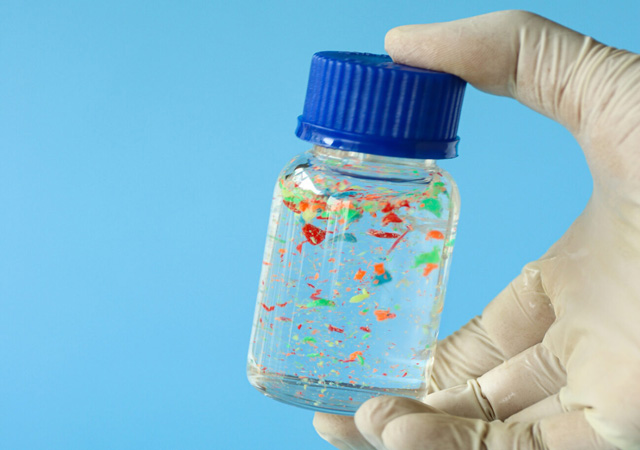
Microplastics are plastic fragments smaller than five millimetres that have become a growing environmental and public health concern. Previous laboratory studies have linked exposure to cellular stress, inflammation and cell damage, while observational studies have reported associations with cardiovascular problems, reproductive damage, neurological disorders and inflammatory bowel disease. However, these associations do not establish that microplastics directly cause such conditions.
For the study, researchers examined six commonly used plastics: polypropylene, polyethylene, polyvinyl chloride, polystyrene, polyethylene terephthalate and polymethyl methacrylate. They used computer simulations, chemical calculations and laboratory experiments to investigate interactions between the plastic surfaces and water.
The experiments detected the formation of reactive oxygen species, including hydroxyl radicals, at microplastic–water interfaces. These highly reactive chemical species continued to form over time, with more hydrophobic plastics generally showing greater surface activity. Polymethyl methacrylate, the most hydrophilic material tested, exhibited the lowest interfacial activity.
In one experiment, methyl orange, a coloured compound, degraded by nearly 90% within 10 days in water containing polystyrene microplastics under continuous stirring. The researchers linked this observation to the ongoing generation of hydroxyl radicals at the plastic–water interface.
The team also found that modifying the interface with Triton X-100, a surfactant, substantially reduced the detected radical activity and altered the electrical properties of the plastic surfaces. These findings indicate that conditions at the interface can influence the chemical activity of microplastics.
The researchers further investigated how microplastics interact with biological molecules. Positively and negatively charged biomolecules accumulated on plastic surfaces, with greater accumulation observed on more hydrophobic polypropylene particles than on polymethyl methacrylate.
Experiments involving lysozyme, a protein, suggested that polystyrene microplastics could promote protein aggregation. The effect was less pronounced when caffeine, which can scavenge free radicals, was added. Coating the plastic particles with Triton X-100 also reduced the observed changes, supporting the possibility that surface-generated radicals contribute to protein aggregation.
In another laboratory experiment, red blood cells obtained from mice were exposed to different microplastics. Some cells exposed to polystyrene particles developed schistocytes, abnormally shaped red blood cell fragments. The extent of cell damage varied among the plastics and was associated with differences in their surface reactivity.
However, the experiments did not establish that radical generation directly caused the observed cellular damage, nor do they demonstrate that microplastics produce the same effects in humans under real-world exposure conditions.
The researchers said their findings highlight the importance of understanding the chemical activity of microplastic surfaces and how these interactions may affect biological molecules. Further research will be needed to determine the significance of these processes for human health and environmental safety.