Daijiworld Media Network - Mumbai
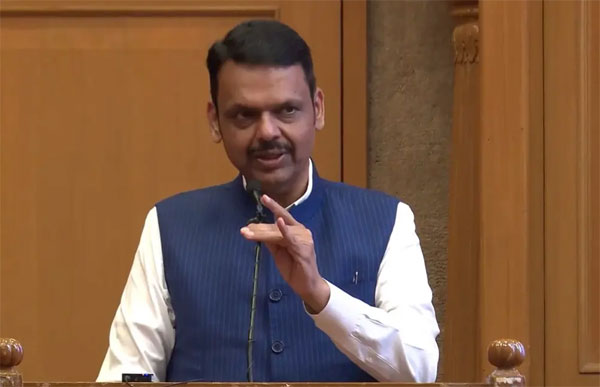
Mumbai, Sep 28: A comprehensive master plan for the holistic development of the Pune Economic Region was presented to Maharashtra Chief Minister Devendra Fadnavis on Monday, with the NITI Aayog-backed 'Growth Hub' initiative targeting an expansion of the region's economy to $200-220 billion by 2036.
The blueprint includes 58 priority projects requiring an estimated investment of Rs 9-10 lakh crore and aims to create 15-20 lakh additional jobs. The plan focuses on improving public transport, expanding affordable housing and ensuring environmental sustainability.
Pune currently accounts for around 11-12 per cent of Maharashtra's overall income, with real economic growth of 6-6.5 per cent. The strategy aims to raise the annual growth rate to 10 per cent.
Aligned with Maharashtra's vision of building a $5 trillion economy by 2047, the Pune Growth Hub proposes increasing the region's economy from $68 billion in FY 2025-26 to $200-220 billion by FY 2035-36. The region has a population of around 15 million.
The framework seeks to promote sustainable and inclusive growth while positioning Pune among Asia's most liveable metropolitan regions.
Six core sectors have been identified for growth, including manufacturing, electric vehicles, engineering goods, defence, robotics and drones, electronics and semiconductors, and biotechnology.
The proposals include EV and mobility hubs, high-tech engineering parks, defence technology centres and AI and Global Capability Centres (GCCs), which are expected to generate 4-5 lakh high-tech jobs.
The plan also aims to increase the number of startups in the region to more than 10,000 and upskill 1.5-2 lakh professionals in areas such as artificial intelligence, cloud computing and cybersecurity.
Pune currently has around 56 lakh jobs, with employment projected to rise to 74-76 lakh over the next decade. This would translate into 12-20 lakh net additional opportunities across sectors such as manufacturing, services, healthcare, education, tourism, agro-processing and logistics.
Tourism development under the plan will focus on six thematic circuits, including the Chhatrapati Shivaji Maharaj Fort Circuit covering Shivneri, Lohagad, Rajgad and Sinhagad.
The blueprint also proposes Pawna and Bhatghar water tourism hubs, a Junnar Leopard Safari, a 600-km Sahyadri trekking trail, health and wellness corridors and entertainment centres.
Public transport usage is targeted to increase from the current 13 per cent to 50 per cent of daily trips. The proposals include expanding the Pune Metro network to 250 km, adding 12,000-14,000 buses, developing six multimodal transport hubs, 11 rail projects and 13 major road expansion projects.
The housing component aims to relocate and rehabilitate 90 per cent of eligible slum dwellers by 2036 and construct 4-5 lakh affordable homes. This includes one lakh hostel units for industrial workers.
The plan also proposes policy updates covering semiconductors, industrial housing, MSME development and tourism.
Three bodies will oversee implementation. These include a Governing Council chaired by the Chief Minister, a State Steering Committee headed by the Chief Secretary and a Pune Growth Hub Steering Committee supported by the Pune Metropolitan Region Development Authority's (PMRDA) Project Management Cell.
The planning process began on August 1, 2025, under NITI Aayog's Growth Hub initiative. The plan was jointly drafted by NITI Aayog, the Maharashtra government and the Pune International Centre (PIC), covering areas under the Pune Municipal Corporation (PMC), Pimpri-Chinchwad Municipal Corporation (PCMC) and PMRDA.