Daijiworld Media Network - New Delhi
New Delhi, Sep 15: Iran has expanded its blacklist of vessels accused of violating its rules for transiting the Strait of Hormuz to 77 ships, adding 21 vessels in less than two weeks and warning insurers, Protection and Indemnity (P&I) clubs and classification societies against providing services to the designated vessels.
The Persian Gulf Strait Authority (PGSA), which oversees passage requests through the strategic waterway, announced the updated list on Monday. It warned that companies and organisations dealing with blacklisted vessels could face unspecified consequences.
The latest update takes the number of vessels on the list from 56 at the beginning of September to 77. The designated ships could face restrictions on future passages through the Strait of Hormuz, including fines, detention or confiscation, according to the authority.
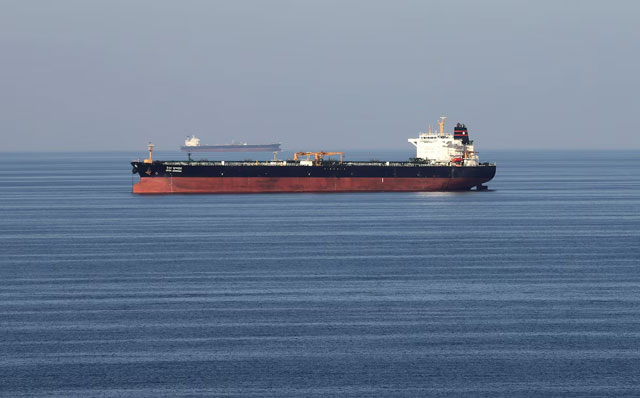
The PGSA also warned that vessels cooperating with blacklisted ships through ship-to-ship transfers or transhipment operations could themselves be added to the list. The authority has not specified when or under what circumstances the penalties would be imposed.
The rapidly expanding blacklist is creating additional uncertainty for shipowners, charterers and maritime service providers involved in Gulf trade. The latest additions reportedly include crude oil tankers ranging from Aframaxes to very large crude carriers, along with product tankers, bulk carriers, an LPG carrier and an LNG carrier.
The blacklist had originally contained 45 unique vessels, according to earlier shipping industry reports. The vessels included VLCCs, product tankers, LNG and LPG carriers, containerships and bulkers. Companies whose vessels were included in earlier rounds reportedly included ADNOC Logistics & Services, Navig8, Bahri, Sinokor, Stolt-Nielsen, Klaveness Combination Carriers, Shipping Corporation of India, Dynacom and GasLog.
The latest expansion means the number of vessels on the list has increased by 32 from the original list issued around three weeks ago. Iran had earlier warned that ships conducting ship-to-ship transfers or transhipment operations with blacklisted vessels could also face designation.
The development comes as traffic through the Strait of Hormuz remains sharply reduced. Reuters reported that preliminary tracking data showed commodity-vessel crossings falling to single digits per day over the weekend, compared with a 10-day average of 14. Such tracking figures may not capture vessels that have switched off their Automatic Identification System (AIS) transponders.
More recent tracking data cited by Reuters showed only four commodity vessels transited the Strait of Hormuz on Monday, compared with 10 the previous day. Traffic remains dramatically below the pre-war average of about 125 daily transits, highlighting the impact of the continuing regional conflict on one of the world's most important energy corridors.
At the same time, shipping activity is moving in the opposite direction around the Red Sea and Suez Canal, where major container carriers are beginning to accelerate their return to the shorter Asia-Europe route despite continuing security concerns.
Maersk and Hapag-Lloyd have announced that four additional Gemini Cooperation services — AE5, AE11, AE12 and ME2 — will switch from routes around the Cape of Good Hope to the trans-Suez corridor. The four services will join AE15 and AE19, which have already returned to Suez routing.
The AE5 service connects Asia with Northern Europe, while AE11 and AE12 connect Asia with the Mediterranean. The ME2 service links India and Europe. The carriers said the change would provide shorter transit times compared with the much longer Cape of Good Hope route.
The first westbound change involves Antonia Maersk on the AE11/SE2 service, scheduled to depart Tanjung Pelepas on September 19. Marchen Maersk is scheduled to follow on the AE5/NE4 service from Tanjung Pelepas on September 21, while Cornelia Maersk is scheduled to operate the first westbound ME2/IEX sailing from Colombo on September 19. The first sailing for AE12/SE1 has not yet been announced.
Maersk and Hapag-Lloyd said their decision followed an assessment of the security situation in the Red Sea. They have stressed that the return remains conditional on continued stability in the region and the absence of further escalation. The safety of crews, vessels and cargo remains their highest priority.
The latest move represents a significant acceleration of the Gemini partners' gradual return to the Suez Canal. The companies had taken an initial step earlier this year by returning one service to the Red Sea and subsequently made additional services structurally trans-Suez.
The renewed Suez operations come despite heightened security concerns in the Red Sea. Iran-aligned Houthi forces have expanded their position along Yemen's Red Sea coast and around the Bab el-Mandeb Strait, creating renewed uncertainty for shipping companies considering a wider return to the corridor.
Since late 2023, attacks by Houthi forces had prompted most major container carriers to divert their vessels around the Cape of Good Hope. The longer route added thousands of nautical miles to Asia-Europe journeys, increasing sailing times, fuel consumption and effective shipping capacity requirements.
The broader return to Suez could therefore have significant implications for global container capacity. Industry analysts have estimated that a large-scale shift from the Cape of Good Hope back to Suez could release a substantial amount of vessel capacity currently absorbed by longer voyages.
For global trade, the contrasting developments in Hormuz and Suez underline the continuing impact of Middle East security risks on maritime routes. While Iran's expanding Hormuz blacklist and sharply reduced traffic are increasing uncertainty around Gulf shipping, Maersk and Hapag-Lloyd are cautiously restoring services through the Red Sea and Suez in an attempt to shorten Asia-Europe transit times.
Both situations remain highly dependent on regional security developments, with shipping companies continuing to monitor the risks before making further changes to their networks.