Daijiworld Media Network - Mumbai
Mumbai, Sep 13: The Reserve Bank of India (RBI) has rejected Tata Sons’ application seeking exemption from listing on the stock market, a decision that could force the Tata Group holding company to undergo a major transformation of its structure and operations.
In a letter to Tata Sons Chief Financial Officer Saurabh Agrawal, seen by the Financial Times, the RBI said the company’s request to deregister itself as an upper-layer ‘shadow bank’ “cannot be acceded to”. The central bank directed Tata Sons to comply with its guidelines “immediately”.
In 2022, the RBI classified Tata Sons, the privately held holding company of the Tata Group, as an upper-layer non-banking financial company (NBFC). Under the regulatory framework, such companies are required to list their shares within three years as part of measures aimed at improving transparency in India’s financial sector.
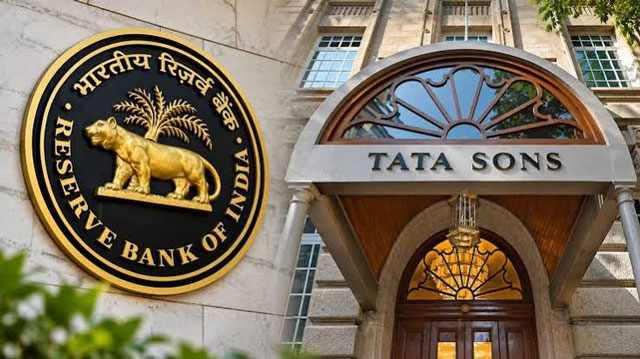
The proposed listing could become one of India’s largest initial public offerings (IPO).
Tata Sons had resisted the RBI’s directive. After reducing its debt levels, the company applied to the central bank in March 2024 seeking reconsideration of its classification.
Although Tata Sons is not a conventional lender, it plays a key role in financing and investing across the Tata Group’s extensive network of businesses. The group has hundreds of subsidiaries and 26 listed companies operating in sectors including defence, steel and consumer goods.
Tata Sons controls major businesses such as Jaguar Land Rover, Air India and Tata Consultancy Services, India’s largest information technology company.
Analysts estimate that a stock market listing could value Tata Sons at more than $120 billion. The company is majority-owned by a group of charitable trusts.
The RBI’s decision comes amid turmoil within the Tata Group. Group chairman N Chandrasekaran unexpectedly announced his resignation last month following a prolonged boardroom tussle and weak performance in some businesses, including IT services and loss-making Air India.
The prospect of a forced listing has increasingly become a contentious issue within the group.
Noel Tata, who took over as chairman of the Tata trusts after the death of his half-brother Ratan Tata two years ago, is understood to have opposed an IPO. People familiar with the matter said Noel Tata believes remaining private would better suit the conglomerate and provide greater flexibility to make long-term investments and business bets.
Critics, however, have argued that the existing private ownership structure gives the trusts significant control, including an effective veto over major decisions.
An IPO would place the trusts on an equal footing with other shareholders, according to a person close to the group.
The RBI ruling is also a major boost for the Shapoorji Pallonji Group, which owns an 18 per cent stake in Tata Sons. The debt-laden engineering and construction conglomerate has been pushing for a public listing, which would allow it to sell its stake more easily.
Tata Sons declined to comment. Noel Tata and the RBI did not respond to requests for comment.