Daijiworld Media Network - New Delhi
New Delhi, Aug 29: The Food Safety and Standards Authority of India (FSSAI) has proposed introducing prominent red, hexagonal warning labels on the front of packaged food products containing high levels of added sugar, saturated fat or salt, marking a major shift in its approach to front-of-pack nutrition labelling. The proposal was submitted to the Supreme Court through a compliance affidavit amid mounting judicial pressure for clearer warnings on unhealthy packaged foods.
The proposed labels are intended to provide consumers with a simple, prominent and easily understandable warning and help them make more informed food choices, particularly children and other vulnerable groups.
Under the proposal, a red hexagonal symbol, resembling a stop sign, would be displayed prominently on the front of packages containing high levels of specified nutrients of concern. The warning would state "HIGH FAT", "HIGH SUGAR", "HIGH SALT" or, where applicable, "HIGHLY SWEETENED BEVERAGE". The lettering would have to be at least one point larger than the font used in the nutrition information table on the back of the package.
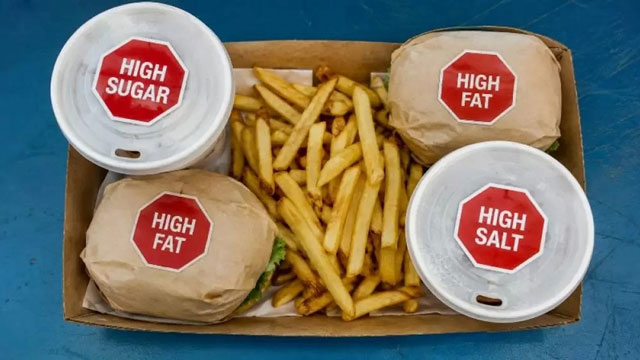
The system is proposed to be introduced in phases. Initially, the front-of-pack warning would apply to products exceeding the prescribed thresholds for any two or more of the specified nutrients — added saturated fat, added sugar and salt. A subsequent phase would extend the requirement to products exceeding the limit for even one of the specified nutrients. The thresholds are proposed to be based on the Dietary Guidelines for Indians 2024.
Certain basic single-ingredient foods, including ghee, oil, salt, sugar, jaggery and honey, are proposed to be excluded from the front-of-pack warning requirement.
The move follows sharp criticism from the Supreme Court over the delay in introducing clear front-of-pack warnings. A bench headed by Justice JB Pardiwala had questioned the FSSAI's earlier approach and raised concerns about the health of children and whether industry pressure was influencing the regulatory process. The Court was hearing a Public Interest Litigation filed by the NGO 3S and Our Health Society seeking mandatory warnings on packaged foods high in fat, sugar and salt.
The regulatory debate has also intensified following concerns over the growing consumption of processed foods and rising obesity. The Supreme Court had previously stressed the need for consumers, particularly children, to have clear information about potentially harmful levels of sugar, salt and fat in packaged products.
The latest proposal represents a reversal from an earlier FSSAI approach. Earlier this month, the regulator had proposed displaying recommended daily limits alongside nutrient values and serving sizes rather than using prominent warning symbols. That approach drew criticism from public-health experts who argued that consumers would have to interpret the figures themselves.
The proposed warning system has also triggered a wider debate over the responsibility of food manufacturers. Maharashtra Food and Drugs Administration Commissioner Tukaram Mundhe has urged food companies to go beyond minimum regulatory compliance and adopt more ethical practices, arguing that clear warnings could empower consumers and encourage preventive action.
Major food companies and industry groups, including Coca-Cola and organisations representing Nestlé and PepsiCo, have raised objections to aspects of the proposed labelling framework. Reuters reported that the industry has argued that warning labels could confuse consumers and questioned their effectiveness, while public-health advocates have pushed for prominent warnings similar to systems used in several other countries.
The proposed red-hexagon system is expected to make nutritional risks more immediately visible at the point of purchase and could significantly change how packaged foods are presented to Indian consumers if the proposal is approved and implemented.