Daijiworld Media Network - New Delhi
New Delhi, Aug 25: India's men's hockey team would have known exactly what was at stake when it took on Argentina at the World Cup. The women's campaign, meanwhile, ended in heartbreak on Sunday, August 23, after a draw against Australia, but their overall performance offered plenty of encouragement.
India's women's team lost just one match throughout the tournament, against the Netherlands. They drew against China, Australia and England and defeated South Africa. Despite missing out on a semi-final berth, the campaign represented progress for the Indian eves, whose wait for another World Cup semi-final appearance has now stretched beyond 52 years.
The expectations surrounding the men's team, however, were considerably higher.
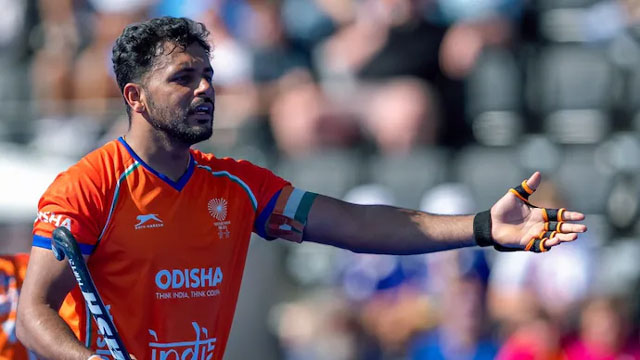
The Asian champions entered the tournament determined to close the gap with the world's leading teams and establish themselves among the elite. Confidence was high, while the team management attempted to keep expectations under control.
What followed was more than a reality check for the players. It exposed a wider concern for Indian hockey.
India struggled against higher-ranked opposition and failed to defeat any of them. They were comfortably beaten by the Netherlands and England before Argentina inflicted another defeat, with the South American side having now scored 23 goals against India in their last five meetings.
India did manage victories over Wales and arch-rivals Pakistan. However, Pakistan are currently dealing with a much deeper crisis in hockey, while India's performances against both teams were far from dominant.
The narrow margins of victory often forced India to fight until the final stages simply to secure results.
That has raised a fundamental question for Indian hockey: how and when will the team close the gap with the world's best?
Former India goalkeeper PR Sreejesh raised precisely that concern after the team's 3-5 defeat against Argentina.
“Are we building a team to PLAY good hockey, or a team capable of WINNING against the best in the world? Stop hiding behind ‘learning’, ‘good hockey’ and future tournaments,” Sreejesh said in a strongly worded social media post.
“The World Cup is not a rehearsal. It is the World Cup,” he added.
India will compete at the Asian Games next month, where a gold medal would provide direct qualification for the 2028 Olympics. India's long wait for a World Cup semi-final has repeatedly led hockey greats to stress the importance of Olympic qualification and performance.
A similar concern has emerged from India's performances in the Hockey Pro League.
India's best finish in the competition remains third place in the 2021-22 season. In the most recent edition, India finished eighth, ahead of only Pakistan, who lost all 16 of their matches.
The Pro League does not always feature teams at full strength, but India's inability to consistently challenge Belgium, Germany and the Netherlands raises questions about whether the competition is being used sufficiently to test the team against the world's best.
Coach Craig Fulton's comments after the Argentina defeat also added to the debate.
Asked about the decision to field Yashdeep Siwach in defence in a must-win match, Fulton explained that it was part of the team's rotation plan. Jugraj Singh, another defender and drag-flick specialist, was also available, although he had struggled for form during the tournament.
“Just rotation. Kanta today, Vivek yesterday. So we're using these games for Asian Games as well,” Fulton told Sportstar.
Using a World Cup as preparation for another tournament, however, raises questions about the team's priorities and appeared to be part of the concern highlighted by Sreejesh.
India are currently eighth in the FIH world rankings and remain the highest-ranked Asian team. But their record against teams above them shows the scale of the challenge.
India have not beaten the Netherlands in a major tournament since 2014. Their last victory over Belgium also came in 2014, at the Champions Trophy.
India defeated Germany to win bronze at the Tokyo Olympics, but Germany eliminated them in the semi-final at the Paris Olympics in 2024.
Against teams such as Spain, England, Australia and Argentina, the pattern is similar. India have recorded occasional victories, particularly in the Pro League, but have struggled to consistently defeat higher-ranked opponents when the stakes are highest.
Another concern is the transition from India's experienced core to the next generation.
Manpreet Singh is approaching the latter stages of his career, while Mandeep Singh struggled to make the same impact at the World Cup that he has produced in the past.
Captain Harmanpreet Singh continues to carry much of India's penalty-corner and drag-flick responsibility, but the team lacks a dependable alternative when he is neutralised.
Harmanpreet scored six goals at the World Cup. Apart from Sanjay, no other Indian player scored from a penalty corner, highlighting the team's dependence on its captain for set-piece goals.
India's field-goal production was also limited. Abhishek and Sukhjeet Singh scored two goals each across five matches, underlining the shortage of consistent attacking options beyond Harmanpreet.
The age profile makes the transition even more urgent. By the 2028 Olympics, Manpreet will be 36, Mandeep 33 and Harmanpreet 32.
India therefore need to identify and develop their next generation now rather than waiting for their veterans to leave international hockey.
The world's leading teams have generally managed such transitions without sacrificing competitiveness, regularly introducing younger players while retaining their position among the elite.
India will now turn their attention to Japan and the Asian Games, where they are likely to face teams ranked below them. A gold medal could secure Olympic qualification and help ease the disappointment of the World Cup campaign.
But the shortcomings exposed against the world's strongest teams will not disappear with an Asian Games medal.
India's inability to consistently defeat top-ranked opposition, dependence on Harmanpreet for penalty-corner goals, limited attacking alternatives and the approaching retirement of key veterans remain unresolved issues.
Those questions will continue to confront Indian hockey until the team finds a sustainable way to compete with and defeat the world's best.