Daijiworld Media Network - Tehran
Tehran, Aug 25: Iran has warned that new US sanctions expected to be announced on Monday would not bring peace to the region, while Tehran threatened a strong response against Washington and countries supporting the measures.
Iranian Foreign Ministry spokesperson Esmail Baghaei said Tehran would respond harshly to any expansion of US sanctions, including measures targeting countries that cooperate with Washington.
“Any escalation of this situation will undoubtedly bring about consequences. Our hands are not tied,” Baghaei said.
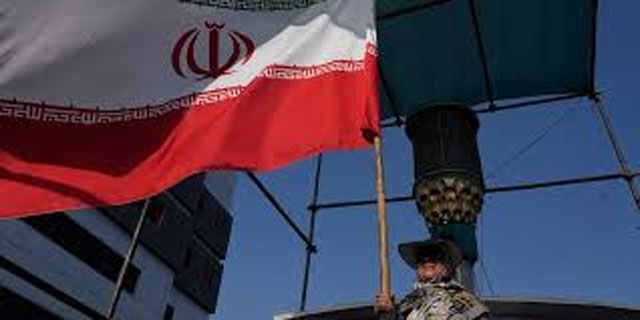
The new head of Iran's top security body also warned on Sunday that Tehran would regard any country's support for the sanctions as an “act of war”.
The expanded sanctions come after weeks of deadlock between the United States and Iran. Washington has so far failed to dislodge Iran's control over the Strait of Hormuz, through which about one-fifth of the world's traded oil passed before the war began nearly six months ago.
Iran has demanded the lifting of the US naval blockade, withdrawal of American forces from the region and compensation for damages caused during the war as conditions for reopening the strategic waterway.
Tehran has also held separate talks with Oman, located on the other side of the Strait of Hormuz, on the possibility of jointly managing the waterway regardless of whether a new agreement is reached with the United States.
US sanctions have historically contributed to higher prices of basic goods in Iran. However, after decades of sanctions, the Iranian economy has adapted by developing domestic industries and establishing alternative trading partnerships.
Ahead of the expected US announcement, Iran's currency fell to a record low on Monday, reflecting growing economic pressure.
Meanwhile, Syrian Foreign Minister Asaad al-Shibani met a high-level Israeli delegation in Jordan over the weekend in an attempt to ease tensions following an Israeli strike in northern Syria last week, Syrian state news agency SANA reported.
The talks, mediated by the United States, focused on restarting negotiations for a future security agreement, SANA said.
Israel had struck the Abu Duhur air base in Idlib province, saying the operation was aimed at preventing Turkey from establishing a military presence there. Turkey has supported the new Syrian government's efforts to rebuild its armed forces after 14 years of civil war.
During the discussions, Syrian officials asserted their right to build their own army and establish alliances freely with other countries, according to SANA.
They also demanded the withdrawal of Israeli forces from a buffer zone in southern Syria that Israel has occupied since December 2024. Syrian officials reiterated their position that the Golan Heights, captured by Israel during the 1967 Middle East war and later annexed, remains Syrian territory.
Israeli officials did not immediately comment on the meeting.
Elsewhere, a crude oil tanker was struck by an unidentified projectile off Saudi Arabia on Monday, according to the British military. The United Kingdom Maritime Trade Organization said the incident occurred about 63 nautical miles west of the Red Sea port city of Yanbu.
The attack caused a fire on the tanker's main deck, but there were no immediate reports of casualties.
Iran-backed Houthi rebels in Yemen have attacked Saudi tankers in recent weeks but did not claim responsibility for Monday's incident. The group also did not respond to requests for comment. Its military spokesperson said the rebels would issue a statement on “military operations” later in the day.
In Gaza, the Israeli military said it had killed a militant affiliated with Hamas' special forces unit in an overnight airstrike. The strike was the latest targeted killing announced since US officials met Israeli Prime Minister Benjamin Netanyahu last week in an effort to revive a ceasefire agreement reached last year.
Israel says it is targeting Palestinian militants who participated in the October 7, 2023, attack that triggered the war.
The Israeli military has announced targeted strikes on six of the seven days since US negotiator Jared Kushner met Netanyahu.
At least 1,288 Palestinians have been killed since the ceasefire took effect last October, according to Gaza's Health Ministry, which is part of the Hamas-run administration. The ministry's casualty figures are generally considered reliable by the international community, although Israel disputes the figures and their attribution.
Meanwhile, a Palestinian American homeowner whose residence was surrounded by Israeli settlers earlier this month said he remains unable to move freely in the village of Qusra in the occupied West Bank.
Loui Ridi travelled from Ohio to join relatives defending his home about a week ago. The Israeli military declared the area a closed zone in an attempt to restore order in Qusra.
Ridi said settlers continued returning throughout the week to the hill overlooking his house.
The residence has been surrounded for more than two weeks, preventing those inside from leaving. Israeli soldiers have encouraged the occupants to leave, but Israeli police have not announced any arrests in connection with the siege.
The incident and Israel's response have drawn condemnation from Israeli rights groups and foreign officials. US Ambassador to Israel Mike Huckabee described the settler violence as terrorism.
Palestinians regard the West Bank, home to around three million Palestinians and about 560,000 Israeli settlers, as central to any future independent state. Palestinian officials have repeatedly condemned Israeli settlement expansion in the territory.
The West Bank has also witnessed a sharp increase in violence by Israeli settlers against Palestinians this year, adding to tensions surrounding the broader Israeli-Palestinian conflict.