Daijiworld Media Network - New Delhi
New Delhi, Aug 24: Indian pharmaceutical companies that have supplied affordable generic medicines to American patients for decades are unlikely to immediately shift production to the United States despite President Donald Trump's threat to impose steep tariffs on imported generic drugs.
Trump has announced that generic medicines imported into the US will remain tariff-free for two years from August 1, 2026. The tariff is scheduled to rise to 100 per cent from August 2028 and double to 200 per cent from August 2029, as part of his push to bring pharmaceutical manufacturing back to the US.
The proposed tariffs could have a significant impact on Indian drugmakers because India is one of the world's largest suppliers of generic medicines to the US. Indian pharmaceutical exports to the American market were valued at about $9.7 billion in 2025-26.
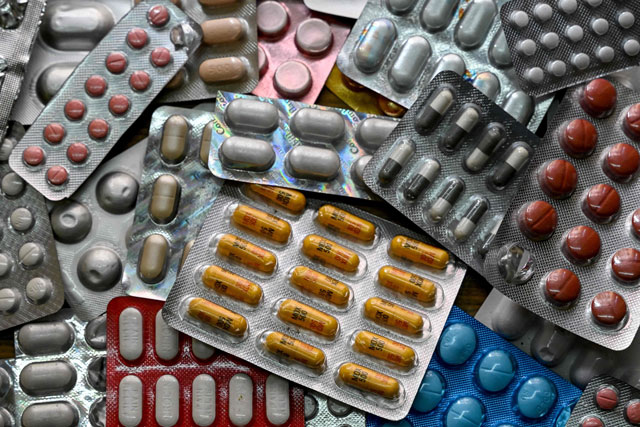
However, the economics of generic medicines make a rapid shift to US manufacturing difficult. Generic drugmakers typically operate on high volumes and relatively low margins. Once patents on branded medicines expire, competing manufacturers can produce equivalent drugs, driving prices down sharply.
The affordability of generics is central to the US healthcare system. More than 90 per cent of prescriptions in the country are for generic medicines, even though they account for only a relatively small share of total drug spending. Around 40 per cent of generic medicines used in the US are imported directly from India, according to industry reports.
The proposed tariffs could therefore have consequences beyond Indian pharmaceutical companies. Higher import costs could eventually be passed on to American patients, insurers and the wider healthcare system.
Healthcare analyst Spencer Perlman of Veda Partners has estimated that the threatened tariffs could raise overall prescription-drug spending in the US by roughly 8 to 15 per cent. If manufacturers are unable to pass the additional costs on to consumers, some low-margin medicines could become commercially unviable, raising the possibility of supply shortages.
Such an outcome could create a political problem for Washington, particularly because generic medicines are among the most affordable components of the US healthcare system. A policy that makes essential medicines substantially more expensive or causes shortages could face resistance.
Indian drugmakers also have reason to be cautious about making large investments in US generic-drug manufacturing. Recent experience shows that producing low-margin medicines in the US can be commercially challenging.
Dr Reddy's Laboratories, for instance, shut its generic-drug manufacturing plant in Shreveport, Louisiana, in March 2025 after years of losses. The facility produced medicines including ibuprofen and aspirin, but the company said there was no clear path to profitability.
India's dominance in generics has developed over several decades. The country's pharmaceutical industry expanded rapidly after India abolished pharmaceutical product patents in 1970, allowing domestic companies to reverse-engineer medicines developed by Western companies.
By the time India restored product patents in 2005, its pharmaceutical companies had built substantial expertise, manufacturing capacity and scale. This helped Indian drugmakers become major global suppliers of off-patent medicines.
The US also played a major role in expanding the generic-drug market after legislation passed in 1984 made it easier and faster for the Food and Drug Administration to approve generic versions of medicines.
Some Indian pharmaceutical companies have already invested in US manufacturing facilities, but these moves are largely driven by commercial considerations rather than the tariff threat.
Sun Pharmaceutical Industries, India's largest drugmaker, and Aurobindo Pharma have separately announced investments in US manufacturing. The companies are seeking opportunities in higher-margin and more specialised treatments, rather than simply shifting low-cost generic production to America.
Industry analysts say the two-year tariff-free window gives Indian companies time to assess their options, including expanding manufacturing in the US, diversifying export markets and changing their product mix.
The US government, meanwhile, has argued that greater domestic production is necessary to strengthen pharmaceutical supply chains and reduce dependence on overseas suppliers. However, tariffs alone may not be sufficient to achieve that objective.
A more targeted approach could involve incentives for strategically important medicines, diversified supply chains and guaranteed government purchasing contracts. Such measures could address supply-chain vulnerabilities without imposing broad costs on low-priced medicines.
For Indian pharmaceutical companies, the immediate response is therefore likely to be caution rather than panic. With generic medicines deeply integrated into the US healthcare system and the proposed tariffs still years away, companies have time to assess whether building US capacity makes commercial sense.
The challenge for Washington will be to increase domestic pharmaceutical production without undermining the low-cost generic supply that has helped keep medicines affordable for millions of American patients.