Daijiworld Media Network - New Delhi
New Delhi, Aug 17: Small merchants such as kirana store owners, street vendors, tea stall operators, hawkers and neighbourhood service providers have emerged as a key force behind the rapid expansion of Unified Payments Interface (UPI), which now accounts for around 85% of India's digital payment transaction volume.
A government-commissioned study released in February found that 94% of small merchants surveyed had adopted UPI, highlighting the deep penetration of digital payments among this segment.
The findings assume added significance following recent changes to the legal framework governing electronic payments, which could eventually enable charges on certain digital payment transactions. While the government has indicated that small businesses and ordinary consumers will remain protected, it has not yet formally defined the category of small merchants or specified the precise criteria for exemption.
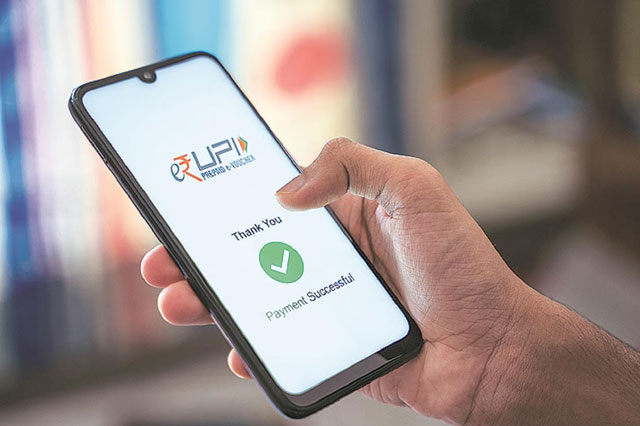
The Department of Financial Services (DFS), Ministry of Finance, conducted a Socio-Economic Impact Analysis of the Incentive Scheme for Promotion of RuPay Debit Card and low-value BHIM-UPI Person-to-Merchant (P2M) transactions.
The study, carried out in consultation with the National Payments Corporation of India (NPCI), covered 10,378 respondents across 15 states, including 6,167 users, 2,199 merchants and 2,012 service providers.
It evaluated the effectiveness of the government's incentive scheme, introduced in 2021-22 and continued through 2024-25, in promoting digital payments, strengthening payment infrastructure and advancing financial inclusion.
According to the study, the benefits for merchants went beyond simply accepting digital payments. Around 72% of merchants surveyed said they were satisfied with digital payments, citing faster transactions, improved record-keeping and greater operational convenience.
Another 57% reported an increase in sales after adopting digital payments. However, the study cautioned that the increase in sales could not be attributed to UPI alone, while also highlighting the role of government incentives in bringing merchants into the digital payments ecosystem.
The incentives helped reduce cost barriers for merchants and acquiring banks, accelerated merchant onboarding and helped build confidence in digital payment systems across different income groups and geographical regions.
The government study credited the combined efforts of the government, NPCI, banks, fintech companies and payment service providers with strengthening India's digital payments ecosystem.
Merchant adoption has also been accompanied by a rapid expansion of the physical and digital infrastructure supporting UPI.
During the implementation period of the incentive scheme, digital transactions increased nearly 11 times, while UPI's share of total digital transactions rose to around 80%, establishing it as the country's primary digital payment rail.
UPI QR deployments increased sharply from 93 million to around 658 million. The number of banks operating on the UPI platform also rose from 216 in March 2021 to 661 by March 2025.
At the same time, the number of third-party application providers increased from 16 to 38, giving consumers and merchants more choices for accessing UPI services and strengthening competition within the ecosystem.
UPI's broader infrastructure has played a crucial role in this expansion. The system is built on digital public infrastructure based on open application programming interfaces, universal interoperability and large-scale participation by banks.
Person-to-Merchant payments have increasingly become an important part of this growth, with QR-code adoption among small businesses helping drive the transition towards digital payments for everyday purchases.
The findings of the government study are also supported by other official estimates. A report titled "India's Digital Payments Revolution: UPI's Global Impact", published by NPCI and Boston Consulting Group last year, estimated that soundboxes and interoperable QR codes had helped bring around 65 million to 70 million merchants into the digital payments ecosystem, primarily small roadside vendors, tea stalls and neighbourhood kirana stores.
The overall number of QR codes in circulation is considerably higher, with official estimates putting active QR deployments at more than 700 million to 790 million.
Individual merchants can also have multiple QR stickers from competing applications such as PhonePe, Paytm and Google Pay at the same counter, further contributing to the proliferation of QR codes and deepening UPI adoption.
The extensive adoption of UPI among merchants has become particularly significant following Parliament's passage of the Taxation and Other Laws (Amendment) Bill, 2026.
Among other tax-related changes, the legislation amends the legal framework governing electronic payments in a manner that could pave the way for charges on UPI transactions in the future. It creates an enabling framework for the possible reintroduction of the Merchant Discount Rate (MDR) on digital payments such as UPI.
MDR is a fee paid by a merchant to a bank or payment provider when a customer makes a digital payment. MDR is currently zero for UPI.
For other payment modes, including cards and net banking, MDR can range from around 0.25% to 4.5% of the transaction value. The fee is generally distributed among participants in the payment ecosystem, including payment processors, banks and card networks.
The legislation itself does not impose an MDR or establish which merchants would be exempt. Actual rates, exemptions and precise turnover or transaction thresholds will be decided subsequently.
Finance Minister Nirmala Sitharaman has said small vendors such as tea sellers, street-cart and vegetable vendors and small shopkeepers would be excluded from any future MDR.
However, the government has not yet formally notified the legal definition of a small merchant, the turnover threshold or other criteria that would determine eligibility for the exemption.
Consumers are also expected to remain outside any proposed charge. Sitharaman has explicitly said consumers will pay zero, while the proposed framework could apply only to a limited category of merchant transactions.
The government's own study underlines that small merchants are not peripheral users of UPI but are among the biggest beneficiaries of and contributors to its mass adoption.
Defining the merchants that generate a significant share of UPI transaction volumes will therefore be crucial as the government considers the future framework for digital payment charges and exemptions.