Daijiworld Media Network - Yemen
Yemen, Aug 16: Yemen is facing a renewed risk of large-scale conflict as Iran-aligned Houthi forces intensify attacks on areas controlled by the internationally recognised, Saudi-backed government, prompting retaliatory strikes and raising fears that the fragile calm maintained since the 2022 UN-brokered truce could collapse.
The latest escalation has centred on the strategic Red Sea port city of Mokha, also known as Al-Makha, and the central province of Marib. Houthi forces have launched missile and drone attacks on government-held military positions and infrastructure, while government forces have responded with strikes against Houthi positions.
On August 9, the Yemeni military said a Houthi attack on Mokha killed seven people, including four military personnel and three civilians, and wounded 30 others. The attack involved ballistic missiles and drones, with Yemeni air defences saying 11 drones were intercepted.
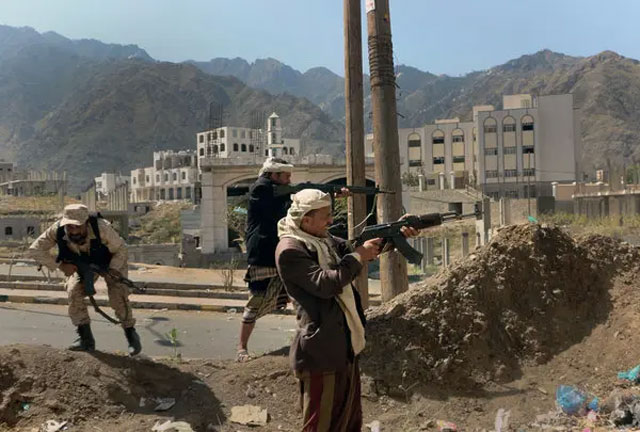
The Houthis said they were targeting Saudi troop concentrations and weapons depots, while Yemeni authorities said civilian areas and infrastructure were also hit.
The attacks continued in the following days, with the Houthis claiming further missile and drone strikes against military sites in Marib and Mokha. The group said it had targeted military deployments, weapons depots and command centres, although its casualty claims could not be independently verified.
Marib is particularly significant as one of the most important areas still controlled by the Yemeni government. It has been a major flashpoint throughout the country's long-running conflict. Houthi forces have also fired ballistic missiles at civilian infrastructure in Marib, according to Yemeni officials, adding to concerns that the latest fighting could widen.
The escalation has also brought Saudi Arabia further into the confrontation. The Houthis have claimed attacks on Saudi infrastructure, including an Aramco facility in Jizan, while Riyadh has maintained its military pressure against the group.
The renewed violence comes amid wider tensions across the Middle East involving Iran, the United States and Israel. The Houthis, who are backed by Iran, have previously used attacks on regional and international targets as part of their broader confrontation with their adversaries.
The latest developments have also raised concerns over shipping through the Red Sea and Bab el-Mandeb Strait. On August 11, the Egyptian-owned cargo vessel Tihamah was attacked in the Bab el-Mandeb, with reports saying four crew members and two Yemeni rescuers were killed and 10 others injured.
The Bab el-Mandeb is one of the world's most important maritime chokepoints, connecting the Red Sea with the Gulf of Aden and forming a key shipping route between Europe and Asia. Any sustained escalation in the area could therefore have consequences for international shipping, trade and energy supplies.
The current escalation follows months of relative calm after the 2022 truce substantially reduced large-scale fighting between the Houthis and Yemen's internationally recognised government.
The Houthis seized Sanaa in 2014 and subsequently fought a Saudi-led coalition that intervened in support of the Yemeni government. Years of fighting devastated the country's infrastructure and economy and created one of the world's worst humanitarian crises.
The United Nations has now warned that Yemen is at its highest risk of returning to major conflict since the 2022 truce. UN envoy Hans Grundberg told the Security Council that military activity and hostilities had intensified across several front lines, including Marib, Hadramawt and Mokha.
Grundberg urged all parties to step back from escalation and return to negotiations, warning that continued fighting could undermine fragile progress towards a political settlement.
The humanitarian consequences of a renewed war could be severe. Years of conflict have already killed tens of thousands of people, displaced millions and left large sections of the population dependent on humanitarian assistance.
The UN has warned of widespread food insecurity, with millions of Yemenis facing severe shortages and vulnerable communities at risk of famine. The humanitarian situation has also been complicated by the detention of UN personnel and other aid workers by the Houthis.
For ordinary Yemenis, the prospect of renewed fighting is particularly alarming. The 2022 truce brought a period of relative stability after years of devastating conflict, allowing some economic and social activity to recover. A return to sustained fighting could reverse those gains and trigger another wave of displacement.
Despite the escalation, diplomatic efforts have not completely stalled. The UN continues to push for de-escalation and negotiations, while regional mediation efforts remain crucial to preventing the situation from deteriorating further.
Yemen remains divided between the Houthi-controlled north and west, including Sanaa, and territories held by the internationally recognised government and its allies. While the latest fighting has not yet reached the scale of the full-scale war witnessed before the 2022 truce, the increasing attacks on government-held areas, Saudi interests and commercial shipping have heightened concerns that Yemen could once again be drawn into a broader conflict.