Daijiworld Media Network - London
London, Aug 9: Cracking your knuckles may annoy people around you, but there is little evidence that the habit causes arthritis or lasting damage to the joints, according to medical experts and studies.
The long-running belief that knuckle cracking causes arthritis was famously challenged by Donald Unger, who cracked the knuckles of his left hand at least twice a day for 50 years while leaving his right hand untouched.
In 1998, at the age of 72, Unger examined X-rays of both hands and found no signs of arthritis or apparent differences between them.
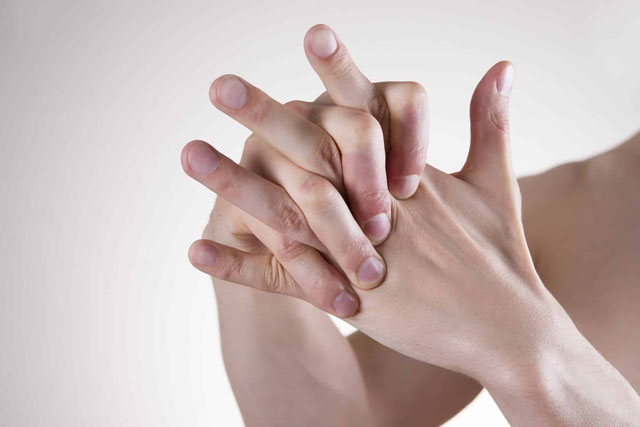
Although his experiment involved only one person, several studies have since examined the possible effects of habitual knuckle cracking.
Between 20 and 50 per cent of people are estimated to crack their knuckles. The sound occurs because of changes inside the joint when it is stretched or manipulated.
Joints such as those in the fingers, neck and back are surrounded by synovial fluid, which acts as a lubricant. When a joint is pulled or bent, the space inside it temporarily expands, lowering the pressure in the fluid and causing dissolved gases to form bubbles.
The characteristic cracking sound occurs when these bubbles collapse. Researchers have recorded sounds reaching up to 83 decibels, roughly comparable to the noise of a diesel truck passing at speed.
Kimme Hyrich, a rheumatologist at the University of Manchester, described joint cracking as a normal physiological process.
For most people, occasional or habitual knuckle cracking is considered harmless. However, pain or swelling in a joint can be a warning sign that requires attention.
Neurosurgeon Jay Jagannathan, who practises in Michigan, said forceful manipulation can sometimes result in strains or other injuries. There have also been rare cases of people spraining their fingers while attempting to produce a loud cracking sound.
The most common concern among habitual knuckle crackers is whether the practice increases the risk of osteoarthritis. Experts say evidence does not support this claim.
A 1975 study involving 28 nursing home residents found similar rates of degenerative arthritis among habitual knuckle crackers and those who did not crack their knuckles.
A later study involving 215 people with osteoarthritis also found that the amount and duration of knuckle cracking over a person's lifetime had no effect on the risk of developing the condition.
Some concerns have also been raised about grip strength. A 1990 study reported weaker hand grips and greater hand swelling among long-term knuckle crackers. However, a 2017 study found no link between knuckle cracking and reduced grip strength.
Other commonly repeated claims, including that cracking causes enlarged knuckles or loose tendons, have also not been supported by research. Ultrasound studies and physical examinations of habitual knuckle crackers found no evidence of swelling or disability.
For some people, cracking their joints may provide temporary relief or increased mobility because stretching the joint takes it through a wider range of motion. There is also a theory that cracking may stimulate nerve endings, relax surrounding muscles and reduce pain, although this has not been conclusively established.
Experts, however, advise greater caution when it comes to deliberately cracking the neck.
The neck contains the spinal cord and major arteries that carry blood towards the brain. Excessive or forceful manipulation can cause serious injury and symptoms such as dizziness or tingling in the limbs.
Jagannathan does not recommend cracking one's own neck, while researchers have also questioned the necessity and safety of forceful chiropractic neck manipulation.
For those who want to stop cracking their knuckles, experts suggest identifying triggers such as stress or boredom and finding alternative activities. Keeping a record of when the habit occurs, using stress balls or fidget toys, and behavioural techniques may help.
Overall, experts say habitual knuckle cracking is largely harmless to the joints. The biggest potential consequence, they note, may simply be irritating friends and family.