Daijiworld Media Network - Mumbai
Mumbai, Aug 8: The Reserve Bank of India (RBI) has prohibited commercial banks from restricting or disabling a borrower’s mobile phone, tablet or laptop as a loan recovery measure, except when the device itself was purchased using bank financing.
The RBI has also fixed compensation of Rs 250 per hour when such restrictions are imposed wrongfully or are not removed within the prescribed time.
The provisions are part of the RBI’s revised draft directions on the conduct of recovery agents. The directions will come into effect from January 1, 2027, and will apply to all commercial banks except small finance banks, payments banks, regional rural banks and local area banks.
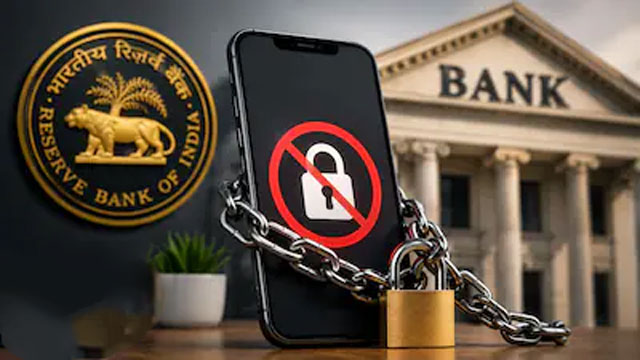
Even when a loan has been taken specifically to finance the purchase of a device, a bank can impose restrictions only if the loan agreement expressly and unambiguously permits such action and clearly sets out the procedure. The borrower must also be given prior notice detailing the restrictions that may be imposed.
No restriction can be initiated until the loan is at least 30 days overdue and the borrower has failed to make the payment despite receiving notice. The full set of contractual restrictions can take effect only after the account is 60 days past due, while outgoing calls cannot be restricted before the 60-day mark.
The RBI has specified certain functions that cannot be disabled under any circumstances, including incoming calls, SMS and emergency SOS features. Banks must also ensure that restrictions do not prevent borrowers from carrying out activities related to their work or employment.
Banks have been directed to adopt a gradual approach instead of disabling a device at the outset and must provide borrowers with visibility into the status of any restrictions at all times.
Restrictions must be reversed within one hour of the dues being realised. Where restrictions are imposed wrongfully, or their reversal is delayed for reasons attributable to the bank, compensation will accrue at Rs 250 per hour until the wrongful action is rectified. The compensation will be capped at the amount of the loan disbursed.
Borrowers will retain the right to prepay part or the entire loan at any stage. Banks must relinquish control of the restriction mechanism once the loan has been fully repaid.
The revised directions also introduce changes to the framework governing recovery agencies. Banks will be required to publish and maintain an updated list of their empanelled recovery agencies on their websites, including the type of agency, correspondence address and the period and purpose of engagement.
The information must be updated within seven calendar days of any change and promptly when an agency’s engagement is terminated.
Before a recovery agent makes an in-person visit to a borrower or guarantor, the bank must provide details of the agency at least one day in advance. Borrowers must also be immediately informed if the recovery agency is changed during the recovery process or its engagement is terminated.
Recovery agents will generally be permitted to contact borrowers or guarantors only between 8 am and 7 pm, unless the borrower expressly requests otherwise.
The directions prohibit recovery agents from using abusive language, posting videos, audio recordings or personal details on social media, making excessive or calls outside permitted hours, issuing threatening or anonymous calls, intimidating relatives, referees, friends or co-workers, using or threatening violence, or making false representations about the amount of debt or the consequences of non-repayment.