Media Release
Udupi, Jul 23: Manipal Academy of Higher Education (MAHE), an Institution of Eminence Deemed to be University, inaugurated the 4th edition of the UK-India HealthTech Accelerator Programme (2026-2028) on July 23 at Dr TMA Pai Hall, Manipal campus, Karnataka. Organised in partnership with the British High Commission, the three-day accelerator, July 22-24, marks a significant step in strengthening India-UK collaboration in healthcare technology and digital health innovation.
The inaugural session was addressed by distinguished leaders from academia, government, and the United Kingdom's science and innovation ecosystem. Dr Neha Sharma, senior adviser - health & life sciences, science and technology network, British High Commission, New Delhi, outlined the objectives of the accelerator programme and highlighted its role in promoting innovation-driven partnerships between India and the United Kingdom.
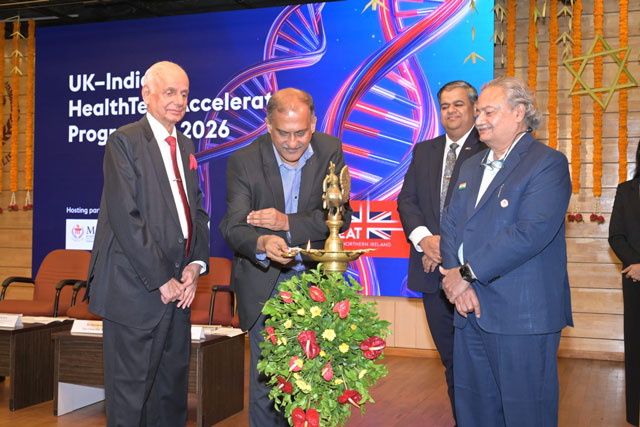
The accelerator has selected 25 HealthTech startups across India to participate in the fully funded programme. At the conclusion of the accelerator, six startups will be selected for a fully funded immersion programme in the United Kingdom, where they will engage with the UK healthcare ecosystem, investors, and the National Health Service (NHS).
The inaugural session was attended by Chandru Iyer, British deputy high commissioner to Karnataka and His Majesty's deputy trade commissioner for investment, South Asia; Dr Sharath K Rao, vice chancellor, MAHE; senior officials from the British High Commission; healthcare leaders; startup founders; and faculty members of MAHE.
Speaking on the occasion, Chandru Iyer, British deputy high commissioner to Karnataka and His Majesty's deputy trade commissioner for investment, South Asia, said, "The UK-India HealthTech Accelerator Programme was one of my first major initiatives as British deputy high commissioner, and it is immensely rewarding to see it delivering real impact today. As I prepare to leave my role in Bengaluru, I am proud to see the programme fostering innovation, partnerships and knowledge exchange between the UK and India, and I am confident it will add further gravitas to the UK-India Free Trade Agreement, which entered into force earlier this month."
Delivering the presidential address, Dr H S Ballal, pro chancellor, MAHE, said, "Healthcare innovation today demands strong partnerships that transcend geographical boundaries. Through initiatives such as the UK-India HealthTech Accelerator Programme, MAHE continues to create opportunities for academia, industry, and government to collaborate on developing solutions to global healthcare challenges."
Welcoming the gathering, Dr Sharath K Rao, vice chancellor, MAHE, said, "The UK-India HealthTech Accelerator represents the power of partnerships in addressing some of the most complex challenges facing healthcare today. At MAHE, we believe that meaningful innovation happens when medicine, engineering, technology, research and policy come together with a shared commitment to improving lives. As the host institution for the 2026–28 programme, in collaboration with BCKIC and with the strategic support of the British High Commission, we look forward to providing innovators with the ecosystem, expertise and mentorship they need to take their solutions from ideas to meaningful impact. This partnership will not only strengthen UK-India healthcare collaboration but also create opportunities for startups to develop globally relevant solutions rooted in real societal needs.”
Delivering a virtual message, Sophia Nestius-Booth, regional director- science and technology, British High Commission, New Delhi, underscored the growing strength of the UK-India partnership in health and life sciences. She highlighted the importance of collaborative innovation, knowledge exchange, and technology-led solutions in addressing shared global healthcare challenges and strengthening long-term bilateral engagement.
Delivering the remarks on behalf of the knowledge partner, Dr Mrutyunjay Suar, chairman, Bhubaneswar City Knowledge Innovation Cluster Foundation (BCKIC), emphasised the importance of building strong innovation ecosystems that connect academia, industry, startups, and government.
As the Host Institution for the 2026-2028, MAHE emphasises the promotion of innovation, entrepreneurship, translational research, and international collaborations.