Daijiworld Media Network - Beirut
Beirut, Jul 23: Lebanon’s Prime Minister Nawaf Salam visited a war-damaged village in southern Lebanon on Wednesday as the implementation of a US-brokered agreement with Israel began following months of conflict with Iran-backed Hezbollah.
The latest fighting began on March 2, when Hezbollah launched rockets towards Israel after US-Israeli strikes that triggered the wider Iran conflict. Israel responded with an aerial campaign and ground operations in Lebanon, killing more than 4,000 people and displacing around 1.2 million residents, according to officials.
Lebanon and Israel, which have remained technically at war for nearly eight decades, entered into rare direct talks facilitated by Washington. The two sides reached an agreement by late June that outlines the deployment of the Lebanese army in southern Lebanon, the withdrawal of Israeli forces and the disarmament of Hezbollah.
However, Hezbollah has rejected the talks and calls for it to surrender its weapons.
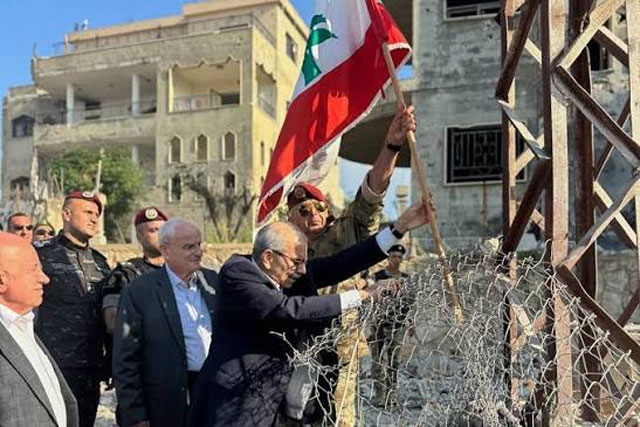
During his visit to Zawtar Al Gharbieh, Salam, along with Lebanon’s defence minister and senior military officials, placed a Lebanese flag near a destroyed building and vowed to rebuild homes and infrastructure damaged during the conflict.
"We have insisted since the beginning that our goal is the complete Israeli withdrawal from all our territory," Salam said. "What we are seeing today is just the beginning, but we remain determined and steadfast, and will continue to mobilise all political and diplomatic efforts to secure a full withdrawal from all of Lebanese territory."
The visit came a day after Lebanese President Joseph Aoun met US President Donald Trump at the White House. During the meeting, Trump announced that American carriers would resume direct flights to Lebanon after a gap of more than 40 years.
The Lebanese army initially prevented civilians from entering the village as troops cleared unexploded ordnance from the area. Some residents attempted to break through barriers to inspect their homes and properties.
Residents also expressed frustration over the government’s handling of the situation, with some saying they wanted to accompany the prime minister during his visit.
Under the agreement, Lebanon and Israel have identified two "pilot zones" in southern villages where Israeli forces will hand over control to the Lebanese army after clearing areas of Hezbollah's presence.
While Israel has not occupied these newly designated zones during the latest conflict, it has carried out strikes and ground operations there. The Lebanese army currently maintains only a limited presence in these areas.