Daijiworld Media Network - Jaipur
Jaipur, Jul 21: The deaths of two women following childbirth in Jodhpur have once again brought Rajasthan's maternal healthcare system under scrutiny, raising questions about emergency obstetric care and referral mechanisms despite the state government's recent statewide monitoring drive aimed at improving services for pregnant women.
The latest fatalities follow similar maternal deaths reported in Kota, Bikaner and Banswara, intensifying concerns over the effectiveness of emergency response and treatment for high-risk pregnancies.
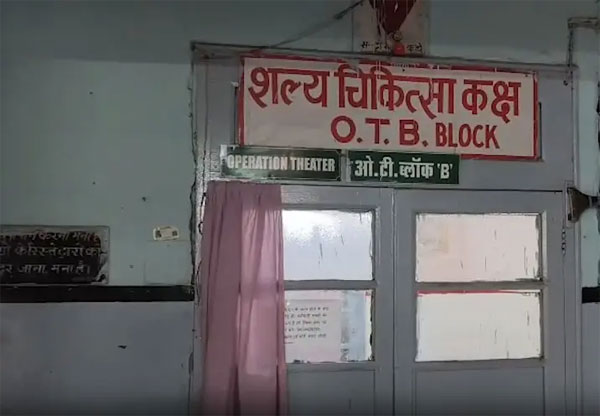
One of the deceased, Samu, delivered a baby girl through a normal delivery at Tinwari Hospital on June 24. However, she developed severe postpartum haemorrhage that could not be controlled, prompting her transfer first to Umaid Hospital and later to Mahatma Gandhi Hospital in Jodhpur.
Doctors performed an emergency hysterectomy after the bleeding continued, but despite intensive treatment, including multiple blood transfusions, dialysis and ventilator support, she died late on Sunday.
Hospital officials said Samu suffered hypovolemic shock caused by excessive blood loss, which led to kidney failure and multiple organ complications. During her treatment, she received six units of blood, 14 units of plasma and 10 units of cryoprecipitate.
In another case, Dimple was admitted to Mathuradas Mathur Hospital on June 30 after giving birth. She remained under medical care for nearly three weeks before her condition deteriorated suddenly on July 19. She died later that night, and a post-mortem examination was conducted the following day.
According to hospital authorities, 16 women who recently delivered babies have developed serious health complications in Jodhpur over the past month, with the majority having undergone Caesarean sections.
Among them is Dhapu, who is reportedly undergoing treatment after allegedly receiving an incompatible blood transfusion at Umaid Hospital. She is currently admitted to Mahatma Gandhi Hospital.
At present, five women remain admitted to Umaid Hospital, while two others, including Dhapu, continue to receive treatment at Mahatma Gandhi Hospital.
The deaths occurred shortly after the Rajasthan government concluded a five-day statewide maternal healthcare inspection campaign conducted from July 15 to July 19.
According to the Medical and Health Department, officials reviewed the medical records of 3,56,783 pregnant women, while 37,558 high-risk pregnancies were identified and monitored closely.
The department also contacted 14,836 pregnant women through real-time verification and interviews to assess healthcare delivery and inspected 8,414 health institutions to evaluate medicine availability, diagnostic facilities, equipment, cleanliness and overall service quality.
Additionally, 7,731 Mother and Child Health and Nutrition (MCHN) sessions were monitored across the state.
During 3,062 Pradhan Mantri Surakshit Matritva Abhiyan (PMSMA) sessions held on July 18, specialist antenatal care was provided to 1,05,629 pregnant women. Blood tests were conducted for 98,247 women, while 12,173 received iron sucrose therapy and 9,284 were administered ferric carboxymaltose (FCM) injections to treat severe anaemia.
The government also distributed 16,634 Mother Vouchers, enabling pregnant women to access free ultrasound examinations.
Principal Government Secretary Gayatri Rathore said every high-risk pregnant woman identified during the campaign would now be monitored by the concerned Auxiliary Nurse Midwife (ANM) every third day, with deficiencies identified during inspections being addressed on priority.
Following the review, Chief Secretary V. Srinivas chaired a high-level meeting and directed officials to strengthen the state's referral management system, particularly in rural areas.
He instructed district health authorities to ensure the timely availability of 104 and 108 ambulance services, provide advance information to referral hospitals before transferring patients, closely monitor high-risk pregnancies—especially women suffering from severe anaemia—and maintain adequate stocks of blood, medicines and emergency medical equipment in government hospitals.
District officials informed the meeting that every high-risk pregnancy in the state has now been mapped individually and linked to the respective ANM for continuous follow-up.
Despite the government's extensive monitoring initiatives and expanded antenatal care, the latest maternal deaths have renewed concerns over the implementation of referral protocols and emergency obstetric services at the ground level.
Health experts continue to identify postpartum haemorrhage as one of the leading causes of maternal mortality, stressing that timely referrals, adequate blood supplies and rapid emergency intervention remain critical to preventing avoidable deaths. The incidents are expected to intensify scrutiny of maternal healthcare standards in Rajasthan even as the state seeks to strengthen its public health system.