Daijiworld Media Network - New Delhi
New Delhi, Sep 7: A novel high-speed yoga programme that combines movement with visual and auditory cues may offer additional cognitive and physical benefits to older adults compared with traditional Hatha yoga, according to a recent pilot randomised controlled trial published in Scientific Reports.
The study found that both YogaCue, the new cued yoga intervention, and traditional Hatha yoga were associated with improvements in cognitive and physical performance among older adults. However, YogaCue appeared to provide additional gains in certain areas, including memory, aerobic fitness and physical performance.
Cognitive abilities gradually decline with age, potentially affecting memory, attention and the ability to independently manage everyday activities. Researchers have therefore been exploring practical approaches that can help older adults maintain both cognitive and physical function. Previous studies have suggested that regular physical exercise, including yoga, can support cognitive health as well as mobility, balance and independence.
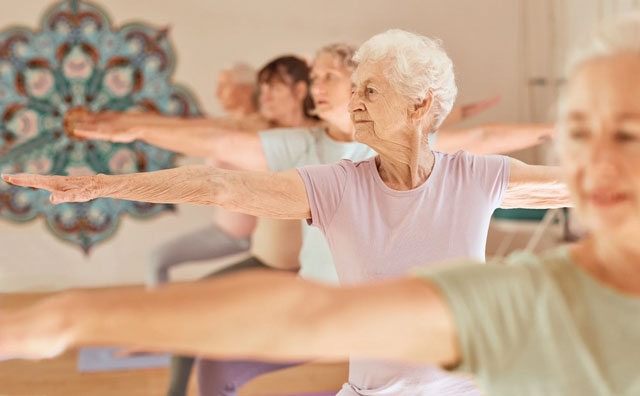
In the pilot study, researchers compared Hatha yoga and YogaCue to examine their effects on cognitive, functional, neuromuscular and aerobic performance in older adults.
The YogaCue programme combined action observation, verbal instructions and movement sequences. Participants initially learned numbered flow sequences, which were later replaced by colour-based cues. Visual cues using coloured paddles were subsequently introduced while verbal instructions were retained. An auditory cue in the form of a gong prompted participants to switch between paired movement sequences. The order of the sequences was randomised to provide additional cognitive stimulation.
The YogaCue programme also became progressively faster, with the duration of individual poses and the intervals between poses reduced as participants advanced. In comparison, the Hatha yoga programme consisted of gentle seated and standing poses performed at a slower and consistent pace. The complexity and variability of the poses were increased as the Hatha sessions progressed.
Of the 54 participants who were initially assessed and randomly assigned to the two groups, 34 completed the 24-week intervention and post-intervention testing and were included in the final analysis. The participants were equally divided between the YogaCue and Hatha groups.
They were recruited through flyers and telephone lists in two waves beginning on October 30, 2023 and October 16, 2024. The participants were aged between 60 and 90 years, lived independently in community settings and practised yoga three times a week for 24 weeks under the supervision of certified yoga instructors. Each session lasted 60 minutes.
None of the participants had memory complaints or uncontrolled neuromuscular, cardiovascular, cerebrovascular, systemic inflammatory or autoimmune diseases.
The researchers collected health histories and conducted anthropometric assessments, including measurements of height, weight and body fat percentage. Cognitive performance was evaluated using tests including the Hopkins Verbal Learning Test, Trail-Making Tests and the National Institutes of Health Cognitive Toolbox.
Neuromuscular performance was assessed through one-repetition maximum and power tests involving chest and leg presses. Functional mobility, endurance and balance were evaluated using the six-minute walk test, Timed Up & Go test and physical performance test.
Peak power during chest and leg presses was also measured at loads ranging from 40 per cent to 80 per cent of participants' one-repetition maximum using pneumatic exercise machines. The researchers conducted neuromuscular tests toward the end of the assessment to minimise the effects of fatigue. Participants were given sufficient recovery periods between tests, including a five-minute rest before the one-repetition maximum test.
Across all participants, significant improvements were recorded in the Flanker Inhibitory Control and Attention Test, the List Sorting Working Memory Test and the Fluid Cognition Composite Score. Both groups also showed significant improvements in the composite cognitive score.
The researchers also observed improvements in blood pressure, aerobic capacity, lower-limb strength and power at certain exercise loads. The decline in systolic blood pressure was mainly driven by participants in the Hatha group, while diastolic blood pressure declined in both groups.
Strength improvements were primarily seen among those practising Hatha yoga, whereas gains in lower-limb power were more pronounced in the YogaCue group.
Scores on the Hopkins Verbal Learning Test, including total recall, delayed recall and percentage retained, improved significantly only in the YogaCue group. Body fat percentage also decreased significantly among participants practising YogaCue.
Participants in the Hatha group showed improvements in the Timed Up & Go test, while improvements in physical performance test scores were more evident among those in the YogaCue group.
Although aerobic fitness improved across the overall group, the gains appeared greater among participants practising YogaCue. However, the researchers said clear differences between the two groups could not be established for all aerobic outcomes.
Traditional Hatha yoga generally focuses on postural control, breathing, body awareness and awareness of the surrounding environment. Such practices can indirectly engage cognitive processes through attention and concentration while helping improve flexibility, coordination, balance and range of motion. However, the intensity of traditional yoga is generally low and often below moderate exercise levels.
YogaCue, on the other hand, combines faster movement intervals with visual and auditory cues. Participants have to remember movement sequences and respond to changing signals while performing the exercises. This combination could provide greater simultaneous cognitive and physical stimulation than slower-paced yoga.
The researchers concluded that both yoga programmes were associated with improvements in cognitive and physical function among older adults. YogaCue, in particular, may offer additional benefits for aerobic fitness and lower-body power, while also potentially improving episodic and verbal memory.
However, the researchers cautioned that the findings should be interpreted carefully because the study was a small pilot trial. It did not include a non-exercising control group, the sample was predominantly female and the study had limited statistical power to establish differences between the two yoga interventions across several outcomes.
The researchers said larger studies will be needed to confirm the findings and determine whether YogaCue can provide meaningful long-term benefits for healthy ageing. Future research could also examine yoga poses targeting upper-body muscles and investigate the mechanisms that may explain the similar cognitive improvements observed with both forms of yoga.