Daijiworld Media Network – Beltangady
Beltangady, Jul 20: The sound of a mobile phone ringing has finally reached the remote village of Elaneeru in Beltangady taluk, ending years of isolation caused by the absence of mobile connectivity. With the commissioning of a BSNL mobile tower, a long-pending demand of villagers has finally been fulfilled.
Residents of Malavanthige gram panchayat had been facing severe difficulties for years due to the lack of mobile network coverage. Landline services had also been discontinued a few years ago, leaving the village with virtually no reliable means of communication. Villagers say the new tower has brought immense relief and greatly improved connectivity.
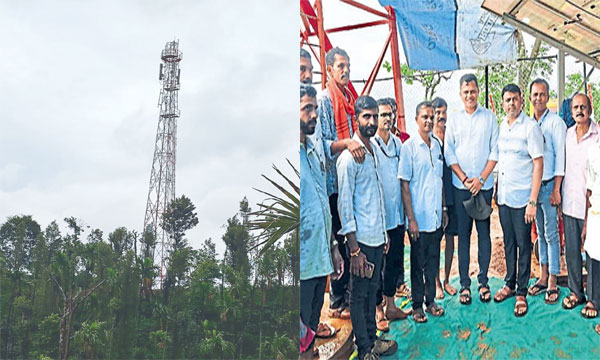
Elaneeru, located on the border of Dakshina Kannada district adjoining Chikkamagaluru district, lies about 5 km from Samse and 8 km from Didupe. The village has a population of around 650 people, and road connectivity becomes particularly difficult during the monsoon.
Although the village had witnessed improvements in infrastructure over the years, including road development, retaining walls, a vented dam, electricity, and other basic facilities, mobile connectivity had remained an unattainable dream. Villagers had repeatedly submitted representations to public representatives and the Department of Telecommunications seeking a mobile tower.
Responding to the long-standing demand, BSNL constructed a mobile tower at Gutyadka, which was officially inaugurated on Sunday by MP Capt Brijesh Chowta.
The new tower is expected to provide improved mobile connectivity not only to Elaneeru but also to surrounding villages, including Didupe, Kadamagundi, Gutyadka Kurekallu, Badamane, Bangarapalke, Ukkuda, and several nearby areas.
The region is also known for its scenic tourist attractions, including Netravathi Peak, Kadamagundi Waterfalls, monsoon-fed rivers, and lush green hill ranges that attract trekking enthusiasts. However, the lack of mobile connectivity had posed serious challenges for both tourists and local residents, especially during emergencies.
People had to travel to distant places to access online services, banking facilities, education, healthcare, and various government services due to the absence of network coverage.