Daijiworld Media Network – Vellore
Vellore, Jul 13: A new study conducted in Vellore has found that wastewater surveillance can accurately monitor typhoid transmission, identify disease hotspots and support targeted vaccination strategies, offering a valuable tool for strengthening public health interventions in typhoid-endemic regions.
Published in The Lancet Microbe, the study established a strong association between the presence of Salmonella Typhi in sewage and laboratory-confirmed typhoid cases, reinforcing the potential of environmental surveillance as part of routine disease monitoring programmes.
The prospective study was conducted by researchers from Christian Medical College (CMC), Vellore, Imperial College London and collaborating institutions across 33 urban wards in Vellore between Dec 12, 2022, and Jun 30, 2023, before the rollout of the TyphiBEV typhoid conjugate vaccine (TCV) trial. The research aimed to establish baseline S. Typhi detection in wastewater and assess whether it reflected the community burden of typhoid.
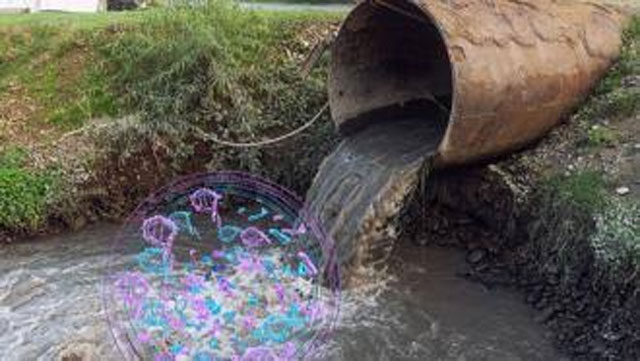
Researchers collected 1,446 wastewater samples, comprising 723 grab samples and 723 Moore swabs, from 50 surveillance sites covering a population of around 2.25 lakh.
The bacterium was detected in 80 samples, representing 5.5 per cent of the total collected. Grab samples recorded a higher positivity rate, with 60 samples (8.3 per cent) testing positive compared with 20 samples (2.8 per cent) obtained using Moore swabs. The highest detection rates were observed in the northeastern and central parts of Vellore.
During the same period, hospital-based surveillance identified 207 blood culture-confirmed typhoid cases. Infections peaked between March and May 2023, when the city experienced a localised outbreak.
Spatial mapping revealed that areas with frequent detection of S. Typhi in wastewater closely matched neighbourhoods reporting the highest number of confirmed typhoid cases, demonstrating the usefulness of environmental surveillance in identifying disease transmission clusters.
The study estimated the overall incidence of typhoid at 180.2 cases per 100,000 person-years. Children aged between five and 14 years recorded the highest incidence at 699.1 cases per 100,000 person-years, followed by children below five years at 685.1 cases per 100,000 person-years. Adults aged over 30 years had the lowest incidence at 19.9 cases per 100,000 person-years.
Researchers found a significant relationship between wastewater positivity and disease incidence. Statistical analysis showed that every ten-fold increase in typhoid incidence increased the likelihood of detecting S. Typhi in wastewater by 2.43 times after accounting for factors such as rainfall, laboratory methods and human faecal contamination.
The study also found a strong correlation between wastewater positivity and typhoid incidence across separate catchment areas, indicating that environmental sampling can reliably reflect disease activity at the community level.
"Our findings show that wastewater surveillance data correlate with clinical disease incidence in an endemic setting and could be used to monitor targeted interventions, including typhoid conjugate vaccine introduction," the researchers said.
The authors noted that environmental surveillance can detect infections often missed by routine hospital-based monitoring, including asymptomatic carriers and untreated cases, providing a more comprehensive understanding of disease transmission.
They concluded that integrating wastewater monitoring with clinical surveillance could provide early warning of outbreaks, guide targeted vaccine deployment, strengthen water, sanitation and hygiene measures, and help evaluate the long-term impact of typhoid vaccination programmes, particularly in resource-constrained urban settings.