Daijiworld Media Network - New Delhi
New Delhi, Jun 12: In a significant intervention aimed at preventing localised fuel shortages amid global supply disruptions, the government has imposed fresh restrictions on diesel sales, capping supply at 200 litres per vehicle per day and barring industrial, commercial and institutional consumers from purchasing petrol or diesel from retail outlets.
According to an official notification issued by the Ministry of Petroleum and Natural Gas on June 11, retail fuel stations will now be permitted to dispense diesel only into vehicle fuel tanks or Petroleum and Explosives Safety Organisation (PESO)-approved containers. Each customer or vehicle will be restricted to a maximum of 200 litres per day, and the resale of such fuel has been explicitly prohibited.
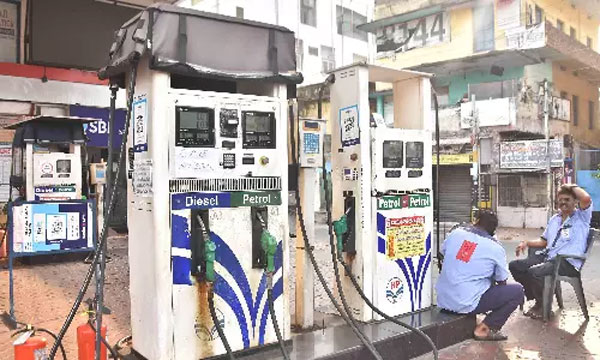
The order further bars bulk consumers, including industries, commercial establishments, telecom operators and institutional users, from procuring fuel from petrol pumps. They have been directed to source petrol and diesel exclusively through their own authorised consumer dispensing facilities.
The restrictions will remain in force for up to 90 days at a time and may be extended through subsequent government orders.
Price gap triggers abnormal demand
The move follows an unusual surge in diesel sales at retail outlets, driven largely by bulk users shifting from higher-priced bulk procurement to comparatively lower retail rates due to a widening price differential. In Delhi, diesel sold at retail pumps is priced at around Rs 95.20 per litre, while bulk procurement rates stand at approximately Rs 134.50 per litre.
State-owned oil marketing companies have moderated retail prices to shield common consumers from global price shocks following geopolitical tensions in West Asia. However, this has led to commercial users such as telecom tower operators, industries relying on diesel for power generation, and transport operators including trucking companies and state road transport buses diverting purchases to retail outlets.
The Ministry noted that this diversion has resulted in “abnormal increases” in retail fuel sales in several pockets, with consumption shifting significantly towards public sector oil marketing companies such as Indian Oil Corporation (IOC), Bharat Petroleum Corporation Limited (BPCL) and Hindustan Petroleum Corporation Limited (HPCL). In May, these firms recorded a 4.8% rise in petrol sales and a 6.4% surge in diesel sales.
Government cites geopolitical disruption
The Centre stated that the restrictions have been introduced due to prevailing global geopolitical conditions impacting petroleum supply chains, shipping logistics and overall availability of petroleum products.
The notification warned that unchecked bulk procurement through retail outlets could divert supplies intended for ordinary consumers, potentially leading to “localised shortages and disruption of essential services to the common man”.
It reiterated that institutional, industrial and commercial consumers must rely on their own authorised fuel dispensing systems instead of retail stations.
Enforcement and penalties
The order empowers public sector oil marketing companies and other authorised retailers to enforce the restrictions, while directing state governments and Union Territories to take strict action against hoarding, black marketing, unauthorised procurement, diversion and other malpractices involving fuel supplies.
It also provides for penalties under the Essential Commodities Act for violations. Any restriction imposed under the framework may be extended beyond the initial 90-day period through fresh government orders, while exemptions may be granted for specific consumers, categories, areas or transactions where necessary.
The government said the measures are intended to ensure “equitable availability” of petrol and diesel across the country and to maintain uninterrupted fuel supply for essential services.