Mangaluru: Pachanady turns plastic waste into fuel, makes 10,000 litres of Pyrolysis oil in a month


Daijiworld Media Network - Mangaluru

Mangaluru, Jun 12: In a major breakthrough in waste management, a plastic-to-fuel plant at Pachanady has produced nearly 10,000 litres of pyrolysis oil within a month of commencing operations, offering a new solution to the long-standing challenge of plastic waste disposal at the landfill site.

The facility, the first of its kind within the jurisdiction of a municipal corporation in Karnataka, has been established by Bengaluru-based ARV Environment Care Limited in collaboration with Kudla Green Wave, with support from the Mangaluru City Corporation. The plant uses plastic-rich Refuse-Derived Fuel (RDF) recovered from the Pachanady landfill as raw material for the pyrolysis process.
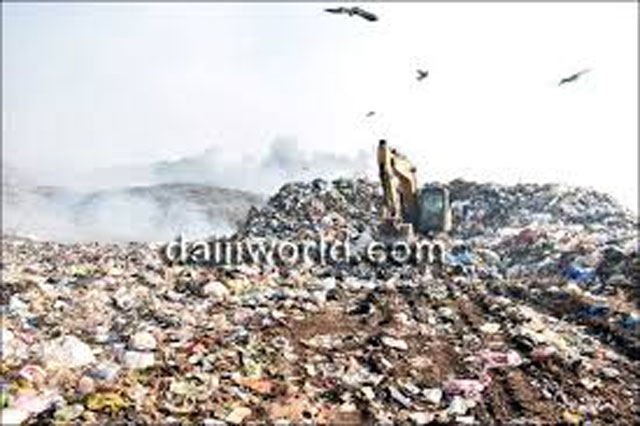
The initiative comes amid ongoing biomining operations in the Mandara area of Pachanady, where nearly nine lac tonnes of legacy waste have accumulated over the years. While biomining helps process much of the old waste, plastic fractions remain difficult to handle. Until recently, a portion of the plastic waste was being sent to cement factories for co-processing, but declining demand prompted the search for an alternative solution.

To address the issue, a machine capable of processing around 15 tonnes of plastic waste per day has been installed at the landfill. The proposal for the project was first conceived in 2021 during the tenure of then Mangaluru City Corporation commissioner Akshay Sridhar.

How the process works

Following the screening of excavated waste and separation of soil, plastic materials are segregated and shredded into pieces measuring approximately 20 to 30 millimetres before being fed into a reactor furnace.

The plastic is heated in a vacuum environment at temperatures ranging between 250°C and 300°C, causing it to break down into vapours. These vapours pass through a series of chambers where they condense into liquid form. The resulting liquid is then separated into oil and water.

The process also generates around 15% syngas. The final outputs include pyrolysis oil, carbon powder, thick tar and syngas. The syngas and thick tar produced during processing are reused within the facility itself, helping improve operational efficiency.

More capacity planned

Project officials said approximately 200 tonnes of plastic waste have already been processed, yielding 10,000 litres of pyrolysis oil. However, an estimated 12,000 tonnes of plastic waste still remain at the site, underlining the scale of the challenge.

A single unit can process between 15 and 20 tonnes of plastic waste per day, and plans are being considered to install additional units if greater support is received from the civic body.

Industrial demand for pyrolysis oil

The fuel produced through the process can be used in burners for road asphalting works, hotel boilers and cashew roasting units.

“Pyrolysis oil derived from plastic waste can be used for burners during road asphalting, hotel boilers and cashew roasting operations. A few years ago, the fuel was priced at around Rs 40 to Rs 45 per litre. Today, it commands nearly Rs 70 per litre in several parts of the country. Demand in Mangaluru, however, is yet to grow substantially,” said Kiran P Kulkarni, bio-remediation expert with the Centre for Urban Development.

With thousands of tonnes of plastic waste still awaiting processing, the Pachanady project is emerging as a promising model for converting landfill waste into a commercially useful fuel while reducing the environmental burden of plastic accumulation.


Top Stories

Comment on this article

  • Suresh, Konchady, Mangalore

    Thu, Jun 18 2026

    A very good initiative by MCC. There should be separate area for dry plastic and wet green kitchen waste which will be easy segregation of waste. Similarly Wet kitchen waste should be seen as a resource, not garbage. With proper composting, waste can be converted into “gold” in the form of cheap , good quality organic manure , potting soil and garden soil for farmers while helping to keep Mangaluru clean and green. If implemented sincerely, wet waste can be converted into high-quality organic manure, creating a true “waste-to-wealth” model. What is considered garbage today can become “gold” for farmers, gardeners, and urban green spaces tomorrow. Along with keeping Mangaluru clean and reducing landfill pressure, this initiative can help build a greener, healthier, and more sustainable city. Congratulations to MCC for taking a positive step in the right direction.

    DisAgree Agree Reply Report Abuse

  • Flavian, Mangalore

    Fri, Jun 12 2026

    A great step in converting waste things into useful products by way of recycling process. Recycling waste materials involves collecting, sorting, and processing used items into new raw materials or products. This practice diverts waste from landfills, decreases greenhouse gas emissions, and conserves natural resources. Common materials like paper, metals, glass, and certain plastics can be reprocessed. Mangalore corporation is well organized in waste or thrash collection. Waste needs to be segregated by dry and wet in separate thrash bags for disposal and collect by thrash collectors.

    DisAgree [4] Agree [10] Reply Report Abuse

  • Rudolf Rodrigues, Mangalore-Mumbai

    Fri, Jun 12 2026

    Its a very development in tackling the huge waste landfill/dumpyard in Pachanady; however, it should be noted that this technology is not a perfect green solution unless the process is rigorously controlled! Running these super-hot ovens requires massive amounts of energy, which often comes from burning fossil fuels and creates newer emissions. Furthermore, if a facility lacks top-tier filters, the process can leak toxic chemicals, heavy metals, and soot into the neighbouring air, while leaving behind dangerous sludge and wastewater. Ultimately, pyrolysis is a helpful environmental tool, but only if it is run cleanly, meticulously and safely; how far all these aspects are taken care of only time will tell!!

    DisAgree Agree [10] Reply Report Abuse

  • Rita, Germany

    Fri, Jun 12 2026

    Good something good use out of waste .Instead of collecting and heaping lot of waste,later animals crows and rats running through this good idea .Well done.Hope it is not harmful to humans and animals.

    DisAgree [3] Agree [6] Reply Report Abuse


Leave a Comment

Title: Mangaluru: Pachanady turns plastic waste into fuel, makes 10,000 litres of Pyrolysis oil in a month


You have 2000 characters left.

Disclaimer:

Please write your correct name and email address. Kindly do not post any personal, abusive, defamatory, infringing, obscene, indecent, discriminatory or unlawful or similar comments. Daijiworld.com will not be responsible for any defamatory message posted under this article.

Please note that sending false messages to insult, defame, intimidate, mislead or deceive people or to intentionally cause public disorder is punishable under law. It is obligatory on Daijiworld to provide the IP address and other details of senders of such comments, to the authority concerned upon request.

Hence, sending offensive comments using daijiworld will be purely at your own risk, and in no way will Daijiworld.com be held responsible.