Daijiworld Media Network – New Delhi
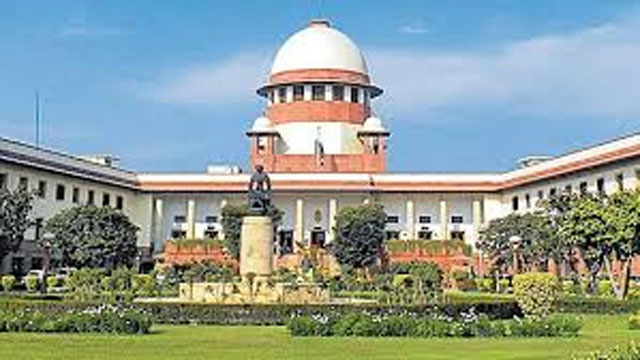
New Delhi, Jun 10: Invoking its extraordinary powers under Article 142 of the Constitution, the Supreme Court has set aside the conviction and sentence of a man who was jailed under the Protection of Children from Sexual Offences (POCSO) Act, noting that the victim has since married him after attaining adulthood.
A bench comprising Justices J K Maheshwari and Atul S Chandurkar exercised its plenary powers to do "complete justice" in the matter, observing that the case presented exceptional circumstances warranting judicial intervention.
According to court records, the man and the woman had fallen in love while she was studying in Class 12. Their relationship later led to criminal proceedings after the woman filed a complaint when the man initially refused to marry her. The complaint resulted in his conviction under the POCSO Act and a sentence of 10 years' imprisonment for maintaining a physical relationship with a minor.
Subsequently, the woman married another person, but the marriage reportedly ended shortly after her husband learned about her previous relationship.
During the period when the accused was out on bail, the two reconciled, got married and began living together as husband and wife.
Following their marriage, the woman approached the Madras High Court seeking to have her husband's conviction set aside. However, the plea was rejected, prompting the couple to move the Supreme Court.
Taking note of the unusual facts of the case, the apex court said the couple should be allowed to live peacefully as spouses.
"Without entering into the merits of the case, in the peculiar facts, we deem it appropriate to exercise our plenary power under Article 142 of the Constitution of India for setting aside the judgment of conviction and sentence of the appellant," the bench observed.
The court acquitted the man of the charge under Section 5(l) of the POCSO Act and set aside the conviction and sentence imposed upon him.
At the same time, the Supreme Court clarified that its order was passed solely in view of the unique circumstances of the case and should not be treated as a precedent in any other matter.
The bench also noted that since the man's substantive jail sentence had already been suspended by the Madras High Court in June 2019, he would not be required to surrender unless wanted in connection with any other case.
Article 142 empowers the Supreme Court to pass any order necessary to ensure complete justice in matters before it, even in situations where existing legal provisions may not adequately address the peculiar facts of a case.