Daijiworld Media Network - Mumbai
Mumbai, Apr 9: In a major medical breakthrough, a 54-year-old woman in Muscat, Oman, underwent a successful remote robotic surgery for suspected kidney cancer, with the procedure performed by a surgeon operating from Mumbai—over 1,500 km away.
The surgery was led by Dr T B Yuvaraja, Director of Uro-Oncology and Robotic Surgery at Kokilaben Dhirubhai Ambani Hospital. While he controlled the robotic system from Mumbai, a team of urologists remained physically present at Medical City Muscat Hospital to step in if required. However, the procedure was completed smoothly without any complications.
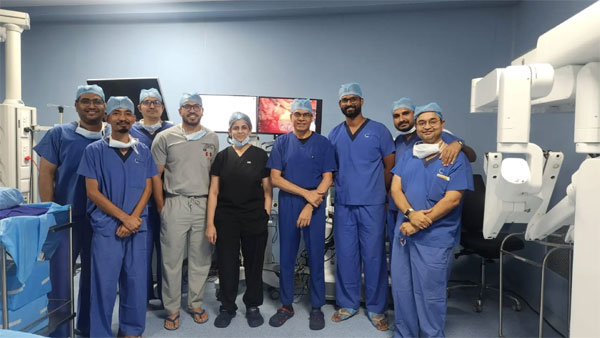
According to the hospital, this marks the first instance of a cross-border remote robotic surgery conducted from India. Notably, in December 2025, Dr Yuvaraja had performed another advanced procedure by operating on a patient in Mumbai while being stationed in Shanghai—nearly 8,000 km away.
Highlighting the significance of the achievement, Dr Yuvaraja said that such innovations are transforming global healthcare delivery. He emphasized that real-time cross-border surgeries could eliminate geographical barriers, allowing patients access to top medical expertise regardless of location.
The collaboration originated when the Muscat-based hospital, which had recently installed a robotic surgical system, sought technical expertise. The connection was facilitated by the equipment manufacturer, leading to an initial on-site surgery followed by the landmark remote procedure the next day.
Experts note that nearly five billion people worldwide still lack access to safe and affordable surgical care. Telerobotic surgery is increasingly being seen as a solution to bridge this gap. The number of such procedures has been rising, with institutions adopting robotic systems across multiple locations.
For instance, SS Innovations International, which developed the indigenous SSII Mantra robotic platform, recently reported completing 100 robotic telesurgeries.
While robotic-assisted procedures can increase costs by Rs 1–2 lac, doctors point out that the enhanced precision often leads to shorter hospital stays and faster recovery times, making it a promising advancement in modern medicine.