Daijiworld Media Network - Washington
Washington, Mar 29: The United States has significantly increased its military presence in the Middle East, deploying over 3,500 troops as tensions with Iran continue to escalate, according to officials.
The United States Central Command confirmed that the USS Tripoli, carrying around 2,500 Marines, has entered its operational zone. The amphibious assault ship—equipped to operate advanced aircraft such as F-35 fighter jets and Ospreys—was earlier stationed in Japan before being redirected to the region.
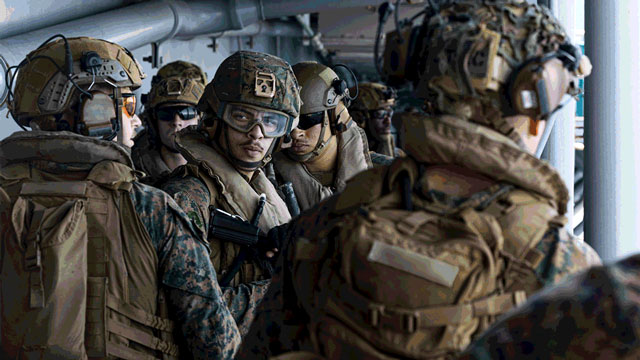
Additional reinforcements, including the USS Boxer and other naval units from San Diego, are also being deployed as the Pentagon prepares for the possibility of prolonged ground operations. However, it remains unclear whether President Donald Trump will authorise the deployment of ground troops.
Military operations have intensified under Operation Epic Fury, launched on February 28, with over 11,000 targets reportedly struck so far, underscoring the scale of the conflict.
US Secretary of State Marco Rubio said Washington aims to achieve its objectives without committing ground forces, while stressing the need to remain prepared for evolving scenarios.
The situation worsened after Iran launched ballistic missiles and drones targeting Saudi Arabia’s Prince Sultan Air Base, injuring at least 10 US personnel. Meanwhile, Iran’s control over the strategically vital Strait of Hormuz has severely disrupted global oil shipments, contributing to rising fuel prices worldwide.
Regional tensions have further escalated with the involvement of Yemen’s Iran-backed Houthis, who claimed responsibility for a missile strike toward Israel. Their participation has heightened concerns over maritime security, particularly in the Bab el-Mandeb Strait, a crucial route for global trade leading to the Suez Canal.
The conflict has already forced disruptions in international shipping and aviation routes, with countries seeking alternatives as key waterways face uncertainty. Analysts warn that continued attacks on commercial vessels could destabilise maritime security and push energy prices even higher.
Diplomatic efforts remain stalled. A ceasefire proposal put forward by US envoy Steve Witkoff aimed at curbing Iran’s nuclear programme and reopening shipping routes has been rejected by Tehran, which has instead demanded reparations and recognition of its sovereignty.
With no immediate signs of de-escalation and more actors entering the conflict, fears of a wider regional crisis continue to grow.